



Norwegian salmon-farming firm Lødingen Fisk’s decision to rethink its plans for expansion in Northern Norway has become a showcase project for Pure Salmon Technology and its approach to designing site-specific, scalable land-based facilities.
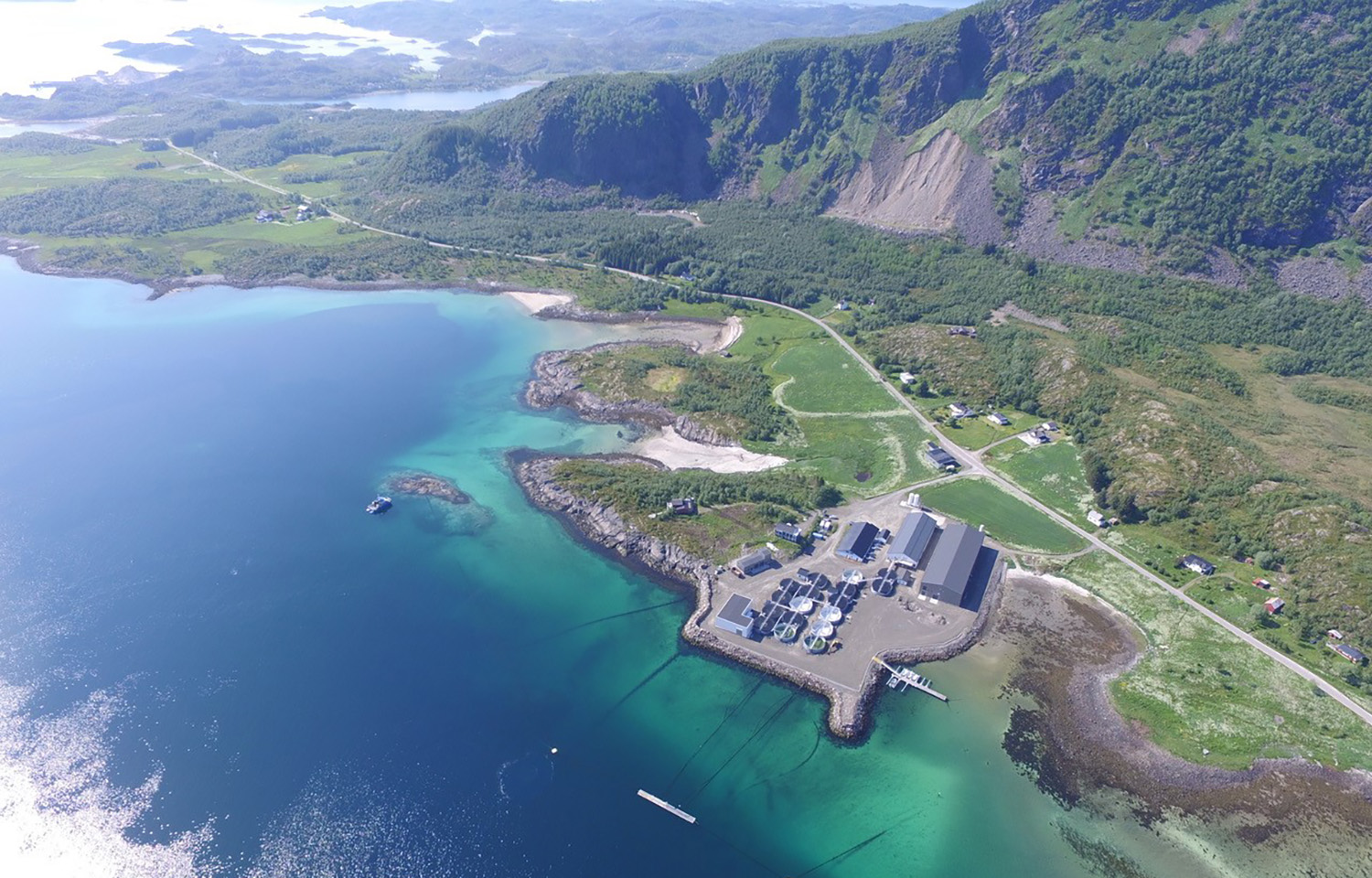
The two companies recently signed an agreement that will result in Pure Salmon Technology delivering a new recirculating aquaculture system (RAS) facility at Vestbygda in Lødingen, integrating land-based production that aligns tightly with Lødingen Fisk’s existing operations.
Lødingen Fisk’s original plan for the site was to expand using a flow-through system, supported by local water access. However, limitations in available electrical capacity and concerns that water usage could approach acceptable limits forced the company to reassess.
Rather than simply scaling back ambitions in response to the setbacks, Lødingen Fisk invited several technology providers to propose alternative solutions. This process revealed that an RAS facility could deliver higher production volumes within the same power constraints while also offering greater operational and biological control.
Following technical assessments and site visits, Pure Salmon Technology was selected as the preferred supplier, and the project entered an intensive collaboration phase.
For Pure Salmon Technology Key Client Director Preben Strand, the shift from flow-through to RAS illustrates a decision-making process increasingly relevant across the sector.
“In the beginning, the main limitation was access to electricity. Because of that, Lødingen Fisk was cautious about committing to a system they believed was ‘out of range,’” Strand told SeafoodSource. “When Lødingen Fisk properly evaluated RAS, they realized it actually gave them the opportunity to maximize production within their constraints. Even though RAS is technically more complex, it allows much higher production intensity – more biomass per unit of water and infrastructure – and far better control over the environment.”
Strand explained the “decisive factor” in committing was the understanding that RAS would let Lødingen Fisk produce significantly more with the resources that they already had.
“For other producers facing similar power and/or water constraints, the decision is transferable,” he said. “The key is to evaluate total production potential.”
The facility designed by Pure Salmon Technology is tailored both to the Vestbygda site and to Lødingen Fisk’s operational needs. It will include dedicated departments for fry, smolt, and post-smolt production, supported by systems designed for stable and predictable operation.
Announcing the project, Lødingen Fisk Managing Director Truls Olsen said the collaboration phase was critical in ensuring the design was fit for purpose.
With initial planning done, the focus now shifts firmly to execution, with health, safety, and environmental performance prioritized throughout the construction phase. Site preparations are now underway, with installation work scheduled to begin in August 2026 and completion expected by September 2028.
Pure Salmon Technology Commercial Director Synnøve Helland said the new project underlines the value of questioning early assumptions.
“Together, we have developed a solution that provides greater flexibility, higher capacity, and a facility designed for the future,” Helland said.
According to Strand, access to electricity and grid capacity is increasingly shaping the landscape of land-based salmon farming.
“A relatively high number of smolt, post-smolt, and grow-out projects have been presented in recent years, and it is noticeable that many of them are located in areas where grid capacity and stable electricity supply are already available,” he said. “Land-based salmon farming is energy-intensive, particularly with RAS technology, and predictable access to power at competitive prices is fundamental for both biological performance and financial viability.”
In Norway, he added, grid bottlenecks have already delayed or constrained some projects, but political focus on strengthening infrastructure could ease these limitations over time.
Strand also pointed out that the biggest risks in first-time RAS projects rarely lie in equipment.
“They sit in misunderstandings, assumptions, and misaligned expectations,” he said, pointing to three key risks addressed during the collaboration phase: misaligned expectations around performance and returns, designing the wrong level of system complexity, and fragmented ownership between designer and operator. “If the designer ‘designs’ and the customer ‘receives,’ responsibility becomes fragmented. But, if both parties build the concept together, ownership becomes shared. That reduces implementation risk significantly.”
Beyond technology, local public acceptance and regional value creation are essential as land-based aquaculture attracts increasing global capital, Strand said.
“Local acceptance and regional value creation are absolutely critical for the long-term legitimacy of land-based salmon farming,” he said. “If communities feel that ownership and profits are flowing outward while negative impacts remain local, resistance will grow. Legitimacy is earned on the ground.”
Looking ahead, Helland sees RAS becoming an increasingly integrated part of the broader salmon production system rather than a standalone alternative.
“Within the near future, land-based salmon farming will both be competing and complementing traditional sea-based production,” she said, pointing to rising sea temperatures, lice pressure and fish welfare challenges. “The economics and biology still favor sea cages for large-scale commodity production, but RAS is carving out a space where it can genuinely outperform. I believe that we soon will see several RAS facilities succeed in producing large salmon on land. It is just a matter of time and learning.”
