



Multiple global ventures led by land-based aquaculture technology firm Pure Salmon Technology are moving from concept to execution, with significant progress particularly reported across two flagship projects in Europe and Asia.
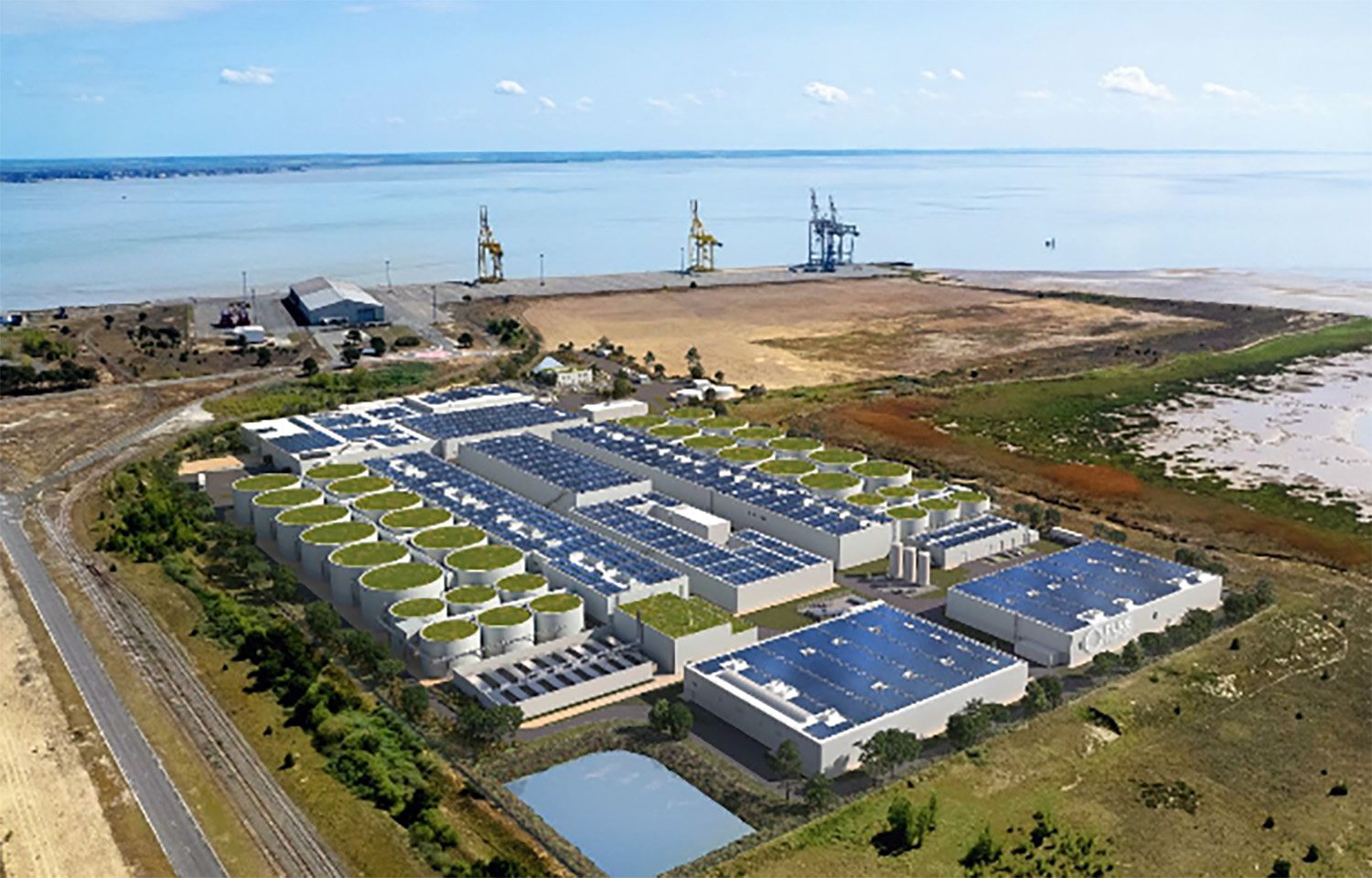
In France, Pure Salmon recently cleared an important regulatory hurdle for its planned recirculating aquaculture system (RAS) facility in Le Verdon-sur-Mer, receiving a favorable opinion from the relevant public inquiry commission as part of a mandatory environmental and construction permitting process. The commission’s approval reflects several years of technical and environmental assessment, particularly around water use, waste treatment, and ecosystem protection, according to Sandefjord, Norway-based Pure Salmon Technology
Pure Salmon France Chair André Muschallik told SeafoodSource the project is now progressing through the regulatory and permitting process and confirmed that the first commercial production remains on course for 2030.
The project, which targets annual production of 10,000 metric tons (MT) of Atlantic salmon, is designed as a fully integrated operation – covering farming, processing, and packaging within France for domestic consumption.
Pure Salmon Technology is responsible for the design and engineering of the facility, including water treatment systems, process flow, and overall system integration.
The facility will operate with a water recirculation rate of over 99 percent, significantly reducing freshwater demand and discharge volumes. The system is also designed to exceed regulatory requirements for effluent treatment while maintaining stable and controlled production conditions.
“Environmental stewardship and responsible resource use are central to what Pure Salmon and 8F stand for,” Muschallik said. “We design our facilities in full compliance with all applicable regulatory requirements and engage proactively with authorities throughout the permitting and operational process. We have the technical expertise to back this up in practice.”
Beyond its technical credentials, the French project is positioned as a major regional investment. With a projected capital expenditure of EUR 275 million (USD 321.3 million), it’s expected to create around 250 jobs and become a significant economic contributor to the Médoc area of Southwest France.
While the firm’s French project advances through permitting, Pure Salmon’s Japanese venture also reached a critical financing milestone, with Pure Salmon Japan recently securing more than USD 180 million (EUR 154 million) in additional investments, led by Fortress Investment Group with participation from Tor Investment Management.
This financing completes the preferred note tranche for the project and supports ongoing construction of what’s set to become Japan’s largest land-based salmon facility.
Shimizu Corporation is the main civil contractor for the project, with Pure Salmon Technology responsible for RAS engineering and commissioning.
According to Muschallik, construction is progressing well.
“Building A is complete and undergoing process installation. Further buildings are progressing on schedule. We expect the first harvest in spring 2028,” he said.
Located in Mie Prefecture, the farm will also target annual production of 10,000 MT, supplying fresh, domestically produced Atlantic salmon to the Japanese market.
According to Pure Salmon, the Japan project reflects a broader shift toward localized protein production, with Muschallik pointing out that the country remains heavily dependent on seafood imports.
The development of domestic RAS capacity aligns closely with national policy priorities around food security and supply chain resilience, he said.
“Fresh Atlantic salmon consumed in Japan is sourced almost entirely from overseas. Once transportation costs and import duties are factored in, the landed cost of Norwegian salmon in Japan substantially exceeds Pure Salmon Japan’s modeled production cost,” Muschallik said. “Proximity to the consumer is a structural advantage that conventional producers find very difficult to replicate.”
While both facilities are targeting the same output level, the RAS engineering used across the Pure Salmon platform allows each to adapt to local environmental and regulatory requirements, Muschallik explained.
“8F, Pure Salmon, and Pure Salmon Technology have accumulated substantial hands-on experience across the full RAS value chain – from engineering and construction through to live fish operations,” he said. “We have a clear and detailed understanding of the technical and operational complexity that large-scale RAS projects entail, and that understanding is directly reflected in our design choices, operational protocols, and project execution approach.”
There are also key differences in the commercial strategies of each project, with France, for example, already having strong access to imported salmon.
“Each market has its own characteristics, which Pure Salmon analyzes carefully and reflects in its commercial strategy. That said, the desire for greater food security, full traceability, and sustainably produced local protein is a meaningful driver in both Japan and France and, more broadly, across most of the markets we focus on,” Muschallik said.
As for where its RAS expertise might take Pure Salmon next, Muschallik said it would be premature to name specific countries at this stage, but he did confirm there’s “genuine and substantive interest” from well-positioned local partners in a number of regions.
In some cases, discussions are already at an advanced stage, he confirmed.
“The demand for healthy nutrition, resource-efficient production methods, food security, and shorter supply chains is growing across all continents. These are structural trends that transcend individual markets,” he said. “Pure Salmon Japan is the first step in building a global protein platform, and we are committed to developing it further.”
