






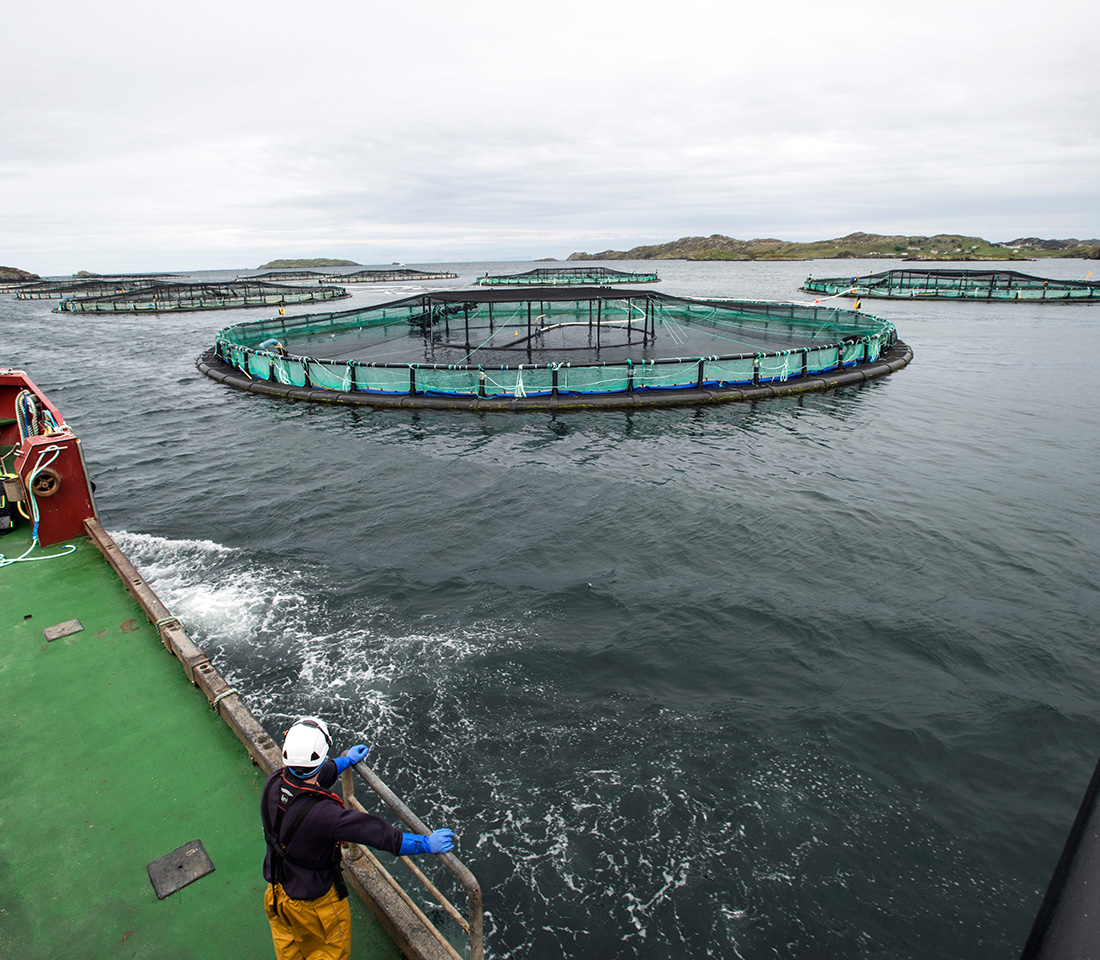
More than a million salmon have died at two adjacent Mowi Scotland fish farms.
The salmon farming firm said that the deaths, which took place at the company's faciltiies in Loch Seaforth, Scotland, are due to rising sea temperatures caused by El Niño, not poor fish welfare.
“This was an environmental event that the company worked tirelessly to mitigate and ensure surviving stock could be brought to market under the highest welfare conditions possible,” Mowi said in a statement.
“This marine heat wave led to warmer seawater temperatures causing exceptionally high levels of jellyfish," the company continued. "The impact of the jellyfish was to weaken the salmon and cause them to suffer from gill disease.”
The deaths are tracked by growth cycle, which in seawater salmon farming is generally a year-and-a-half. Since spring 2023, the beginning of the most recent cycle, more than a million salmon have died in Mowi’s Loch Seaforth operations.
Mowi emphasized that navigating environmental conditions, especially those accelerated by climate change, is one of the biggest challenges facing salmon farmers today. In order to maintain their welfare certifications, the company said they consistently “need to demonstrate the measures we have in place to deal with those challenges and aim to minimize potential harm to the fish in our care.”
The news comes amid an ongoing inquiry by the Scottish Parliament’s Rural Affairs and Island Committee into how Scotland’s salmon farming industry has changed over the last six years. In the face of this industry-wide scrutiny, which the salmon farming industry has alleged is the work of “extreme activists,” Mowi and other major players have defended their welfare practices.
As Mowi COO for Farming Scotland, Ireland, Faroes, and Atlantic Canada Ben Hadfield told the parliamentary committee, it’s just good business to raise healthy salmon.
“First and foremost, we’re farmers. We care about the welfare of fish. We care about the livestock under our care," Hadfield said in October. "But, we’re also businessmen and women, and the way you make money in salmon aquaculture is about growing great quality salmon and selling them for the highest price you can achieve.”
In early September, three farms, including one owned by Mowi in the Inner Hebrides’s Loch Alsh, were suspended by the RSPCA after an animal rights group secretly filmed animal mistreatment. At that time, Director of Animal Equality UK Abigail Penny said the footage was indicative of a systemic problem.
“It’s not just one bad farm – this is a widespread issue," Penny said.
The ongoing suspension means that salmon from the three farms can no longer be sold under the RSPCA Assured label.
In the case of Mowi's Loch Seaforth farms, however, both Mowi and the RSPCA confirmed that the RSPCA Assured accreditation remained in place.
A spokesperson for the RSPCA Assured program told SeafoodSource that "the unexpected loss of fish lives is deeply upsetting and not something anyone wants to happen. Loch Seaforth, which consists of three individual farms, suffered from disease outbreaks, which very sadly resulted in a high loss of fish lives."
"Some of the reasons for this were sadly beyond the farms’ control such as rising sea temperatures due to climate change, which results in an increased presence of naturally occurring jellyfish and other waterborne challenges such as algae and plankton."
“The RSPCA understands the challenges presented to all farmers," Mowi said in a statement. "The RSPCA Assured accreditation remained in place throughout this period and is still in place today.”
Mowi has featured in animal welfare complaints before. Prominent Scottish chefs and NGOs launched a boycott of farmed Scottish salmon in 2023 in response to undercover footage taken at Mowi farms, which NGO Wildfish used to argue that certifications like those offered by the Aquaculture Stewardship Council (ASC) and the RSPCA are often misleading to customers. As SeafoodSource reported then, leading industry group Seafood Scotland defended the sector’s practices and even touted improvements to fish farming nationally, such as the decline in antibiotic usage on salmon farms.
