






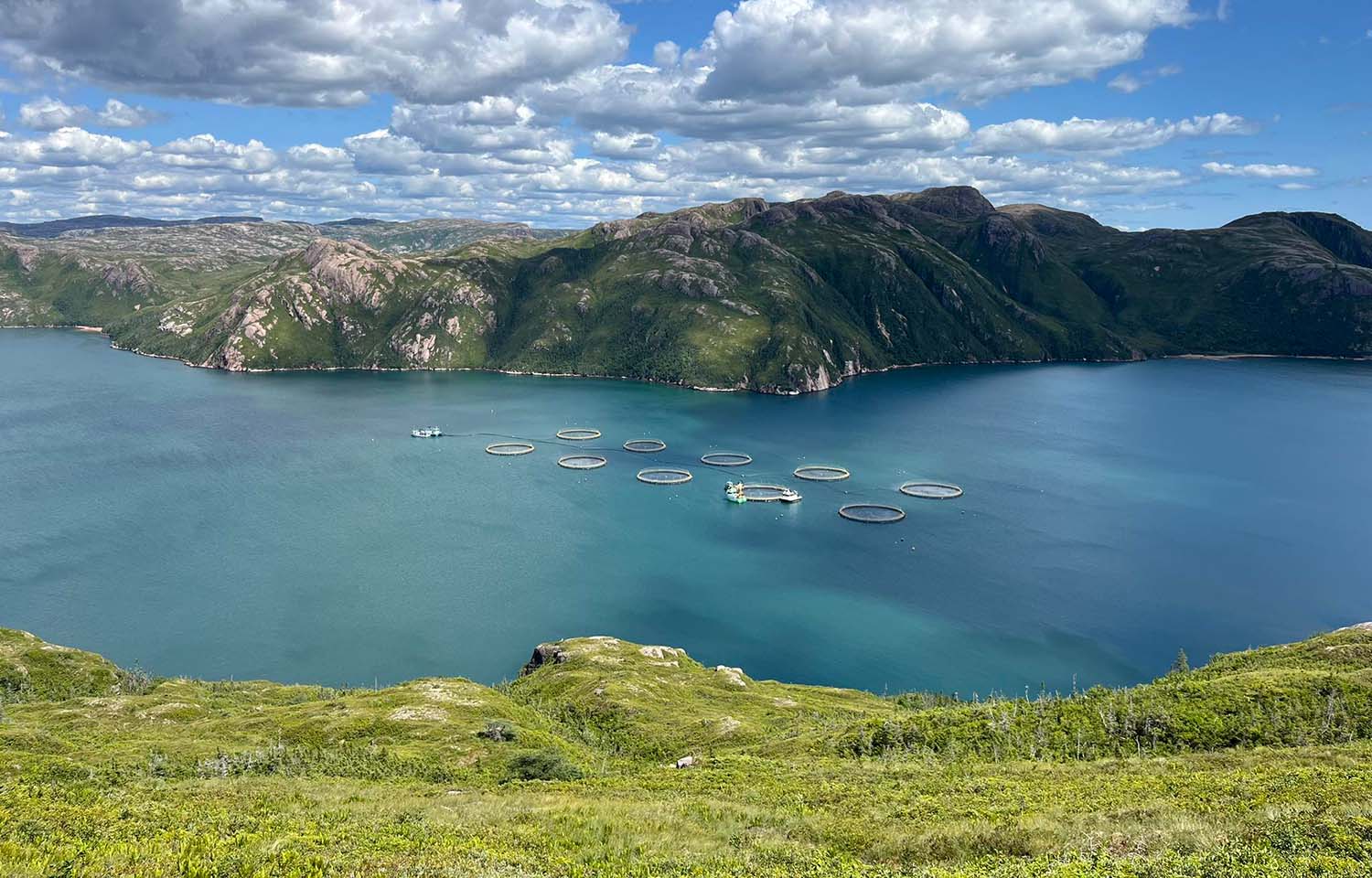
Mowi Canada East has reported another fish mortality of greater than 10 percent at two separate farms in the Southern coast of Newfoundland, Canada – the third mortality in Newfoundland this summer.
Mowi issued a release on its social media confirming the reportable mortality, citing repeat sea lice infestations amid a prolonged period of high water surface temperatures as the culprit. The company said extended periods of no rainfall or freshwater run-off into the fjords, and no winds to drive surface currents were to blame.
“These conditions are ideal for sea lice and other small marine animals to flourish,” the company said.
In public reports the company indicated that at one farm 238,246 fish were affected, and at the other 236,569 fish were effected, for a total impact of 474,815 salmon affected by the incident.
The company said the mortality was not a singular event, but a period of higher mortality over recent weeks as the company was treating the salmon using approved products to remove sea lice.
“It is the responsibility of all salmon farmers to reduce sea lice numbers by treating the animals in their care to ensure health and welfare standards are maintained at all times,” the company said.
Mowi said it informed the government of Newfoundland and Labrador as soon as it became aware of the cumulative numbers of deaths.
“This incident is a painful loss for the dedicated and hard-working staff who have cared for and reared these fish for the last year. The company wishes to thank these staff for their professionalism and effort,” the company said. “This incident is an economic loss to the company and comes after several years of successful incident free production, but 2025 is proving to be an environmentally tough year for everyone on Newfoundland.”
The mortality is the third incident this summer in Newfoundland. The company confirmed a mortality in July which affected 176,249 fish at the Little Burdock Cove site, due to decreased oxygen levels. Then the company reported an incident in late August which affected approximately 400,000 fish.
