






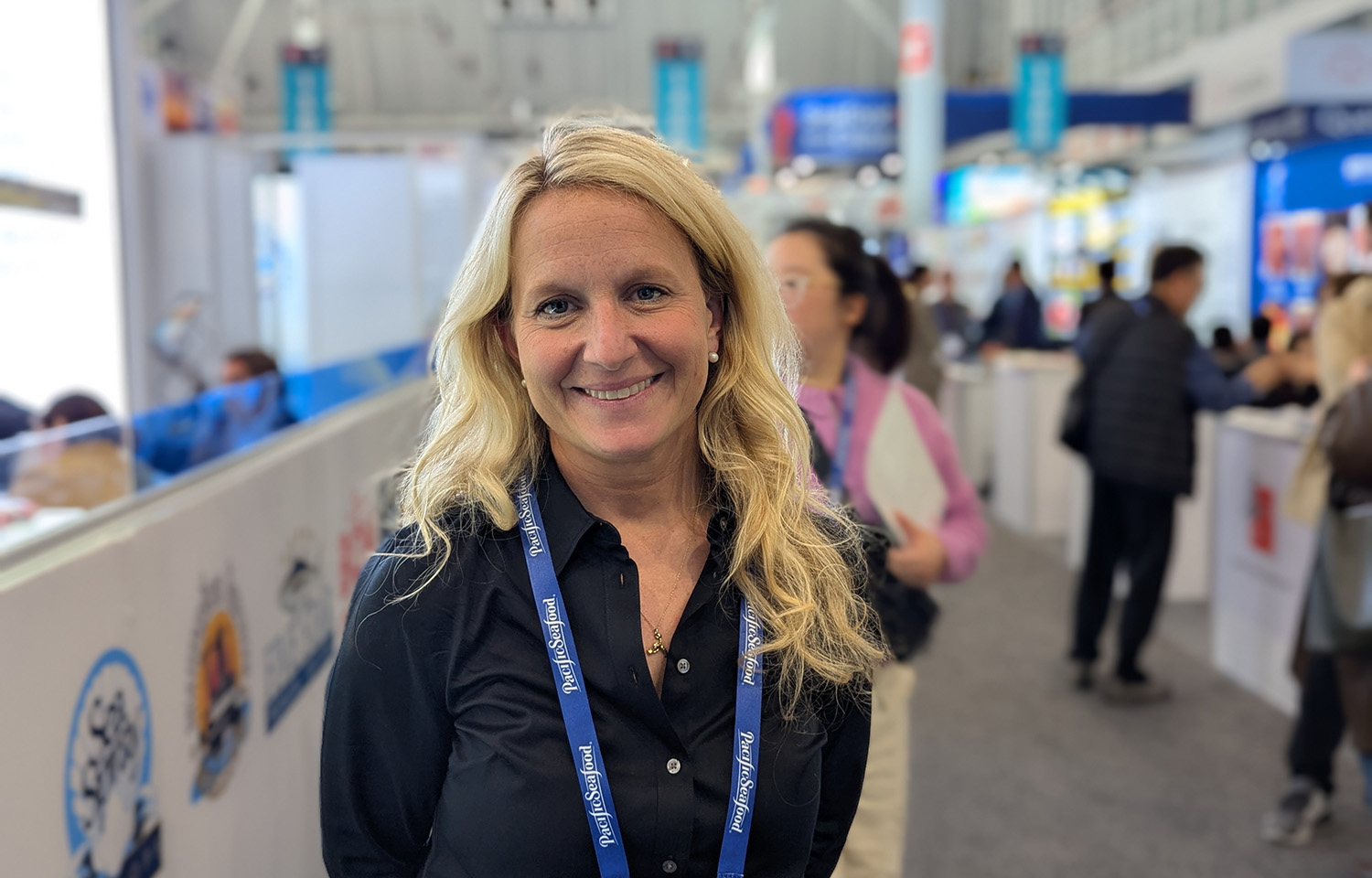
Pine Island Redfish recently harvested its first batch of red drum from its recirculating aquaculture system facility (RAS), and is now looking to work towards year-round production by expanding to a larger facility.
The company, founded by Megan Sorby, is working to develop a commercial land-based aquaculture facility for red drum on Pine Island, located in the U.S. state of Florida. Its first harvests were out of a small facility in Sarasota, Florida at a demonstration facility, and those first fish went on sale in Publix stores in the state.
Sorby told SeafoodSource during Seafood Expo North America – which ran from 16 to 18 March in Boston, Massachusetts – that featuring the company’s fish in Publix was a great “full circle” moment. During the Global Seafood Market Conference in January 2024, Publix Supermarkets Seafood Director Guy Pizzuti said he was interested in carrying the product” in the store when it was ready for sale.
“To be able to follow through on that, particularly with a partner that’s as strong as Publix, is really exciting,” Sorby said. “They’ve offered us an opportunity to put our brand out there, to connect with the retail customer, so they get the sense of not just ‘hey here’s the redfish you’re familiar with,’ but ‘here’s the story of how this redfish was grown.’”
The redfish farming is just one half of the company’s success – it has also helped contribute to repopulating mangrove forests along the Florida coast. Using the nutrients from the farm, Pine Island Redfish has fueled the growth of over 5,000 mangrove trees that are being planted at restoration projects across the Gulf coast in the next six months.
Currently, the demonstration facility is capable of producing 10 metric tons (MT) of red drum a year. Sorby said the company is in the process of working on a much larger 800 MT facility.
“Our site is fully permitted and shovel ready – so we’re in fundraising mode,” Sorby said.
The larger red drum facility will also allow Pine Island Redfish to raise more mangroves; Sorby said the expansion will allow it to raise around 100,000 trees.
“We do have foundational interest from corporate sponsors that are looking to support regenerative farming, and specifically coastal restoration efforts,” Sorby said.
Restoring coastal mangrove forests will also benefit wild red drum. The coastal habitat serves as a nursery environment for young fish – which are an important species for the economy on the Gulf coast. Sorby said the sport fishery is worth roughly USD 2 billion (EUR 1.8 billion), and the mangrove restoration can help ensure that it remains sustainable.
“Every mangrove that we put out is contributing to nursery habitat for the fish that we’re growing, and contributing to the continuation of that really powerful sport fishing industry,” Sorby.
For now, as it works on securing funding for its expansion, the company is focused on honing in its genetics to improve yields and the farmability of its red drum.
“Most producers that are doing alternative or new species need time, the market has to be patient enough so that we can diversify away from our core commodity species,” Sorby said. “It takes a lot of work.”
Selective breeding programs have to take multiple factors into account – it can’t just be for bigger fish.
“It’s for body condition, it’s for appearance, it’s also making sure that you don’t simultaneously select for things you don’t want, like aggression,” Sorby said. “But these are all things that you just adapt and grow over time.”
