





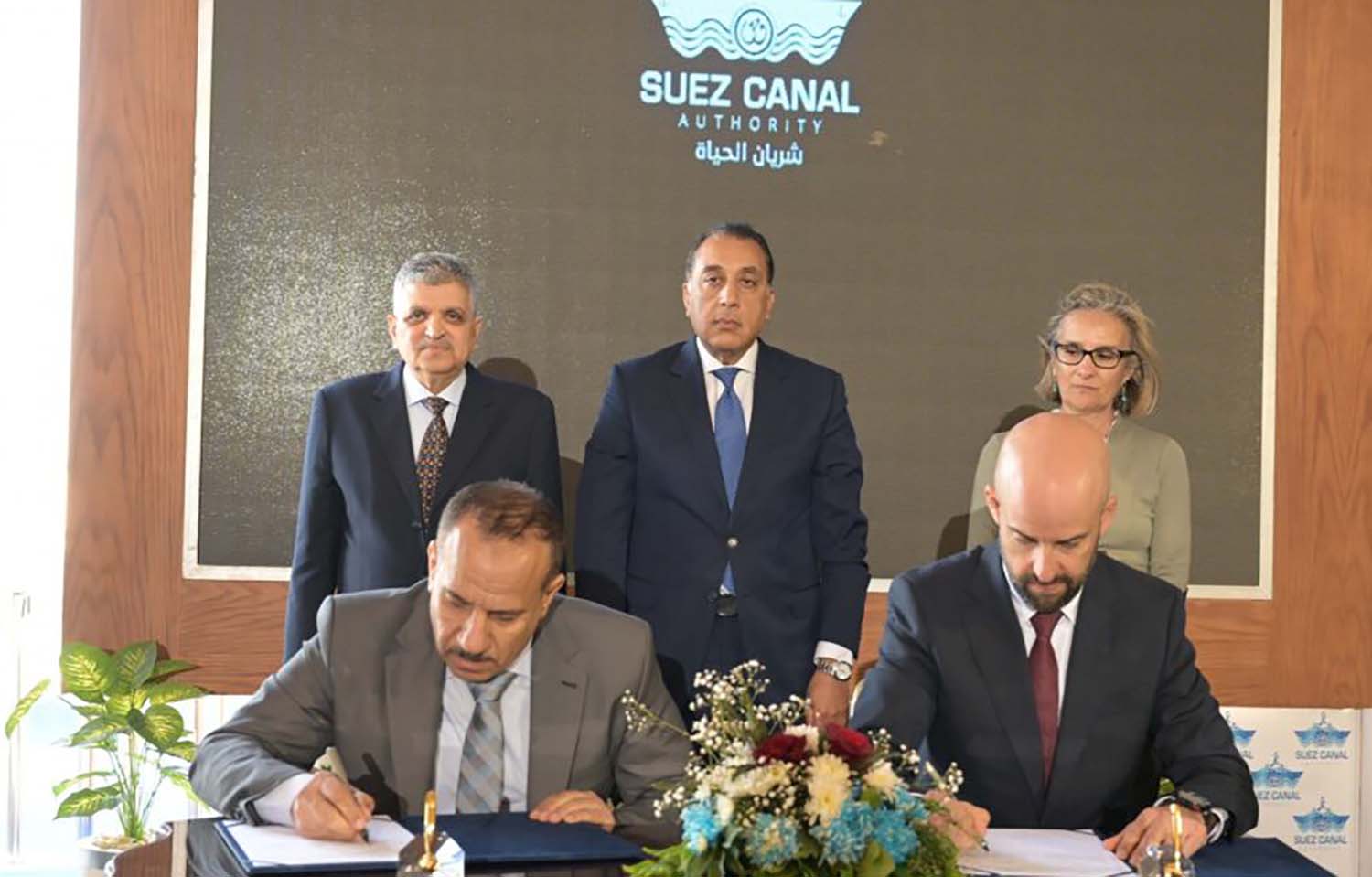
Santander, Spain-based animal health and wellness company Tejedor Lázaro Group has signed a memorandum of understanding (MoU) with Egypt’s Suez Canal Aquaculture Company (SCAC) to improve the output of the latter firm’s fish- and shrimp-farming operations.
Tejedor Lázaro Group, along with its affiliates the Derwent Group and the Dibaq Group, specializes in animal nutrition, fish farm management, aquafeed manufacturing, and engineering. SCAC is a 2015-founded subsidiary of the Suez Canal Authority, which manages and maintains the important shipping lane connecting the Mediterranean Sea to the Red Sea. SCAC’s farms, which raise bass, bream, shrimp, tilapia, and more, are located on the eastern bank of the canal near the city of El Qantara.
The MoU marks Tejedor’s entry into Egypt’s aquaculture market, where it hopes to lend its expertise to improve SCAC’s operations and increase national fish production in the process.
“Both parties are committed to achieving mutually beneficial objectives through the agreement, facilitating the implementation of aquaculture projects and the advancement of existing operations,” Suez Canal Authority Chairman Osama Rabie said.
After the signing of the agreement, Egyptian Prime Minister Mostafa Madbouly said that the MoU epitomizes the Egyptian government’s commitment to developing partnerships with international organizations – both in the public and private sectors – to draw on their expertise across a range of industries.
With Tejedor’s expertise, the MoU aims to build upon the momentum already built up in the North African nation’s fishing and aquaculture industries, which have “made tangible progress in recent years,” as well as improve the country’s food security, Madbouly further explained.
According to the U.S. Department of Agriculture, Egypt’s annual fish production totals around 2.2 million metric tons (MT), with aquaculture’s share at 1.7 million MT.
The country has set goals to get to 3 million MT annually, but domestic demand for seafood has been negatively affected by heavy inflation in recent years. Additionally, Egyptian aquaculture operations have been affected by water scarcity, difficulty in applying biosecurity measures, a lack of processing facilities, a need for more packing and freezing capacity, and fish diseases and pathogens.
However, the USDA predicts that “population growth and gradual economic recovery” will be enough to combat the issue of inflation, and partnerships like the one between SCAC and Tejedor aim to address the latter issues and establish safe, high-quality operations.
