


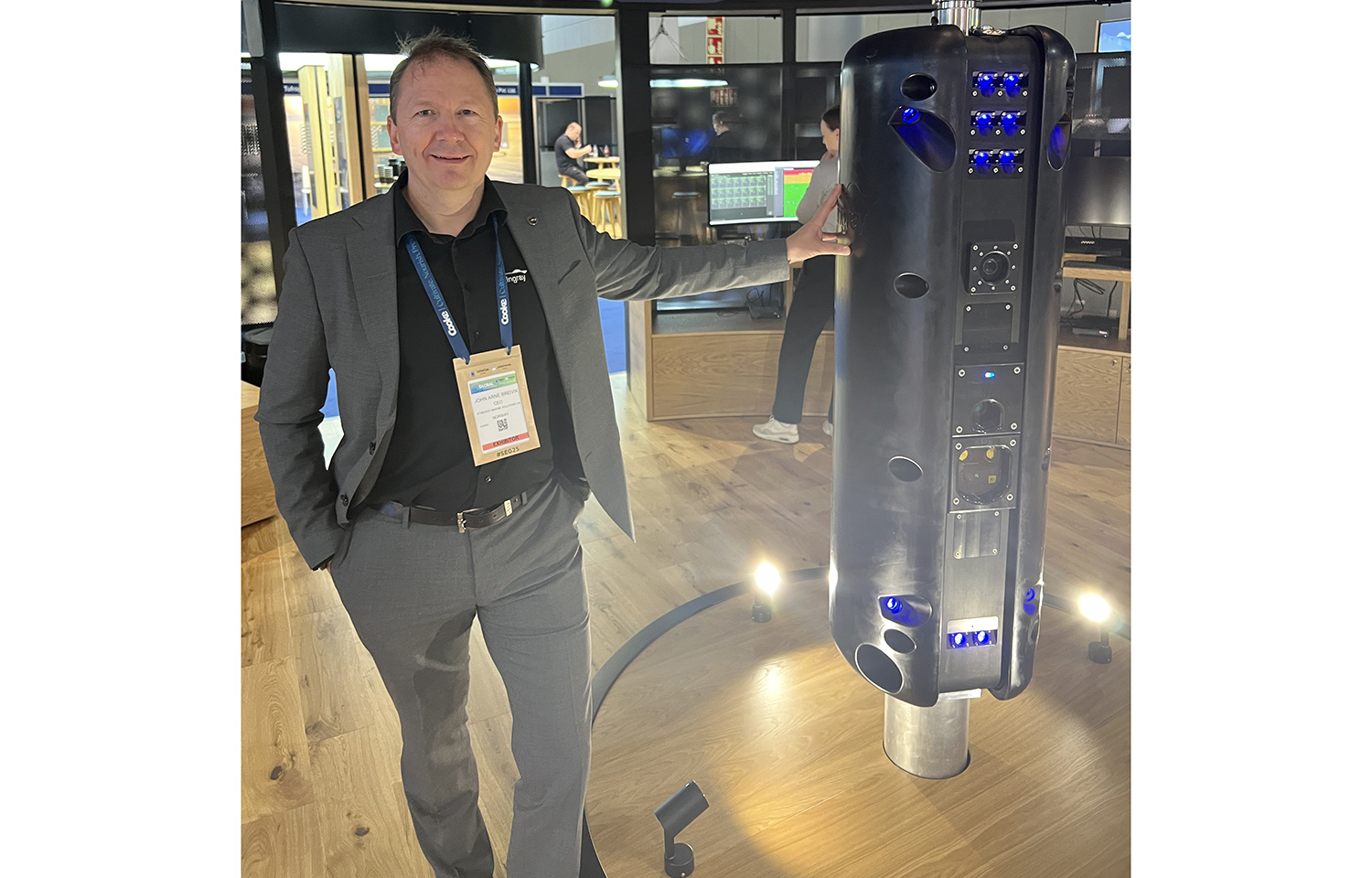
Stingray Marine Solutions CEO John Arne Breivik has watched Norway’s aquaculture industry grow from simply being an extra revenue stream for livestock farmers to an industry worth around NOK 75 billion (USD 7.4 billion, EUR 6.4 billion) annually.
The rapid growth of the country’s aquaculture sector brought along equally swift advancements in technology to meet its shifting needs, and from a young age, Breivik became fascinated in the technological developments taking place in both the wild-catch and aquaculture sectors, as well as other industries across the world.
“I grew up on a farm on the northwest coast of Norway where we were doing both livestock and fishing,” Breivik told SeafoodSource. “My two grandfathers would take me out to sea, so I grew up around the shipyards, where I saw a lot of innovation in underwater technology like pipe scanners. I have always been interested in technology; I’ve had a computer since 1981 and had the first mobile phone when it came along.”
Combining his passion for technology with his deep understanding of the pain points of seafood industry stakeholders, Breivik co-founded Oslo-based Stingray in 2010, aiming to provide Norway’s aquaculturists with an innovative solution to one of their biggest biological challenges: sea lice.
Stingray offers a delousing laser system for salmon and trout operations, and soon after the company’s founding, Breivik began selling the industry on using his system to take a proactive approach toward controlling sea lice, instead of reacting when an outbreak occurs.
“We saw a niche opportunity early on to help farmers take care of sea lice in a gentle way instead of handling fish [aggressively],” he said. “Instead of implementing a lot of reactive treatments and trying to decrease the number of sea lice after they become too high, the Stingray system helps to control them at all times by targeting each sea lice sitting on fish, even down to lice just 2 millimeters in size. When you don’t use reactive treatments or have to manually handle fish, you don’t need to starve them and take away their feed for multiple days. Being proactive allows fish to feed and grow continuously.”
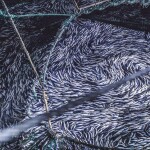
That sales pitch has paid off for the firm, as there are now more than 2,000 Stingray laser systems deployed along the coasts of Norway and Iceland. Stingray recommends between two and four systems per net pen, depending on the size of the pen, and each system carries seven cameras. Those 14,000 cameras currently monitor and protect around 92 million salmon and trout across the region, Breivik said, which is equivalent to around 20 percent to 25 percent of all the fish farmed by Norway’s aquaculture industry.
The firm projects its annual sales turnover to total roughly NOK 1.4 billion (USD 138 million, EUR 119 million) this year and spike to around NOK 2.3 billion (USD 227 million, EUR 196 million) in 2026.
As the company – which employs 230 employees ranging in expertise from software to engineering to fish welfare – has grown, it has received more data confirming the benefits of its system.
“A laser site compared to a non-laser site using reactive treatments nets 0.5 to 1 kilogram extra growth out of each fish during the same production time, which pays off the cost of the laser … within 12 to 15 months on average,” Breivik said, adding that lasers typically last for four years but, with proper care and maintenance, can last as long as five or six years.
Breivik acknowledged that the salmon-farming industry has struggled with high mortality levels, reaching as high as 16 percent in some years; however, he said sites using Stingray lasers suffer mortality rates of only 3.5 percent to 6 percent on average.
Even at that highest mortality average, “that means 150,000 more metric tons and 750 million more meals of salmon every year,” he said.
Besides the laser itself, the system comes with a digital customer portal in which farmers can monitor the growth of their fish, as well as track other welfare biometrics and count sea lice to accurately determine the severity of an outbreak in a particular pen.
Though the company has been flirting with the idea of international expansion for years, Breivik said that Stingray is close to getting lasers in the waters of the Faroe Islands and Scotland. Collaboration with firms operating in North and South America is a long-term goal, too, he added.
