




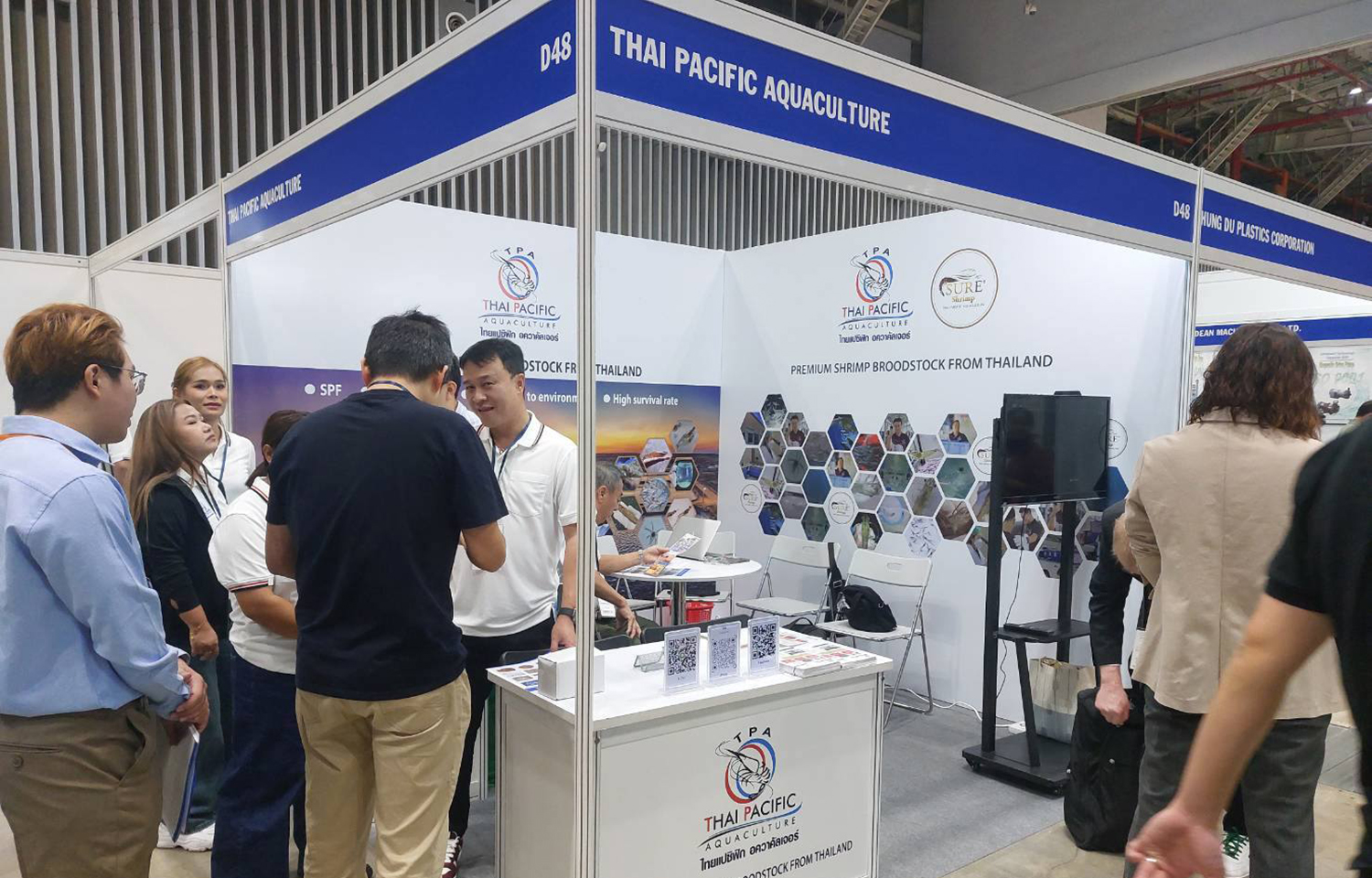
Thai Pacific Aquaculture, PC Farm, and Unity Agro all told SeafoodSource at the 2026 VietShrimp Asia and Aquaculture Vietnam show, which took place in Ho Chi Minh City, Vietnam, from 18 to 20 March, that they are looking outside of their domestic market of Thailand to find growth opportunities.
More specifically, they said that shrimp genetics, tilapia broodstock, and water treatment solutions all have room to grow in Vietnam’s aquaculture sector.
Thai Pacific Aquaculture is entering the Vietnamese market with a specific emphasis on high-growth shrimp varieties. After 14 years of broodstock development and 40 years of shrimp hatchery experience in Thailand, the company is adapting its strategy to meet local preferences in Vietnam.
“We are confident in our hatchery and our genetic lines, which we have already developed for 14 years. The feedback in Thailand has been very good,” Thai Pacific Aquaculture CEO Aumpon Sathitsilp told SeafoodSource. “Although the market [in Vietnam] is strong and highly competitive, we are confident that we can compete effectively.”
Unlike the Thai market, which emphasizes survival and robustness, Sathitsilp said that Vietnam’s competitive edge lies in the speed of its production cycles. Thai Pacific Aquaculture’s current line balances growth with robustness, aiming to offer a middle ground for farmers in high-intensity areas.
Sathitsilp confirmed that the company has no immediate plans to build its own hatchery in Vietnam; instead, its strategy involves partnering with local hatcheries that will use Thai Pacific Aquaculture broodstock to produce post larvae (PL) for the domestic market. For at least the next two to three years, the company will remain focused on broodstock supply and the search for the right local partners. Already, the company is in discussions with a few partners in Vietnam and is scheduled to visit a hatchery in Vietnam to explore cooperation opportunities.
Thai Pacific Aquaculture is eyeing a PL market share of 5 percent to 10 percent in Vietnam, with Sathitsilp adding that while the Vietnamese market is significantly larger than Thailand’s, the timeline for reaching this goal remains flexible as the company navigates specific challenges within the local landscape.
Though Vietnam has unique challenges, it also has unique benefits, with Sathitsilp saying Vietnam has strong government support, competitive pricing, and superior aquafeed quality compared to production in Thailand.
In the tilapia sector, PC Farm is positioning its broodstock to support Vietnam's growing whitefish export industry. The company’s primary value proposition is a fast-growing strain that can potentially reach harvest size in half the time of regular tilapia.
Its expansion comes as Vietnamese producers, including industry giants like Navico, aggressively ramp up tilapia exports to major markets such as the U.S. and Brazil.
"I cannot speak for the entire Vietnamese industry, but we have observed that Vietnamese aquaculture is developing very rapidly," PC Farm General Manager Thipprapa Mahasaksiri told SeafoodSource. "Our main strength lies in our tilapia strains. We believe we have the best Thai broodstock, offering the fastest growth.”
PC Farm currently maintains a presence through a regular distributor in Northern Vietnam, as well as a consistent, large-scale buyer in the south, but it is looking to sell more tilapia broodstock to the country, which Mahasaksiri said will help lower feed costs and increase the frequency of harvests.
“I know that if Vietnamese producers see the performance of our strains, they will want to take this opportunity,” Mahasaksiri said.
Meanwhile, Unity Agro Intertrade is moving to consolidate its position in Vietnam. The company provides a comprehensive range of aquaculture solutions including immune stimulants, multi-enzyme additives, probiotics, herbal disease controls, and environmental conditioners specifically designed to optimize shrimp health and pond water quality.
Unity Agro Intertrade currently operates through six distributors in Vietnam and remains open to new partnerships, though the firm emphasized its strategy prioritizes quality over quantity.
To that end, Unity Agro requires its partners to be large-scale entities possessing methodical and professional distribution systems to ensure technical standards are met, Unity Agro Intertrade Vice President Patthunya Chanothan told SeafoodSource.
The company said the Vietnamese market has immense potential for foreign investment, stable development within its product segments, and open-mindedness of local farmers toward new technologies.
“The future of the Vietnamese shrimp industry is particularly bright due to its steady development and the proactive adoption of innovation by local farmers,” Chanothan said.
