




Thai Union Feedmill (TFM) has entered a strategic partnership to modernize Bangladesh’s aquaculture sector, aiming to scale up production of high-value species, the company said in a statement on 10 February.
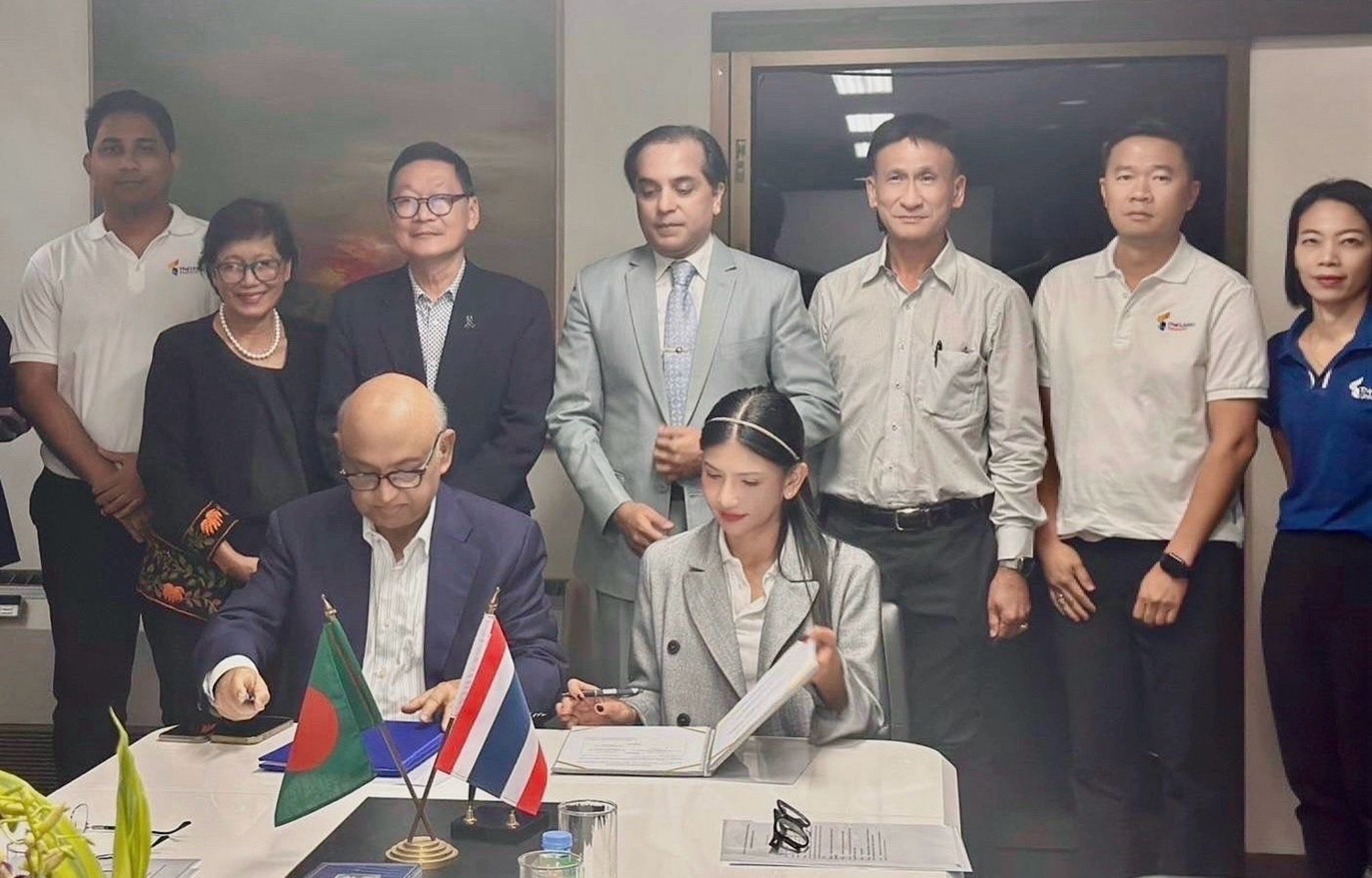
The Thai aquafeed manufacturer and distributor signed a memorandum of understanding (MoU) with the Bangladesh Shrimp and Fish Foundation (BSFF) to transfer technology and Thailand’s internationally recognized farming standards to the South Asian nation, TFM said.
The agreement focuses on the development of whiteleg shrimp, black tiger shrimp, giant freshwater prawn, and barramundi.
“This collaboration is not only an expansion of TFM’s business opportunities but also a testament to the global recognition of Thailand’s aquaculture standards. We firmly believe that sharing knowledge and expertise will lead to positive transformation in the aquaculture industries of both countries,” TFM Director of Feed Commercial Hathai Nantathong said during the MoU signing ceremony.
BSFF added that transitioning to modern sea bass farming offers a pathway for coastal economic growth and export diversification alongside traditional shrimp farming in Bangladesh. By leveraging Thailand’s commercial expertise-spanning advanced hatchery techniques, formulated feeds, and stringent biosecurity, Bangladesh can reduce its dependence on feed comprising “trash fish” as a main ingredient. This shift is expected to boost yields and profitability while bringing local production in line with international sustainability benchmarks, according to Bangladesh’s The Business Standard.
The latest collaboration came after a successful pilot project conducted between 2023 and 2024 at ATI Aqua Farm in Cox’s Bazar, Bangladesh. Using TFM’s premium fingerlings and specialized feeds, the pilot achieved a yield of approximately 4.3 metric tons (MT) of sea bass per acre with a feed conversion ratio (FCR) of 1.2, indicating high efficiency in turning feed into fish biomass.
Under the new three-year roadmap between the two organizations, TFM and BSFF will partner with Bangladesh’s National Institute of Biotechnology (NIB) to pioneer genetically suitable sea bass strains and set up domestic hatchery capacity. The initiative also focuses on cultivating a specialized workforce to manage the full value chain, spanning hatchery breeding, grow-out operations, factory processing, and global distribution, The Business Standard reported.
In the first year, research and demonstration pilots will be launched at sites in Teknaf and Khulna, Bangladesh. The main aim is to strengthen the aquaculture value chain by developing expertise in hatchery and processing operations, ultimately integrating Bangladeshi farmers into global trade networks.
Bangladesh possesses a 710-kilometer coastline and up to 250,000 hectares of brackish water area, including 155,000 hectares for shrimp farming.
