

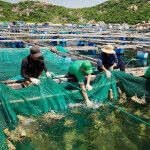



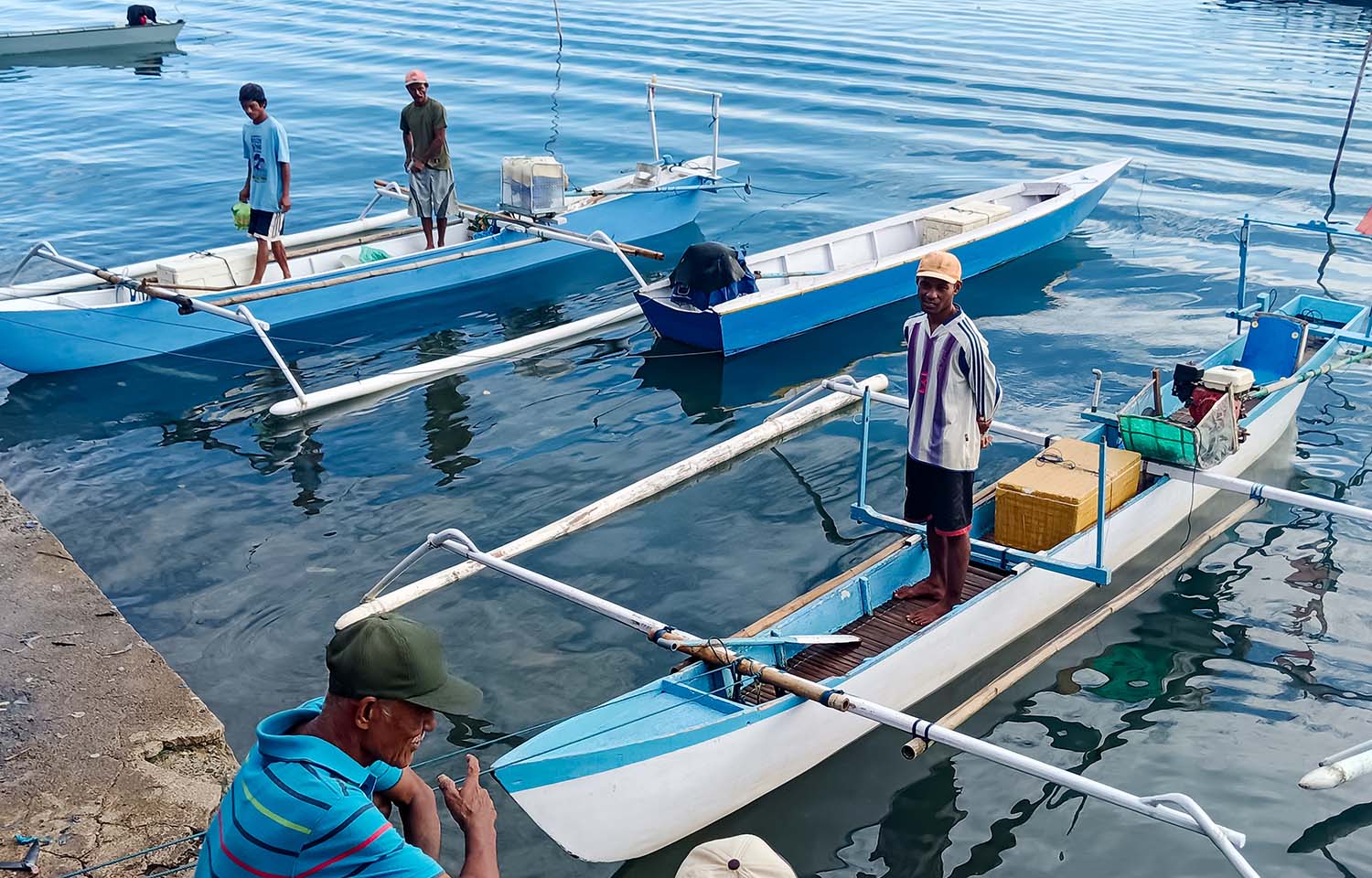
Despite representing half of wild-caught landings globally, small-scale fisheries continue to struggle to access larger markets.
The obstacles are multi-fold, according to the SSF Tech and Markets Intermediary Collective. Small-scale fisheries often face two major bottlenecks: a lack of traceable, verifiable data to confirm they are conforming to regulatory and buyer requirements; and inadequate infrastructure such as water treatment, cold chain facilities, and reliable electricity, all necessary to deliver a product to international markets.
Those bottlenecks and the lack of access to international markets means most small-scale fishers have few sales options, forcing them to accept low prices for their catch. That, in turn, can lead those fishers to extract more resources than the fish stocks they rely on can sustain as they compensate for low prices with higher volumes.
A solution, according to Momo Kochen, a coordinator for The SSF Tech and Markets Intermediary Collective, is access to better financing opportunities and mechanisms which can help remove these bottlenecks for supply chains and increase value for producers and fishing communities.
“Small-scale fishers contribute roughly 50 percent of the world’s seafood yet they remain chronically undercapitalized, receiving less than 1 percent of global ocean investment,” Kochen said. “This imbalance reflects deeper structural issues: market exclusion, power asymmetries along supply chains, and persistent barriers that prevent small-scale fishers from participating in higher-value, traceable, or export-linked markets.”
Those barriers can exist even when small-scale fishers get access to the market, she said.
“Even when market linkages are established, downstream actors capture the majority of the value, while upstream producers, who bear the ecological risk and operational burden, retain only a fraction of it,” they said.
Kochen points to The World Bank’s “Sunken Billions Revisited” report which estimates these inefficiencies contribute to some USD 83 billion (EUR 72 billion) in lost economic benefits annually. The human cost of this imbalance is stark: over 5.8 million fishers survive on less than USD 1.00 (EUR 0.87) per day, and 97 percent of the 500 million people who rely on fisheries for their livelihoods live in developing countries.
The SSF Tech and Markets Intermediary Collective is working to bring together an increasingly influential model of social enterprise – Route-to-Market (RTM) organizations, which have been working to design responsible production and market development models for small-scale fisheries to remove supply chain bottlenecks and increase value for fishers.
The organizations have already worked to build responsible and economically sustainable enterprises in small-scale fisheries, and examples of the work can be found in Indonesia, Mexico, South Africa, Peru, Costa Rica and many other countries. The success of these fisheries and the models for improvement make both more attractive to outside capital.
“SSF intermediaries, or Route-to-Market organizations, are positioned at the first mile of the value chain, they aggregate catch, stabilize volumes, ensure quality and traceability, integrate technology, build decentralized cold-chain and logistics, and support co-operative development,” Serge Raemaekers, the executive director of ABALOBI, said.
ABALOBI is a South-Africa based organization dedicated to assisting small-scale fisheries through financial inclusion, community infrastructure, and data-driven fisheries rebuilding.
Raemaekers said RTMs also help fishers overcome market barriers through “achieving consistent supply, implementing quality improvements, developing products in line with market demand, adopting sustainability practices, documenting captures and landings, negotiating better prices, accessing formal buyers, and building financial histories.”
RTMs also have experience financing small-scale fisheries to help implement programs for digital payments, microloans, working capital, savings mechanisms, and access to insurance products. Along with identifying and refining models that work in the field, RTMs have helped acclimate fishers to working with new financial systems through their understanding of the type of finance ecosystem necessary to drive change in small-scale fisheries. That experience and the relationships they build with fishing communities give them the ability to assess and reduce risk, support repayment, and deploy capital where it has the greatest social and economic impact.
Through this work and experience, the Collective has developed a strong prospectus for investment in small-scale fisheries – a portfolio of successful ventures turning around distressed fisheries, the design and implementation of new and innovative models across the globe, and a field-tested set of financing and financial due diligence mechanisms.
Still, another major barrier to attracting new investment remains that’s inherent to the size of the fisheries: scale.
Addressing financing gaps for small-scale fisheries can be difficult to solve fishery by fishery. Small-scale fisheries rarely have the capacity or expertise to attract capital, especially from blended financing and similar models that involve multiple partners and flows of capital. From an investor point of view, a single small-scale fishery does not represent the scale of projects they are looking for.
“For many small-scale fisheries, USD 1 million (EUR 870,000) would be a big loan. For many investors, USD 20 million (USD 17.5 million) is a small loan,” Kochen said. “Can we create a managed fund for small-scale fisheries with built in due diligence and verification to create a ‘plug and play’ opportunity for investors, while also creating efficiencies for the fisheries being invested in – pooling fish for consistent delivery to market, contracts for longer-term purchasing relationships, multi-fishery technology purchases to lower costs? We certainly think so.”
Such a fund would not emerge in a vacuum. A growing set of blue finance instruments is taking shape for wild-capture fisheries – improvement funds, loan guarantee facilities, and outcome-linked mechanisms among them. Most existing mechanisms are designed to deploy repayable capital into enterprises that are already investment-ready. The Collective is focused on building around small-scale fisheries and their Route-to-Market intermediaries, combining blended capital with embedded technical assistance to build the pipeline of investable enterprises that downstream financing requires.
While RTM organizations and the Collective have created a huge opportunity for seafood supply chains by making small-scale fisheries more investible, supply chain companies and retailers have an important role to play in making small-scale fisheries more investor friendly.
“Traditional seafood suppliers often focus on high-demand, easily sourced species such as imported, farmed or industrially caught seafood. They run lean inventory models and engage with small-scale fishers only opportunistically, offering low prices when markets are flooded,” Raemaekers said. “This entrenched model leaves small-scale fishers significantly disadvantaged. Meanwhile, the growing demand for full-chain traceability and certifications, though crucial for documenting and verifying sustainability, places further strain on fishers, who often lack the financial and administrative capacity to meet these requirements.”
As small-scale fisheries ramp up traceability and verification, Raemaekers and Kochen said supply chains need to ensure they are not unnecessarily excluding opportunities to increase assured supply from small-scale fishers due to excessive or unnecessary requirements on producers. Buyers can go further still: longer-term purchase commitments and offtake agreements are among the most powerful de-risking instruments available, turning demand signals into the very thing that makes small-scale fisheries financeable.
Attracting more financing is a big challenge, but it’s a challenge Raemakers said is solvable and worth solving.
“The most powerful de-risking instrument in this space isn’t a guarantee or a first-loss tranche – it’s a buyer willing to commit to a longer-term purchasing relationship,” they said. “If supply chains want assured, traceable wild-caught supply, the fastest way to get it is to help make small-scale fisheries financeable.”
SeafoodSource will be hosting a webinar on this topic, Net Gains: Financing and Traceability for Small-Scale Fisheries, at 2 p.m. to 3 p.m. ET on 29 July, 2026.
