



Oyster consumption rates are on the rise among the British public, but farmers are still navigating turbulent waters, as they have had to continually deal with, among other issues, negative consumer perceptions.
“When people hear that water companies are dumping sewage into rivers, they assume it ends up in the oyster,” Colchester Oyster Fishery CEO Paul Harding told SeafoodSource. “Even though oysters filter and clean the water, perception is everything. If you wouldn’t swim in the river, why would you eat something from it? Popularity is rising, but people are still wary of oysters from rivers. Media coverage and historical concerns about pollution continue to cast a shadow."
Such opinions have had real economic consequences in the past.
After the Covid-19 pandemic, norovirus levels spiked, and although few cases were linked to oysters, Colchester sales dropped by around 40 percent, according to Harding, who stressed that oysters themselves are not the vector.
“Oysters don’t give us norovirus; we give it to them. But, they always get the blame,” he said.
To restore consumer confidence and keep oysters on menus across England, producers have started to look toward technological solutions. Colchester Oyster Fishery has invested in high-pressure processing (HPP), a technique commonly used in the food industry for products like orange juice and guacamole. This process exposes oysters to 6,000 bars of pressure – roughly six times the pressure than at the deepest point in the ocean.
The result, Harding explained, is that any norovirus is eliminated, guaranteeing consumer safety. At the same time, the meat is released from the shell easily, making the oyster simple to open.
"We now supply oysters still in the shell but fully safe to eat and easy to serve," he said. "Restaurants don’t need knife skills, and food alerts no longer threaten sales."
The HPP oysters have already made a significant impact, according to Harding.
In just over a year, the Mersea Island, U.K.-based company has processed over 500,000 oysters without a single reported illness, and despite the oysters being technically dead after processing, Harding insists the taste remains intact.
“Because the process kills the oyster instantly, the product becomes a ready-to-eat, raw product rather than a live shellfish. We give the product a seven-day shelf life when stored chilled,” Harding said.
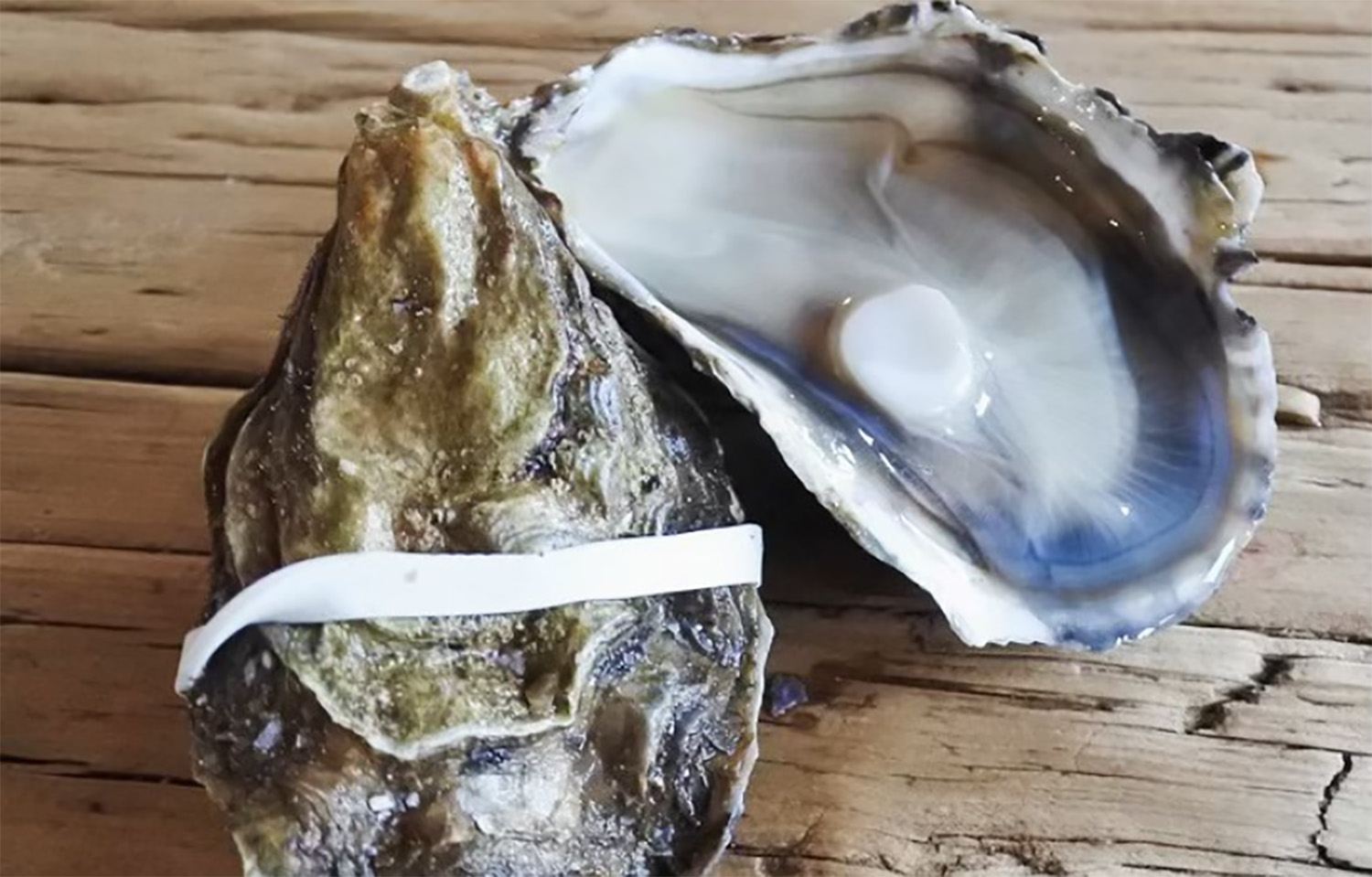
This solution has led to a new branded offering from Colchester – pre-shucked Colchester Pyefleet Oysters, supplied fresh and raw. The Pyefleet oyster shells are secured with elastic bands so restaurants or caterers can simply cut the band and serve the oyster.
“Finding a machine that can put elastic bands onto oysters at scale turned out to be harder than expected; the machine we use was actually designed in the Netherlands for putting bands on tulips,” Harding said.
Colchester Oyster Fishery is currently the only company in the United Kingdom using the HPP process for oysters; according to Harding, a likely reason for this is cost. The machine itself, which is about the size of a small bus, costs about GBP 3 million (USD 4 million, EUR 3.5 million), and can require intensive maintenance.
Harding maintains that to capitalize on the popularity resurgence of oysters, the U.K. oyster sector must stay one step ahead of consumer expectations and regulatory challenges. Through technological innovation and careful management, producers can protect both their product and their market, he said.
"The challenges are constant, but if we adapt and innovate, there’s always a market for quality oysters," Harding said.
Another major threat to the sector is government policy, according to Shellfish Association of Great Britain Director Davis Jarrad. This, he said, has been the primary driver behind a roughly 10 percent annual reduction in U.K. oyster production in recent years.
“Pacific oysters are classified as an invasive non-native species, even though they were introduced by the U.K. government in the 1960s,” Jarrad said. “At the time, it was believed they would not reproduce in British waters. However, climate change and warming seas now allow them to spawn successfully. Larvae can travel up to 200 miles, meaning the species will continue spreading regardless of domestic policy. Government modeling suggests they could reach as far north as the Faroe Islands by 2050.”
Yet, licensing restrictions continue to limit farming. In some areas, such as the Duchy of Cornwall estate waters, licenses for Pacific oyster farming are no longer being renewed, forcing some businesses to close.
According to Jarrad, this approach risks destroying a sustainable industry without solving any ecological issue since wild oysters will remain regardless. He also insisted the United Kingdom has the environmental conditions to support a much larger oyster sector.
At present, though, its production remains extremely small compared with the volumes of centuries past and with European competitors today – just 3,000 metric tons (MT), or approximately 24 million oysters, compared to France’s 120,000 MT, or roughly 1.2 billion oysters.
“We have similar hydrographical conditions and a much bigger coastline,” Jarrad said. “The reality is that the U.K. could be doing much more, and oysters are probably one of the most environmentally friendly forms of protein production.”
