




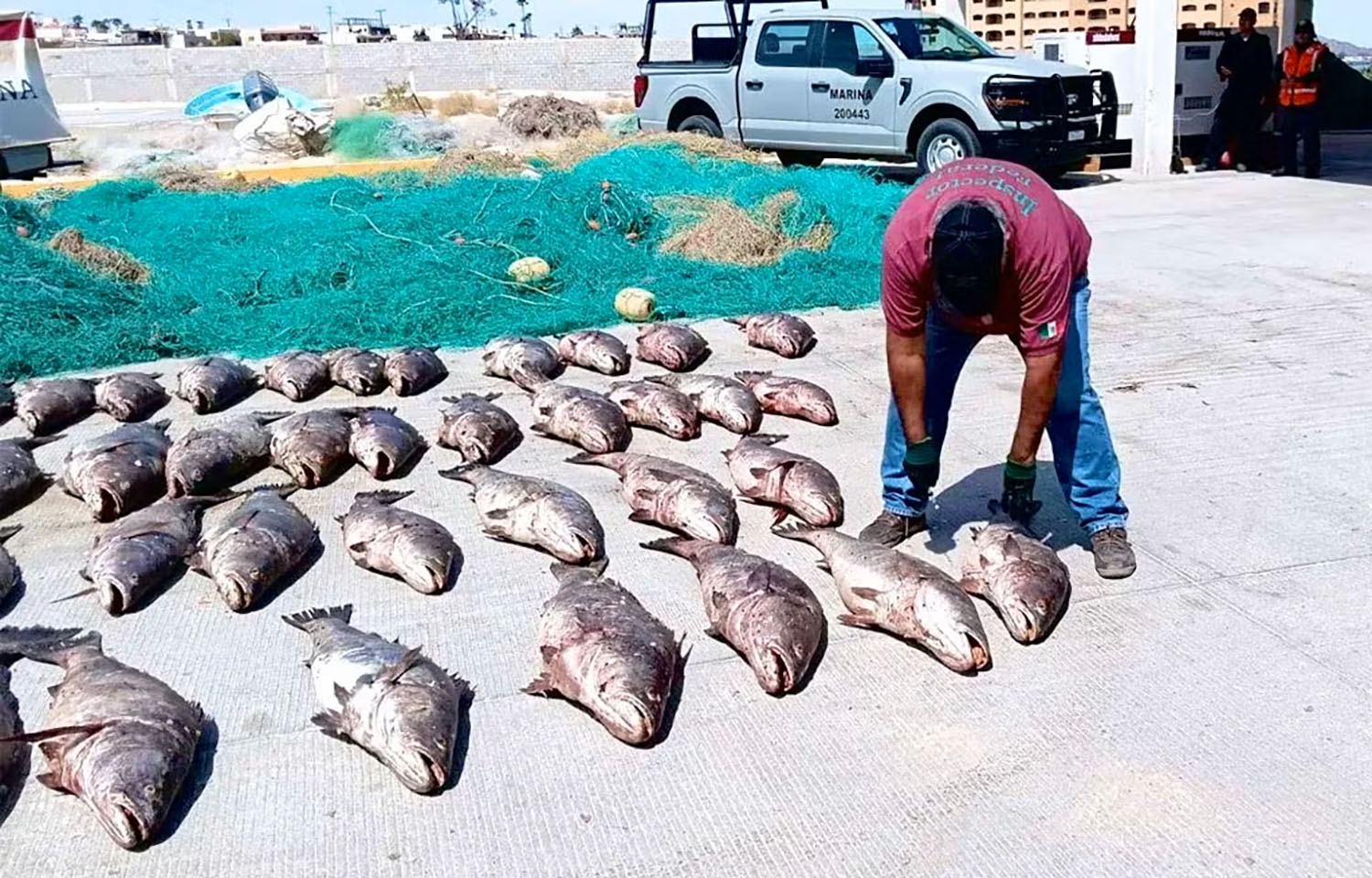
The swim bladder of the totoaba – a fish native to Mexico’s Gulf of California – can fetch as much as USD 80,000 (EUR 69,300) per kilogram in Chinese markets, where it’s prized as a luxury delicacy, investment, or status gift.
The lure of such profits has driven a sizable black market for the product that is largely controlled by the Sinaloa Cartel along the west coast of Mexico, fueling violence, corruption, and ecological destruction.
Researchers at the University of California at Santa Barbara (UCSB) and AgroParisTech recently released a study suggesting a way to mitigate the issue: a legal market for farmed totoaba.
Their findings, published in Nature Partner Journals’ Ocean Sustainability, suggest that such a market could reduce the incentive for illegal fishing, potentially benefiting both conservation and communities caught in the crossfire. It also said that aquaculture may have a better opportunity to succeed where bans and enforcement on wild capture have been unable to curb poaching.
The totoaba has been listed as endangered under the Convention on International Trade in Endangered Species (CITES) agreement for decades, making all international trade of the species illegal. Yet, the fish’s swim bladder – a buoyancy organ – remains among the world’s most expensive wildlife products, “making it worth more than gold or cocaine,” marine biologist and study co-author Julia Lawson told UCSB newspaper The Current.
Though totoaba populations have appeared relatively stable in recent assessments, according to the study, the collateral damage on their illegal trade has been catastrophic.
The gillnets used by poachers to catch totoaba can also entangle vaquita, an extremely rare porpoise that lives only in the Upper Gulf of California. Scientists estimate that there are fewer than 10 individual vaquita left in the wild and are on the brink of extinction.
Through the UCSB research project, Lawson, who earned her doctorate from UCSB’s Bren School of Environmental Science and Management, and her co-lead author Simon Jean, an economist at AgroParisTech, set out to understand whether aquaculture could shift this worrying trend.
As part of the project, several graduate students from the Bren School traveled to Mexico to interview fishermen and farm operators, collecting information on bribes, wages, fuel costs, and equipment. They also tracked growth rates of totoaba in captivity compared to wild populations and analyzed government seizure data to estimate market prices.
“I was really proud of how rigorous our data are,” Lawson said. “It’s unusual in an illegal trade to have such detailed information.”
Combining biological and economic data, the researchers built a model to test how the market might respond to legalized farming and concluded that aquaculture could curb poaching – but only if four key conditions are met.
Poaching must remain costly, while farming must be cheaper or equally competitive, according to the study, and consumers must consider swim bladders from wild and farmed totoaba as equivalent. Additionally, demand must not spike with legalization.
“If it’s free to poach a species, farming is never going to work,” Lawson noted.
The model included in the research showed that farming is already cheaper than poaching, and with a USD 6 million (EUR 5.2 million) annual subsidy, the Mexican government could keep aquaculture costs down, making it profitable and stable while relieving pressure on wild populations, according to Jean.
“This subsidy point relates to the case where the cartel would want to compete by cutting prices and flooding the market. We show that under such a subsidy, the farming costs would be pushed lower and, substantially lower, the likelihood of the cartel engaging in such a strategy,” Jean told SeafoodSource.
Still, the researchers warn any such move would require CITES oversight, and while there is precedent for allowing trade in farmed versions of endangered species, regulators often require clear labeling, which could discourage consumers who prefer wild-caught products.
“CITES plays a pivotal role and would continue to play a pivotal role under the market-based intervention we explored,” Lawson told SeafoodSource. “The goal of our paper is absolutely not to undermine this important international convention or proclaim it failed. Rather, our paper adds to a body of work on CITES and is trying to encourage CITES to consider market-based approaches to illegal trade challenges, rather than relying so strongly on regulation as a one-size-fits-all solution.”
The team also analyzed how the Sinaloa Cartel might react to a legalized trade.
In one scenario proposed in the study, the cartel could flood the market, triggering a price war aimed at bankrupting aquaculture competitors, accepting a short-term loss to completely regain market share and continue business as usual. In another, the syndicate could accept reduced market share, maintaining high prices while scaling back poaching.
Both possibilities could cause a serious financial blow to organized crime.
“In the quantity adjustment scenario, the cartel will likely lose USD 192 million [EUR 166 million] a year,” Jean said. “But, in the price war, they would lose USD 310 million [EUR 268 million] a year.”
However, the researchers’ model predicted that the strongest conservation results would emerge if the cartel itself were to enter the farming business
“If aquaculture is taken over by the cartel, it produces even better results for totoaba than what we had first anticipated because they can leverage the whole farming operation,” Jean said.
The syndicate would have far less incentive to fund costly poaching when a legal, cheaper alternative exists, he added.
Despite their optimism, Lawson and Jean remain cautious.
Legalizing a high-value wildlife product could backfire if it fuels new demand or fails to outcompete illegal trade, they said.
Their models show that if demand rises by more than 20 percent, the conservation benefits would evaporate, so the researchers suggested public education campaigns to discourage consumption of totoaba swim bladder – even if it is farmed.
“Sometimes, the best way to curb overharvesting is to adjust existing market mechanisms, rather than depend only on strict governmental and international rules,” Jean said.
For now, their work highlights that bans alone have not saved the totoaba – nor vaquita. However, it emphasized that legal, well-regulated aquaculture might offer a solution where both conservation and commerce can align.
“Completely liberalizing the trade while helping Mexico crack down on poaching could be an alley, but further studies are required to understand how consumers value totoaba,” Jean said.
