


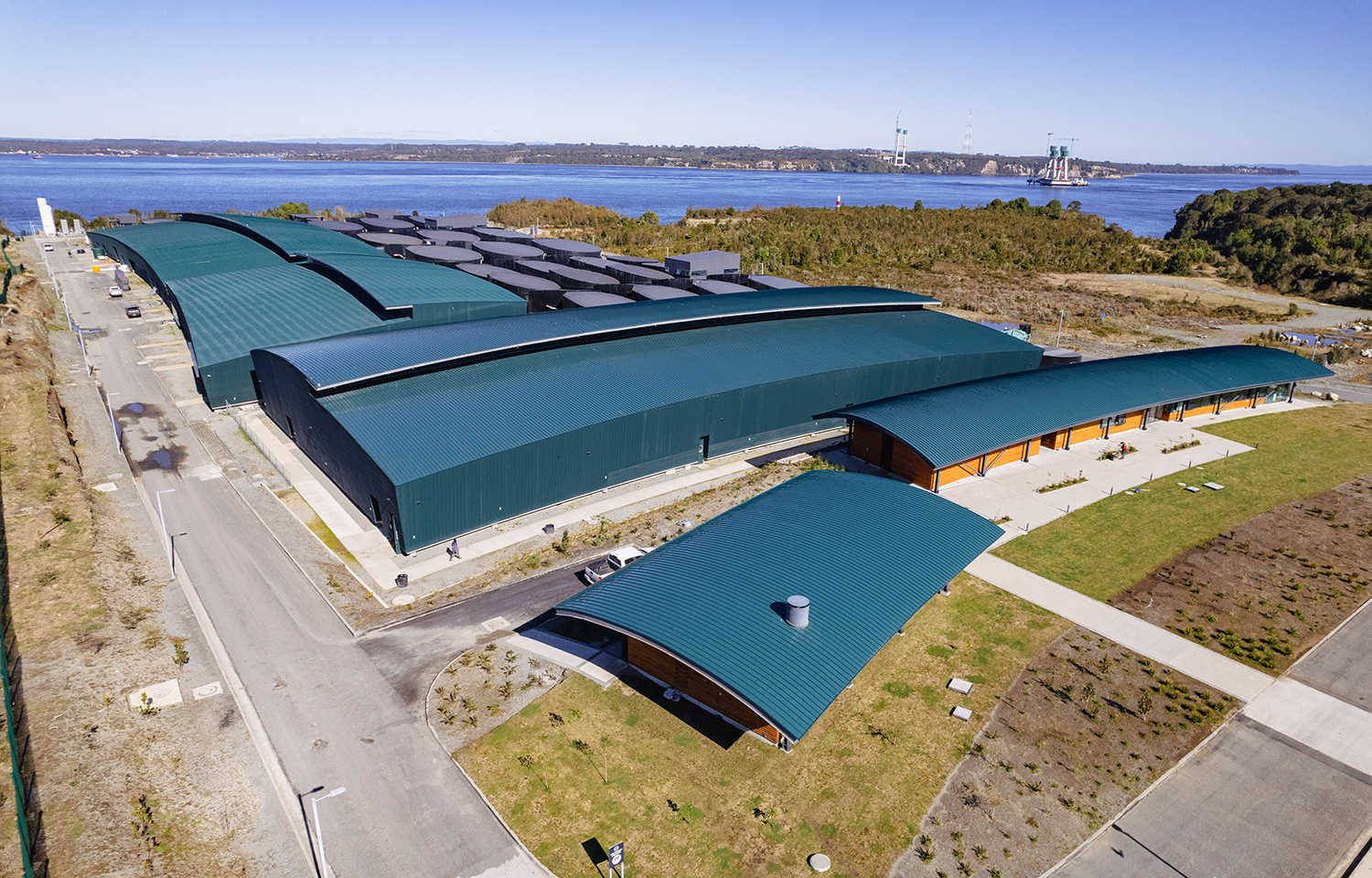
Chilean salmon-farming firm Multi X is continuing to use its MultiSea land-based hatchery facility as a strategic tool to shorten marine production cycles, stabilize harvests, and reduce its salmon’s exposure to challenging environmental conditions, according to CEO Cristián Swett.
MultiSea – a recirculating aquaculture system (RAS) hatchery facility developed jointly by Multi X and Sealand Aquaculture – produces both smolts and post-smolts that are selectively stocked at the salmon company’s farming centers depending on local production conditions.
The project was initially developed to support Multi X's operations in Southern Chile's Magallanes region, where colder water temperatures can slow fish growth and extend the time required for fish to reach harvest weight.
By transferring larger post-smolts reared at MultiSea to ocean net pens, Multi X can reduce the amount of time fish spend in marine farming sites, where fish are more susceptible to such issues as sea lice. The approach can also help the company avoid periods when environmental conditions are less favorable, including those associated with lower oxygen levels.
Under MultiSea’s hybrid farming approach, fish spend up to 14 months in freshwater before being sent to sea for 10 to 12 months, whereas in traditional farming, fish are in freshwater for 12 months before being sent to sea for 14 months.
“The use of post-smolts in some concession areas allows us to reduce their stay at sea, maintain a more stable harvest program, and make better use of the most favorable periods for growth,” Swett told SeafoodSource.
MultiSea currently has the capacity to produce around 2,400 metric tons (MT) of biomass, with environmental permission for 3,000 MT. The facility produces fish at different stocking weights depending on the needs of individual farming sites and production groups.
Around 5 million post-smolt fish weighing approximately 400 grams are destined for centers where Multi X seeks to shorten marine production cycles. At the same time, the facility produces smaller smolts of approximately 170 grams for centers where there is no need to shorten the production cycle.
“This flexibility is precisely one of MultiSea’s main attributes,” Swett said. “It allows us to define the stocking weight according to the production conditions of each concession area, [production] center, and fish group, instead of applying a single strategy to our entire production.”
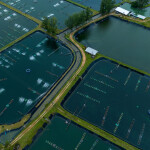
The company said the production of post-smolts at MultiSea requires large-scale infrastructure, specialized technology, and significant investment. MultiSea has more than 18,000 cubic meters of ponds, making it one of the largest fish farms in the Southern Hemisphere, according to Swett.
Sustainability is another component of the project. The facility uses RAS technology, where approximately 99 percent of the water employed in the process is treated and reused, providing greater control over farming conditions while reducing water requirements.
MultiSea also operates a sludge treatment plant that removes approximately 80 percent of the moisture from waste material without additives. The resulting solid material can be used in composting or evaluated for other applications in agricultural and forestry activities.
Additionally, the facility's social benefits are a key element of its design.
MultiSea employs approximately 80 people, around 40 percent of whom are women, including employees in leadership, supervisory, and managerial positions.
MultiSea is not intended to replace conventional smolt production across Multi X's operations; rather, Swett said the company sees post-smolts as a selective management tool that can be deployed where larger fish provide a specific production benefit.
Despite all of its benefits, Swett acknowledged that MultiSea has been limited by regulatory constraints.
For instance, the current production measurement used by Chile's Superintendency of the Environment (SMA) is based on harvested biomass rather than the weight at which fish are stocked or their effective growth during their time at sea. According to Swett, this reduces the incentive to stock larger fish.
Measuring production in a way that better reflects applicable environmental permits and their modeling could create greater incentives to use larger fish and consequently reduce their time at sea, he suggested.
Multi X is not currently planning to replicate the MultiSea model at any of its other farming facilities; the idea is to optimize the existing facility to its full potential.
“Our priority is to continue to develop and optimize the capacity we already have at MultiSea,” Swett said.
Expansion at MultiSea remains part of the project's longer-term outlook. The facility was designed with the possibility of being expanded through two additional stages, each with production capacity of 2,250 MT per year, but Multi X and Sealand are still currently focused on consolidating the first stage.
As such, the company is continuing to implement productive, operational, and technological improvements before making any decision on further expansion, which Swett said would depend on several factors, including the needs of Multi X's farming sites, changes in environmental conditions, technological advances, and the way the SMA ultimately defines production in relation to environmental permits.
“Rather than thinking about an expansion based solely on volume, we will look for that second stage to respond to specific production needs,” he said.
