






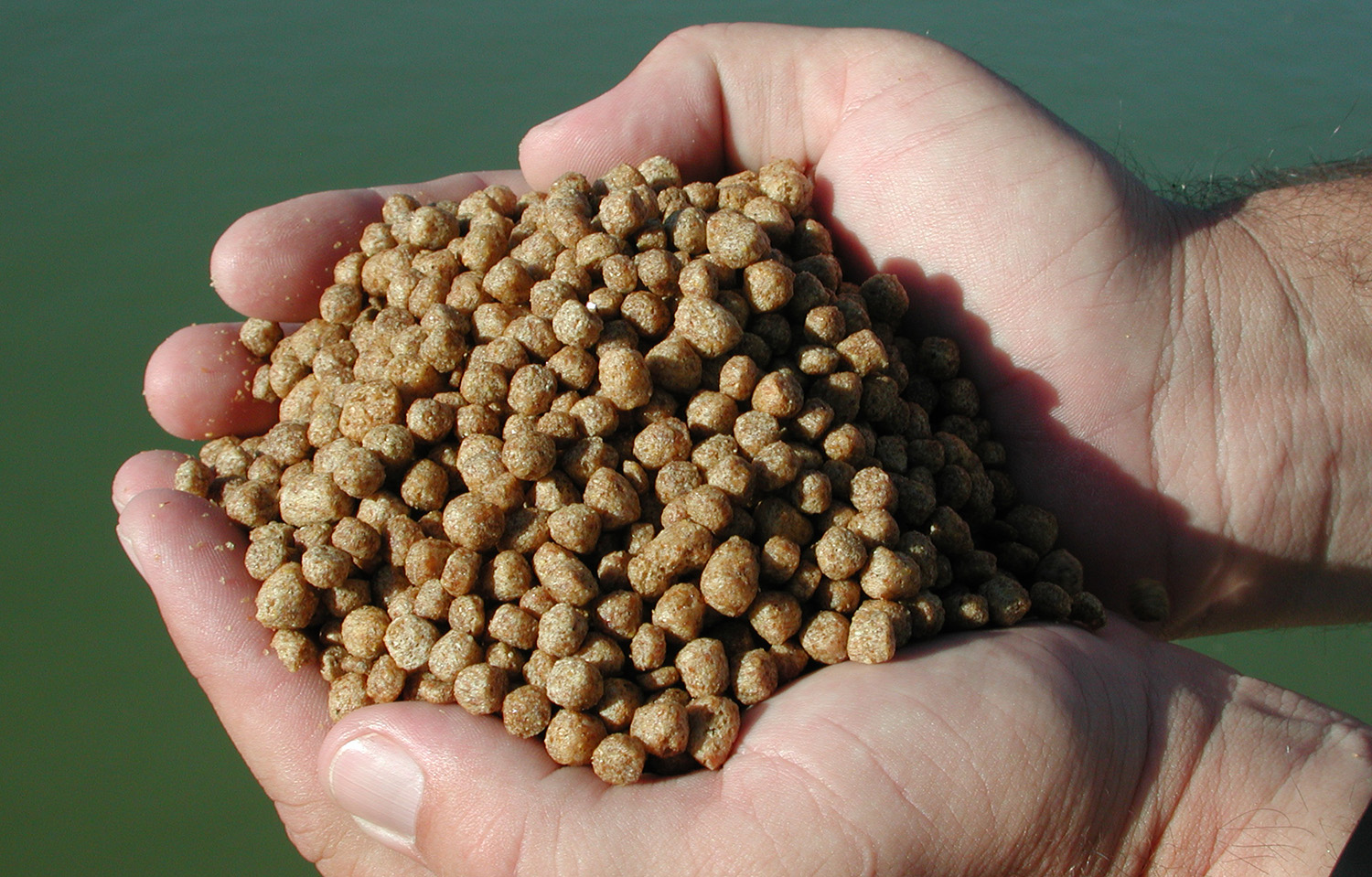
Chinese aquaculture and feed mill representatives recently visited U.S. soybean farms and aquaculture facilities as part of a visit organized by the U.S. Soybean Export Council (USSEC) to establish mutually beneficial business connections.
The USSEC, which has long encouraged the Chinese aquaculture industry to use U.S.-grown soy in its operations, took the visiting group to four aquaculture facilities that employ recirculating aquaculture system (RAS) technology: LocalCoho in New York; Cornell University’s Aquaculture Laboratory, which is also in New York; the Institute of Marine and Environmental Technology (IMET) in Maryland; and the Conservation Fund Freshwater Institute in West Virginia.
The Chinese delegation also visited two soybean farms – DuMond Farms in New York and the farm of United Soybean Board Director John Harrell in Pennsylvania – to view sustainable farming techniques in action and reinforce the unique value proposition of U.S. soy products compared to products China may be able to source more locally, according to the USSEC.
“[The trip] facilitated knowledge transfer, fostered relationships, and promoted a deeper understanding of sustainable U.S. soy within the Chinese aquaculture industry,” the USSEC said. “This sets the stage for increased adoption of U.S. soy products and continued collaboration in advancing sustainable aquaculture practices.”
The Chinese companies participating in the trip were not disclosed.
Though China, which is the top importer of soy in the world, has heavily demanded U.S. soy throughout various points in the past, the incoming administration of U.S. President-elect Donald Trump could affect trade of the legume.
Trump has proposed heavy tariffs on goods from China, among other countries, which some experts believe could kick off a renewed trade battle between the two nations.
When Trump instituted tariffs on China during his first term, China reduced its reliance on U.S. products like soy by looking elsewhere to meet its needs. The U.S. supplied 40 percent of China’s soy imports in 2016 but just 18 percent in 2024, with China turning largely instead to Brazilian-grown soy to fill the gap, according to Reuters.
To enhance its sales pitch and attract Chinese firms despite looming trade difficulties, the USSEC also offers other benefits besides solely facilitating soy trade. The council has helped Chinese aquaculture firms secure valuable certifications. For example, it helped a catfish farm in Jiangsu Province to obtain Best Aquaculture Practices (BAP) accreditation.
The soy industry isn’t the only U.S. agricultural sector attempting to court foreign seafood operations for business. The U.S. Grains Council (USGC) recently organized a training session in Fes, Morocco, where it highlighted the potential of U.S. products in increasing yield and quality within Moroccan fish farms.
“Incorporating U.S. [grain] into fish diets dramatically increases yields at a highly competitive price point, bringing value to end users in Morocco and to U.S. producers and exporters,” USGC Regional Deputy Director for Africa Mohamed Salah Bouthour said at the time.
