






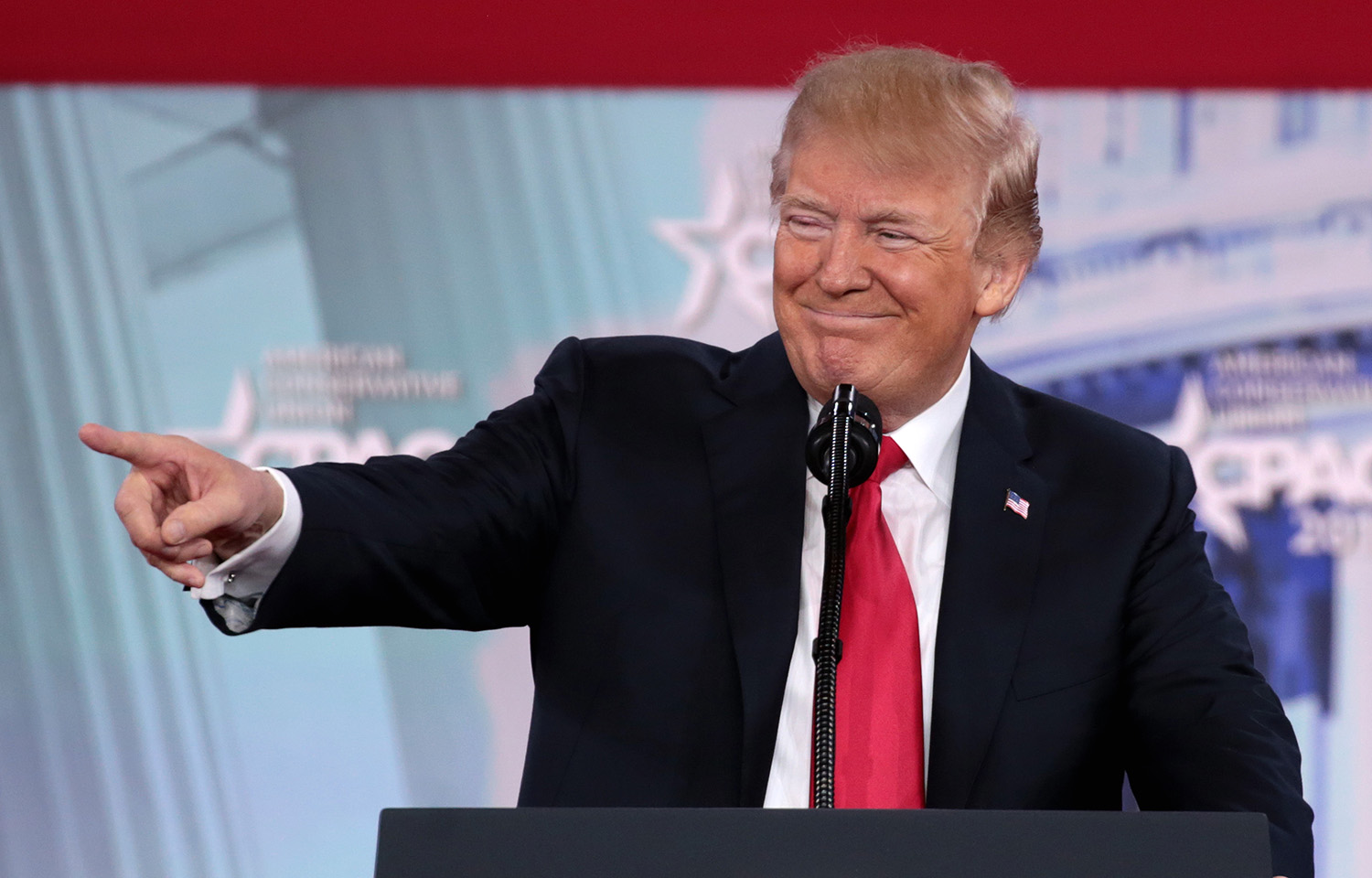
U.S. President-elect Donald Trump proposed big hikes in tariffs on all goods from Canada, Mexico, and China on 25 November in a move that would affect one-fifth of all U.S. seafood imports by value.
Trump, posting on his Truth Social platform, said he would charge tariffs of 25 percent on all products from Mexico and Canada and 10 percent tariffs on goods from China – above any existing tariffs.
“On 20 January, as one of my many first executive orders, I will sign all necessary documents to charge Mexico and Canada a 25 percent tariff on all products coming into the United States and its ridiculous open borders,” Trump said on the platform. “This tariff will remain in effect until such time as drugs, in particular fentanyl, and all illegal aliens stop this invasion of our country!”
The U.S. sources the majority of its seafood via imports, and in 2023, the country’s trade deficit reached USD 20.3 billion (EUR 19.3 billion) on USD 25.3 billion (EUR 24.1 billion) in seafood imports. Of that total, USD 3.62 billion (EUR 3.45 billion) worth of imports came from Canada alone, making it the top source of seafood to the U.S.
According to NOAA trade data, the U.S. imported USD 3.56 billion (EUR 3.39 billion) worth of edible seafood from Canada in 2023, comprising over 271 million kilograms of products. It imported a further USD 59.5 million (EUR 56.7 million) in non-edible seafood products, comprising 34 million kilograms of products.
If Trump’s planned 25 percent tariff had been in place, U.S. importers would have paid an additional USD 904 million (EUR 861 million) for Canadian seafood products in 2023.
Canadian Prime Minister Justin Trudeau told reporters on 26 November that he was prepared to work in “constructive ways” with President-elect Trump and that he immediately reached out to schedule an urgent meeting between the prime minister and Canadian premiers.
Deputy Prime Minister Chrystia Freeland said the country is considering targeted counter-tariffs.
The Canadian seafood industry is also working on how to address Trump’s proposal. A spokesperson with the Fisheries Council of Canada – a trade group representing the country’s commercial fishing industry – told SeafoodSource that the organization is working to bring together its members and discuss its strategy and the matter requires “serious consideration.”
By far the hardest-hit seafood items will be shellfish from Canada, which comprises the top four import categories from the country; three of those items are lobster.
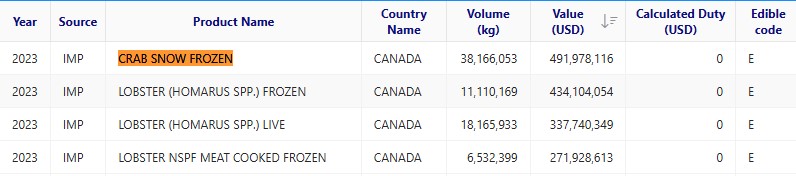
The U.S. imported USD 434 million (EUR 413 million) in frozen lobster, USD 337 million (EUR 321 million) in live lobster, and USD 271 million (EUR 259 million) in cooked frozen lobster meat – totaling USD 1.04 billion (EUR 991 million). Adding in lobster frozen in brine, which was worth USD 44.3 million (EUR 42.2 million), the U.S. imported USD 1.08 billion (EUR 1.03 billion) in lobster products in 2023, which would have faced over USD 271 million (EUR 258 million) in additional tariffs under Trump’s proposal.
The highest-value seafood item the U.S. imported was frozen snow crab. The U.S. imported USD 492 million (EUR 469 million) in frozen snow crab in 2023 – the highest item by value. NOAA data separated frozen snow crab out across multiple separate entries for a combined value of over USD 684 million (EUR 652 million) – meaning frozen snow crab would face at least an additional USD 171 million (EUR 163 million) in tariffs.
China was also a top source of seafood for the U.S. in 2023, despite continuing to face tariffs. Trump first hit a range of seafood items from China with a 10 percent tariff in 2018, and many of those tariffs continued during the administration of U.S. President Joe Biden.
Despite facing tariffs, the U.S. imported USD 1.55 billion (EUR 1.48 billion) worth of Chinese seafood last year, composed of USD 1.54 billion (EUR 1.47 billion) in edible goods and USD 21 million (EUR 20 million) in non-edible goods. By volume, China sent nearly 336 million kilograms of edible seafood and 4.5 million kilograms of non-edible seafood to the U.S.
According to NOAA data, China’s edible seafood exports to the U.S. already faced a calculated duty of USD 216.5 million (EUR 206.4 million), and a 10 percent tariff would add another USD 153 million (EUR 145.8 million) on top of that total.
The highest import by value from China was frozen cod fillets. The U.S. imported USD 107 million (EUR 101 million) worth of frozen cod fillets, which are currently exempted from a swath of tariffs on Chinese seafood. The 10 percent tariff would add an additional USD 10.7 million (EUR 10.1 million) in costs to U.S. importers.
Mexico sent the least seafood of the three countries, shipping USD 647 million (EUR 616 million) worth of edible seafood in 2023 and USD 35 million (EUR 33 million) worth of non-edible products to the U.S. At a 25 percent tariff, seafood from Mexico would cost U.S. importers an additional USD 161.8 million (EUR 154.2 million).
The top U.S. import by value from Mexico is fresh bluefin tuna. The U.S. imported USD 70.6 million (EUR 67.3 million) of the product in 2023, which would have faced an additional USD 17.6 million (EUR 16.8 million) in costs.
All told across the three countries, seafood importers in the U.S. could face an additional USD 1.2 billion (EUR 1.14 billion) in taxes if Trump follows through on his proposed tariffs.
