






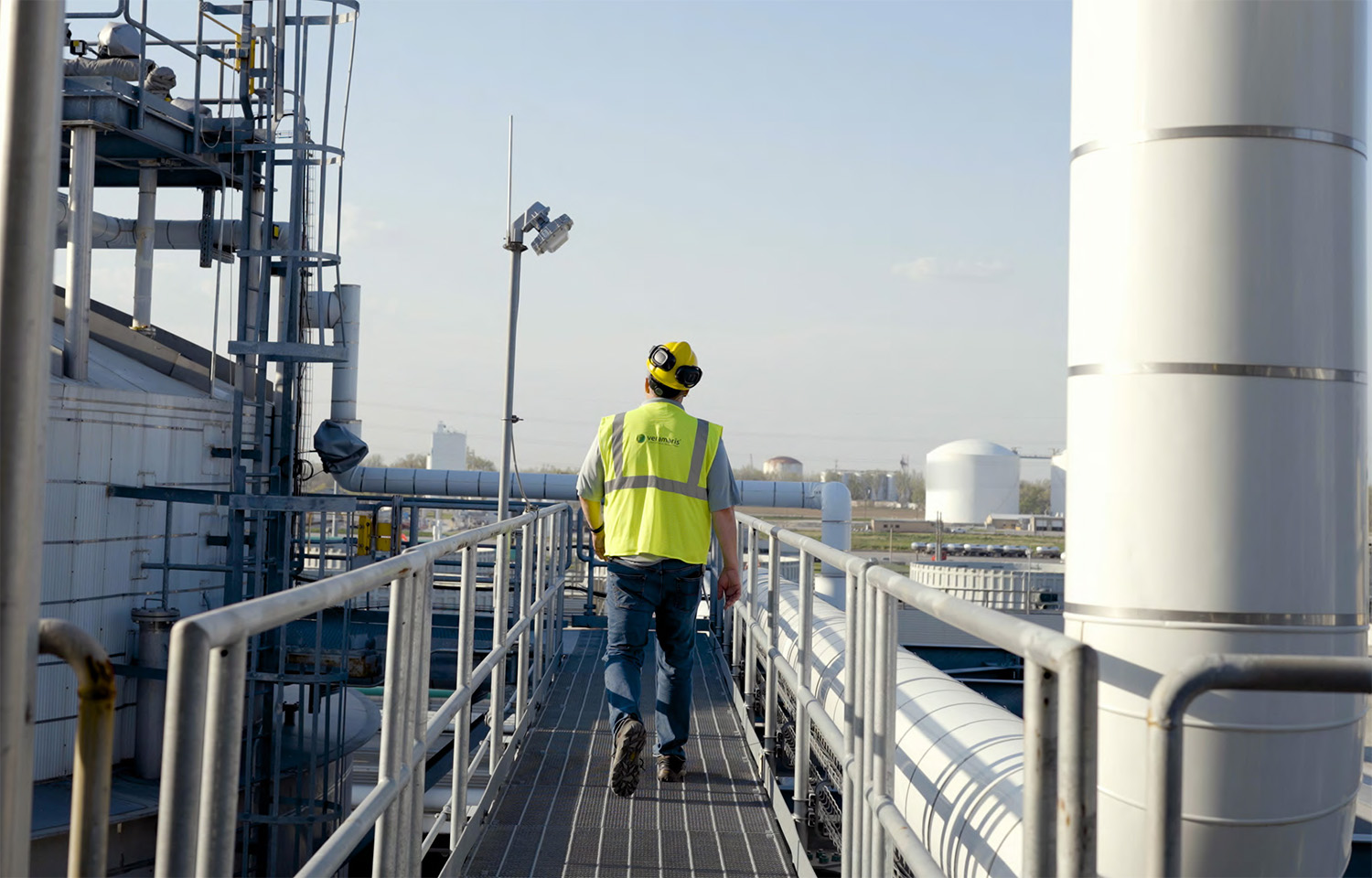
Algae oil production company Veramaris ran at full operational capacity in 2024 for the first time and has reached what CEO Gertjan de Koning called the “moment of truth” for the company.
Veramaris produces algae oils for feed industries, with a focus on an oil that includes EPA and DHA omega-3 fatty acids. The company officially opened its USD 200 million (EUR 175.9 million) facility in Blair, Nebraska, U.S.A., in July 2019, with the goal of gradually ramping up production in the coming years.
Now, de Koning said that the scale-up has been successful in more ways than one.
“In 2024, we operated at full capacity for the first time, proving that aquaculture can expand responsibly – without deepening its reliance on wild fish stocks for essential long-chain omega-3s,” de Koning said.
Part of that scale-up effort included efforts to reduce Veramaris’s greenhouse gas emissions, and the company said that despite increasing production by 61 percent in 2024, it reduced its emissions by 5.6 percent from its baseline.
“These reductions aren’t just achievements; they mark a shift in what sustainable growth looks like in our industry,” de Koning said.
De Koning told SeafoodSource in 2024 that the company experienced increased demand for its products during the year as fishmeal and fish oil supplies were hampered by the closure of Peru’s main anchovy fishing season in 2023, which led to shortages of traditional sources of aquaculture feed. That meant Veramaris’s supply, which is consistent, became attractive to companies.
De Koning said at the time that as aquaculture production increases, the appeal of companies like Veramaris will increase with it to maintain the quality of aquaculture feed as wild-caught supplies of key feed ingredients remain stagnant due to reaching maximum sustainable yields.
In its latest report, de Koning reiterated Veramaris’s stance on becoming a key part of the aquaculture feed supply.
“For too long, aquaculture has heavily relied on wild-caught forage fish stocks for omega-3s alone, but the supply gap is challenging, and the volatility of fish oil prices continues to disrupt the market. The events of last year were a warning – one that cannot be ignored,” Koning said. “This is where algae oil comes in. It is not just an alternative; it is an essential solution.”
De Koning said the company has benefited from fish oil shortages in the past, but that companies often reverted to older solutions as prices went down. This time has been different, with companies continuing to support Veramaris which de Koning said is moving algae oil away from an alternative to a more essential part of the supply chain.
“We’ve seen strong signals across the value chain. But, intent must become action,” Koning said. “Only then can we build a stable foundation aquaculture needs to grow sustainability. This is the moment of truth. Veramaris is ready. The seafood industry must be, too.”
