






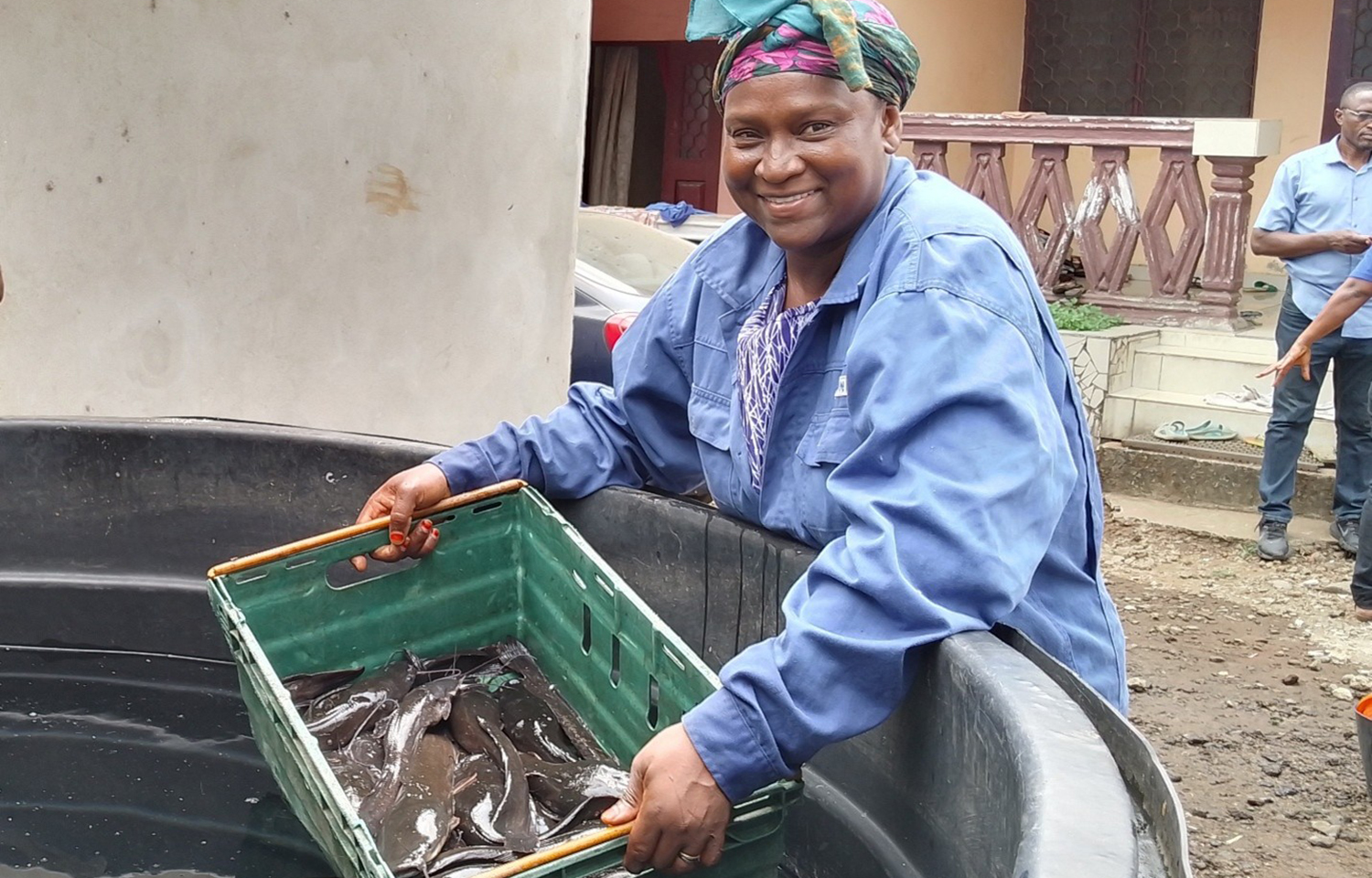
The Central African country of Cameroon has received a USD 98 million (EUR 85 million) loan from the African Development Bank (AfDB) to expand its livestock, fisheries, and aquaculture sectors.
The nation’s Ministry of Livestock, Fisheries, and Animal Industries will put the funding toward support for its five-year Livestock and Fish Farming Value Chain Development Project (PD-CVEP), a key component of which is producing and distributing improved, high-yield broodstock of a strain of Clarias, or African catfish, as well as tilapia.
The strain, which was developed by Cameroon’s Agricultural Research Institute for Development, boasts rapid growth, low fat content, and low mortality rates compared to other strains of catfish, according to a statement from the AfDB about the PD-CVEP.
"In addition to distributing the breeders, the project will train 280 fish farmers in hatchery management, floating cage farming, aquaculture feed, and the rehabilitation of fish farming stations in Bamenda, Yaounde, and Foumban to bolster the national supply of fingerlings," AfDB said.
The loan helps Cameroon fill funding gaps, which for years have hindered the country’s ability to complete fisheries and aquaculture infrastructure projects.
“Fish processing – especially for export – needs cold chains, reliable electricity, and modern ports. Cameroon’s cold storage and transport networks are minimal, and electricity supply is inconsistent, making local processing costly and risky,” Edwin Ngwafor, the managing director of Cameroonian fishing firm Timezone Marine Ventures, told SeafoodSource late last month. “Local entrepreneurs and cooperatives rarely have access to affordable credit to invest in processing plants, cold rooms, or fishing vessels that meet international standards.”
Greater funding for the PD-CVEP also aligns with nationwide goals to increase Cameroon’s supply of fishery and aquaculture products 7.5 percent by 2030.
To come to fruition, Cameroon would have to boost output by at least 25,000 metric tons (MT) between 2025 and 2027, scaling the volumes up to 50,000 MT in 2030 with support from the private sector and Cameroon's decentralized local authorities.
“To cover the ever-increasing needs over the years and due to a galloping population, Cameroon has just developed and adopted the National Development Strategy 2020-2030, which is now the new reference framework for development actions during the decade,” a recent government report said.
