





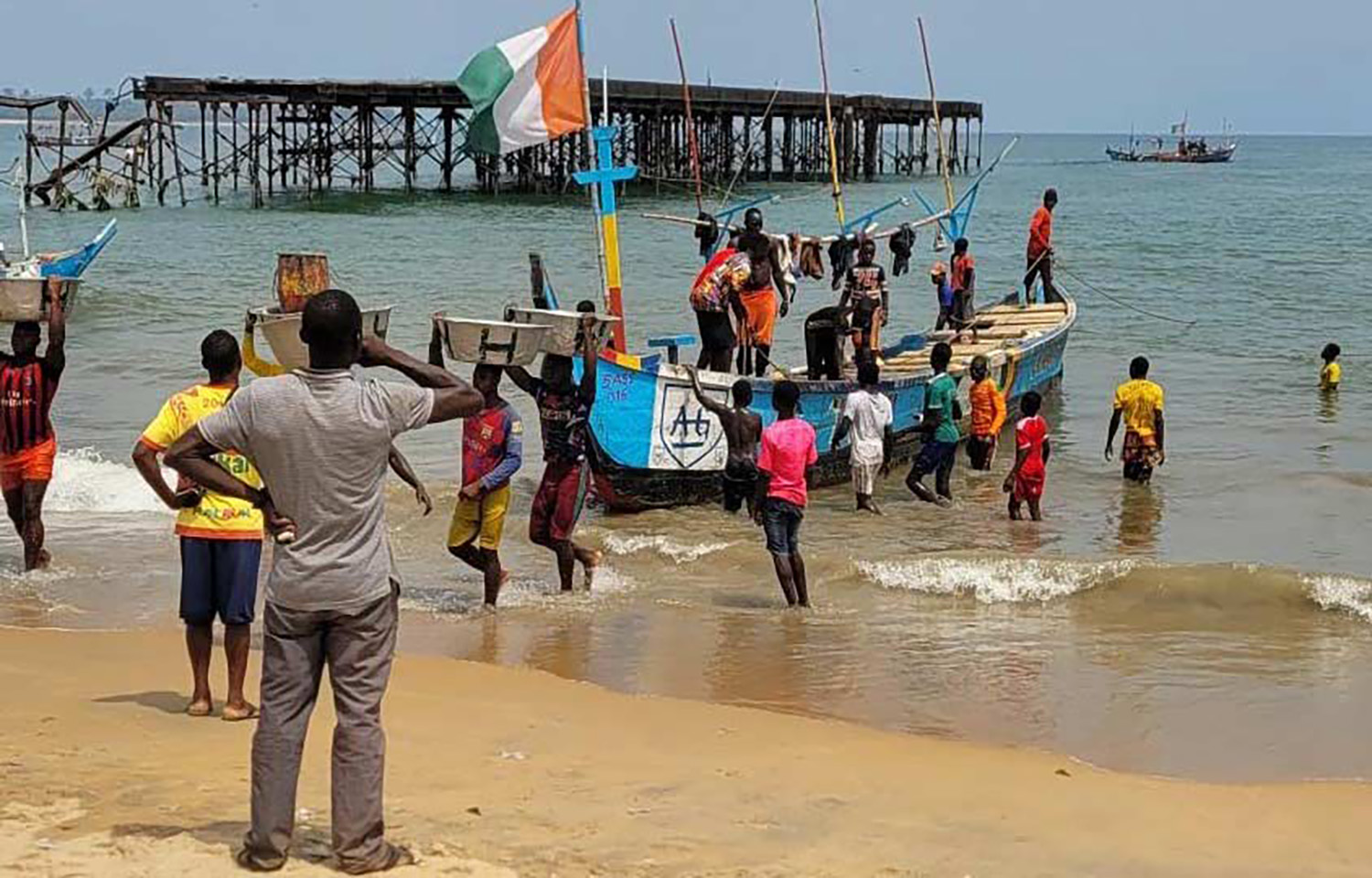
The African Development Bank (AfDB) has announced it is doling out a EUR 24.6 million (USD 25.9 million) loan to the West African nation of Cote d’Ivoire in order to spur growth within its fisheries and aquaculture industries.
The bank’s board of directors approved the loan in late 2024 specifically to support the goals outlined in Cote d’Ivoire’s 2022-2026 National Policy for the Development of Livestock, Fisheries, and Aquaculture (PONADEPA). Though the policy entered into force three years ago, the country’s fisheries and aquaculture industries have struggled to achieve consistent growth.
Cote d’Ivoire’s annual seafood production totaled 92,000 metric tons (MT) in 2023, marking a decline from its all-time high of 106,000 MT in 2018, according to government reports.
The bank’s loan will go toward carrying out PONADEPA objectives and helping ensure they actually come to fruition – though most likely later than the timeline outlined in the policy. The funds will be available to the country through 2029.
“The bank's involvement in this project will facilitate the establishment of aquaculture- and fisheries-related infrastructure, improve skills within the fisheries sector, contribute to improved governance of sea, lagoon, and inland fisheries, and promote the development of commercial aquaculture through training and the implementation of a reliable system for the production of high-quality fry and feed,” AfDB Deputy Director General for West Africa Joseph Ribeiro said.
Additionally, funding will go toward public and private seafood entrepreneurs in the villages of Loka, Dompleu, and Jackueville in an effort to improve their fishing equipment and increase their ability to catch higher-quality seafood suitable for both local and international markets.
According to government estimates, Cote d’Ivoire has the potential to produce up to 700,000 MT of fish annually, but the country is currently unable to optimize the opportunity due to several constraints, such as high levels of post-harvest losses and difficulties in accessing better seafood markets.
Other constraints include overfishing, water pollution due to gold mining, and piracy that reduces the resources available to local fishermen.
According to Center for Strategic and International Studies Senior Associate Robert Paarlberg, the country and its neighbors are also dealing with the effects of climate change on local stocks, especially within the Gulf of Guinea.
"Even if the fishery were better-managed, local stocks would not be able to recover due to the warming of offshore ocean waters driven by climate change, and communities that now depend on fishing will soon need help transitioning to alternative livelihoods," a recent Center for Strategic and International Studies report to which he contributed said.
Paarlberg added that the issue is unlikely to get better any time soon.
“African governments are understandably reluctant to devote their limited resources to reducing greenhouse gas emissions since the much larger emissions of other regions such as Europe, North America, and China are the source of the problem,” he said. “In addition, while United Nations climate meetings have promised to finance both mitigation and adaptation in Africa, most of the promised money has never been delivered.”
