

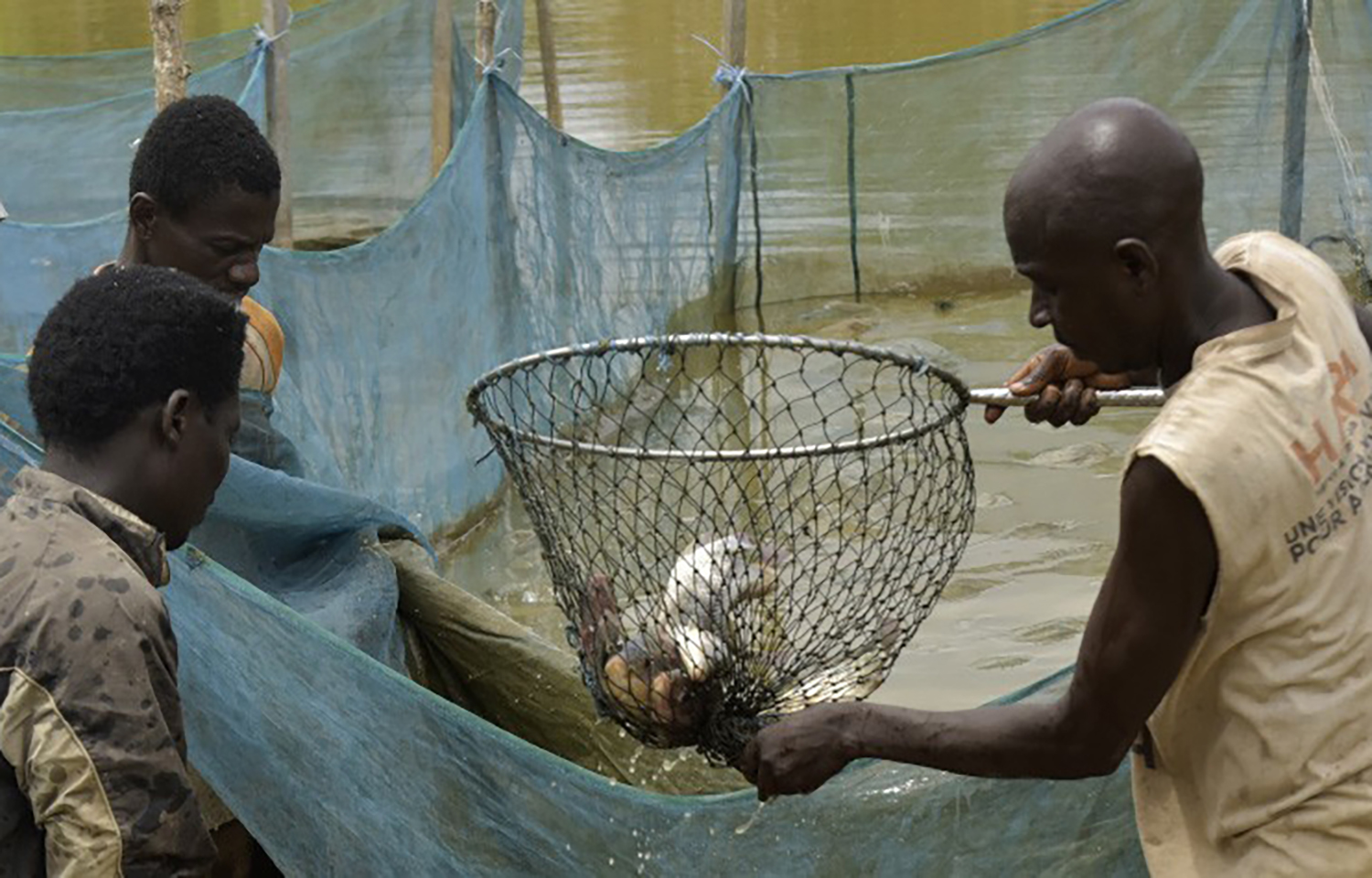
Ivory Coast has begun implementing a fisheries and aquaculture project that aims to increase annual farmed fish output to 35,000 metric tons (MT) and reduce imports, which are currently relied upon for up to 80 percent of domestic supply, making the nation one of West Africa's top net seafood importers.
Aiding in the increased aquaculture output goal, the project aims to enhance the development of broodstock and establish hatcheries, commercial fry production, and improved feed formulation in the country, benefiting at least 50,000 aquaculture entrepreneurs.
Regarding wild capture, over the next five years, the project aims to address constraints hampering the West African country from achieving sustainable fisheries management.
One such constraint it aims to address is improving relevant authorities’ knowledge of stocks, fleets, and production so they can adjust current fisheries activities to achieve better sustainability across the nation’s commercial fisheries.
That adjustment will, ideally, manifest in the form of an ecosystem-based management approach to fisheries oversight, as well as new strategies of tackling illegal, unreported, and unregulated (IUU) fishing in the country.
On the processing end of the supply chain, the project aims to improve storage and distribution infrastructure in the country.
African Development Bank (AfDB) Deputy Director General for West Africa Joseph Ribeiro said the initiative would enable the establishment of aquaculture and fisheries-related infrastructure and “improve skills within the fisheries sector, contribute to improved governance of sea, lagoon, and inland fisheries, and promote the development of commercial aquaculture through training and the implementation of a reliable system for the production of high-quality fry and feed.”
Meanwhile, Ivory Coast Minister of Animal and Fisheries Resources Sidi Tiemoko Toure said the project will help address the country's fish supply problems, highlighting that estimated national fish demand stands at 650,000 metric tons (MT). That total is more than 80 percent higher than the country's total seafood output, which at its peak in 2018 reached approximately 110,000 MT.
To make up that gap, Ivory Coast spends an estimated USD 850 million (EUR 721 million) on fish imports every year.
With a project such as this, Toure expressed optimism that sectoral reforms can meaningfully increase domestic production and increase the sector’s contribution to national gross domestic product (GDP). As of now, it contributes just 0.5 percent of GDP.
The AfDB and the Ivory Coast government, along with technical support from the United Nations’ Food and Agriculture Organization, will fund the USD 33 million (EUR 28 million) project.
