


Just under a month after Singapore-based Barramundi Group released its FY 2023 results – five months after they were due – the company released its H1 2024 results revealing SGD 3.37 million (USD 2.5 million, EUR 2.4 million) in net losses as it works to restructure the company and reverse its losses.
Barramundi Group was placed on the “penalty bench” of the Oslo Børs, or Euronext Oslo exchange, in June 2024 for failing to release its results by 30 May. Then in September, the company announced a restructuring plan to assist with a scheme to bring it back into profitability – a move which has since placed it in the “recovery box” on the Oslo Børs.
As it worked to bring itself back from dire financial straits, the company asked the High Court of the Republic of Singapore for a six-month moratorium on any receivership and legal proceedings against the company as it works to restructure. The court ultimately granted it a four-month moratorium on 11 October, which will end on 11 February.
According to Barramundi Group, it expects to resolve its restructure by H1 2025.
As it continues to work on its restructure, the company posted a slightly lower revenue in H1 2024 of SGD 7.3 million (USD 5.4 million, EUR 5.2 million), down from the SGD 9.3 million (USD 6.9 million, EUR 6.6 million) it posted in H1 2023. Fish mortality costs also increased slightly to SGD 634,000 (USD 469,000, EUR 448,000), up from SGD 575,000 (USD 426,000, EUR 406,000).
The company’s gross margin decreased to a loss of SGD 323,000 (USD 239,000, EUR 228,000), down from near breakeven in H1 2023.
The company did see positive movement in its earnings, and posted an operating EBITDA loss of SGD 1.45 million (USD 1.07 million, EUR 1.02 million) in H1 2024, slightly better than the SGD 1.49 million (USD 1.1 million, EUR 1.05 million) it posted in H1 2023. Its operating EBIT improved to a loss of SGD 3.36 million (USD 2.49 million, EUR 2.37 million), up from SGD 3.57 million (USD 2.6 million, EUR 2.5 million).
Barramundi Group’s operating net profit before fair value adjustment of biological assets improved to a loss of SGD 3.35 million (USD 2.48 million, EUR 2.36 million), up from a loss of SGD 3.56 million (USD 2.64 million, EUR 2.52 million) in H1 2023. With the fair value adjustment on biological assets the results improve slightly by comparison, reaching a net loss of SGD 3.37 million (USD 2.5 million, EUR 2.4 million) compared to the net loss of SGD 3.66 million (USD 2.7 million, EUR 2.6 million).
During its H1 results presentation, the company reviewed its Brunei-based barramundi recirculating aquaculture system, which it pivoted to in August 2023 as its losses continued in H1 2023 and it shut down farming in Singapore. The company first brought its RAS hatchery and nursery online in the country in 2021, and it pivoted to its operations there after its first attempt to sell its assets in Australia fell apart in May 2023. It had originally planned to sell its holdings in Australia in the form of MPA Fish Farms and MPA Marketing, but the prospective buyer, Wild Ocean Australia, could not raise the necessary funds to complete the acquisition.
Barramundi Group ultimately sold the Australian assets to Tassal Group in August 2023 as it struggled with losses.
The pivot is apparently starting to gain steam as the company reported an increase of net sales to SGD 115,000 (USD 85,000, EUR 81,000) in H1 2024 from Brunei, up from just SGD 44,000 (USD 32,000, EUR 31,000) in H1 2023. More importantly, the company’s standing biomass has increased by 113 percent in the year between Q3 2023 and Q3 2024, with the net growth also increasing.
“Growth and health performance of the first stock has been very promising, with very low accumulated mortalities, lower FCRs, and better than model growth,” Barramundi Group said. “Whilst this is still early days, we believe this is the result of the better water conditions in Brunei as well as the relative isolation of Pelong Rocks.”
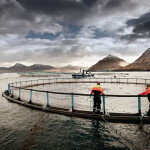
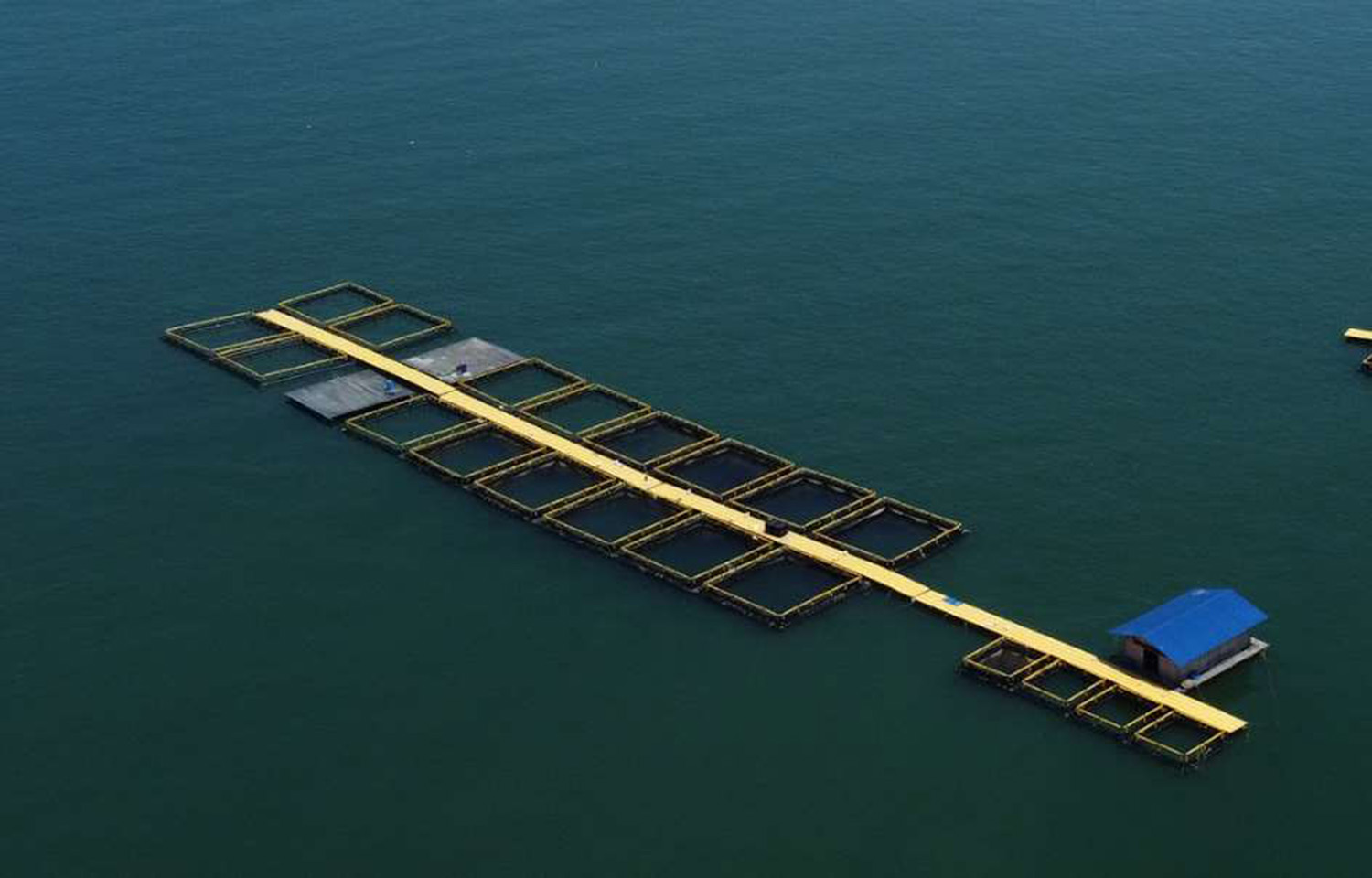
The company said it has also secured financing to expand its sea operations in Brunei, and a growout cage in Pelong Rocks has been operational since July 2024 – with five more growout cages to be deployed by March 2025. Its land-based growout facility is in the master planning, design, and fundraising stage, the company said.
The company said it will be able to reach a steady-state production of 1,000 metric tons (MT) per year with the addition of its Pelong Rocks facility.
Outside its Brunei division, Barramundi Group said UVAXX – its fish health and autogenous vaccine company – has concluded joint registration with Singapore’s Agency for Science Technology and Research. The vaccine company will also enter the second phase of a project to commercialize its work into a registered vaccine in Q1 2025 – with funding for the project already secured.
“UVAXX has also been appointed by a major [multinational corporation] pharmaceutical company as their sole partner to do lab diagnostic services to serve aquaculture farms in Southeast Asia,” Barramundi Group said.
