





Portland, Maine, U.S.A.-based lobster processing company Cozy Harbor Seafood has filed for Chapter 11 bankruptcy, citing post-Covid price instability and uncertain tariff threats as obstacles to operating within workable margins.
Cozy Harbor Seafood was founded in 1980 by its current President John Norton and Co-founder Joe Donovan, and it currently sells Maine lobster products like meat and tails – along with whitefish products – internationally. The company began processing lobster in 1993, and its products have received top marks in the Seafood Excellence Global awards.
In its Chapter 11 filings, Norton wrote that the company had trouble operating due to the high impact of fluctuating prices for seafood.
“In the months and years prior to the Petition Date, the Debtors diligently explored a range of options to address their ongoing challenges related to maintaining sufficient cash flow to satisfy their debt and operational obligations,” Norton wrote.
Those efforts ultimately failed, and now the company has filed for Chapter 11 bankruptcy to stabilize its balance sheet. The company said it has a loan agreement with Keybank National Association, with a principal amount of USD 8 million (EUR 6.8 million), on which it currently owes USD 4.9 million (EUR 4.1 million). It also has a line of credit with Camden National Bank, on which it owes USD 330,000 (EUR 280,000).
According to its Chapter 11 filing, in addition to the secured creditors, the company has at least 20 unsecured creditors with potential financial claims.
Among those are East Coast Seafood, which according to the filing is owed USD 1.37 million (EUR 1.16 million) by Cozy Harbor; J.K. Marine dba Louisbourg Seafood, owed USD 803,000 (EUR 681,000); Whitecap International Seafood Exporters, owed USD 342,000 (EUR 290,000); Northern Ocean Sea Products, owed USD 265,000 (EUR 224,000); and Cape Bald Packers, owed USD 206,000 (EUR 174,000).
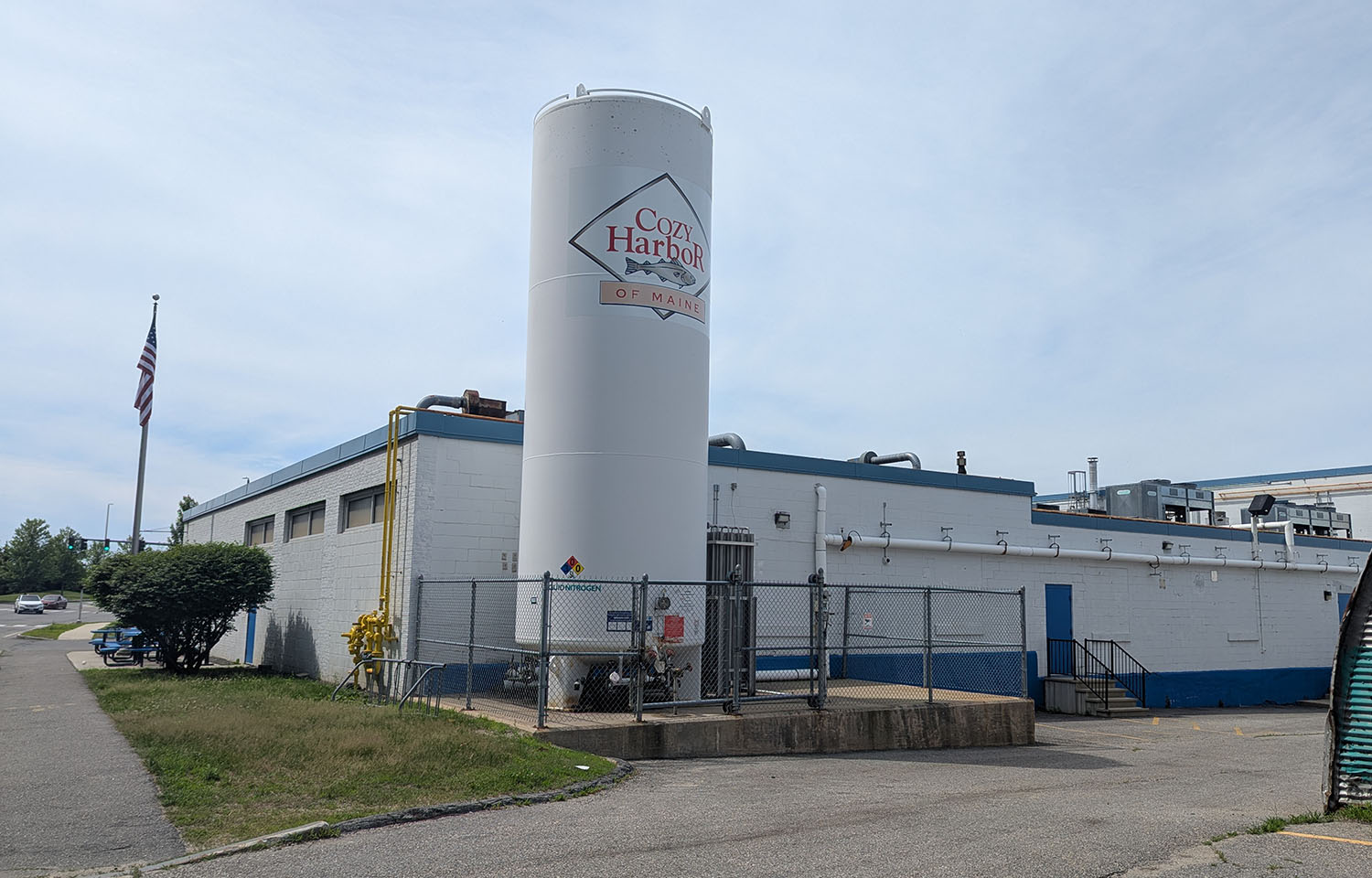
In a press release issued by Cozy Harbor, the company said its processing and packing facilities on St. John Street, at the Portland Fish Exchange, and on Union Wharf in Portland, Maine will all continue to operate, receive deliveries, employ staff, and fulfill customer orders. It also said the workforce will remain intact.
“The Company’s decision is best understood in the context of broader market forces that have strained the sector in recent years,” the company said. “Like many businesses, Cozy Harbor Seafood has had to manage many financial challenges in the years since the COVID-19 pandemic. In this environment, even well-established processors have struggled to manage sustained external pressures and market instability.”
Cozy Harbor said the Chapter 11 bankruptcy mechanism will allow it to achieve its financial and operational goals while providing a “level playing field” and optimum value in the event that the company is sold to benefit its creditors.
“For more than 45 years, Cozy Harbor Seafood has been a leader in sharing Maine’s iconic lobster catch with the world, while being a reliable partner for our local fishermen and working waterfronts,” Norton said. “Despite the many challenges we’ve faced over the last 45 years, our business is woven into the social, cultural and economic fabric of Maine – and that is worth saving, which is why we have made this difficult, yet important decision.”
Norton said the Chapter 11 process will help the company continue to operate as it determines the best path forward – which could include finding a new owner.
According to court filings, Norton holds a 66 percent stake in the company, Donovan holds 25 percent, and the remaining 9 percent of the company is held by Joel Knox. Norton did not respond to a request for comment on the bankruptcy from SeafoodSource.
U.S. lobster prices have wildly fluctuated in recent years as external factors weigh in on the industry. The start of a trade war between China and the U.S. during the first term of U.S. President Donald Trump resulted in a steep drop in lobster exports to China in 2019, though the overall lobster market managed to cope with the shift.
Then, during the Covid-19 pandemic, lobster prices spiked to the point it caught national media attention in 2021 before facing a steep fall in prices in 2022 that represented a return to relative normalcy.
