






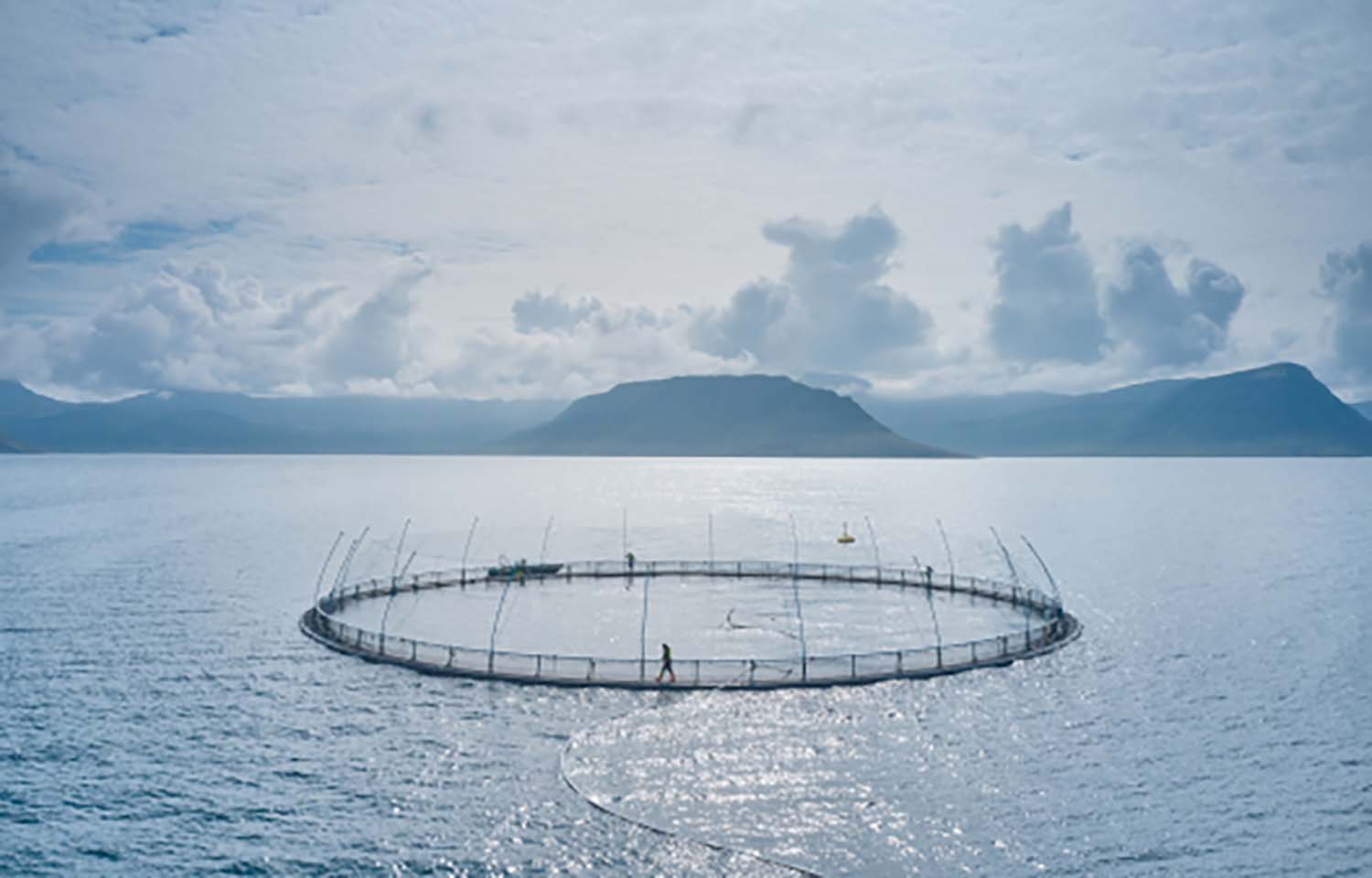
Bíldudalur, Iceland-headquartered Icelandic Salmon, which owns fish-farming firm Arnarlax, was forced to conduct an accelerated harvest in the second quarter of 2025 in response to an outbreak of bacterial kidney disease (BKD) at two farming sites.
This resulted in a Q2 harvest of 4,000 gutted weight tons (GWT), compared to 700 GWT in the same period a year prior. Because the need to harvest quickly came at the end of the three-month period, when market prices were at their lowest, the company recorded a Q2 EBIT loss of EUR 8.3 million (USD 9.6 million), compared to a loss of EUR 3.8 million (USD 4.4 million) in Q2 2024.
Due to the larger volumes harvested, the firm achieved an operating income of EUR 25 million (USD 29 million), compared to EUR 9.7 million (USD 11.3 million) a year prior, while its operational EBIT per kilogram in the quarter totaled a loss of EUR 2.90 (USD 3.66) – up from a loss of EUR 5.37 (USD 6.23) in Q2 2024.
Delivering the group’s Q2 results, Icelandic Salmon CEO Bjørn Hembre confirmed the quarter was “strongly affected” by the accelerated harvest while market prices were “significantly lower” than Q2s of recent years, with 3- to 6-kilogram fish in the first half of 2025 drawing prices that were EUR 2.55 (USD 2.96) per kilogram lower than in the corresponding period of last year.
The company was also not prepared to harvest the large amount of fish it did in Q2 and, thus, had a contract share of just 1 percent in the period.
“This was due to the fact that we were not planning to harvest for a period and hadn't made any contracts,” Hembre said. “The harvest was initiated by the biological challenges we faced in the quarter.”
However, he said the quarter also featured “good development” with its 2024 generation of fish and that Icelandic Salmon expects to start harvesting this batch in Q4 2025.
Nevertheless, the firm has adjusted its harvest volume guidance downward for the full year of 2025, dropping it from 15,000 GWT to 13,000 GWT.
Besides the biological challenges Icelandic Salmon experienced in Q2, it also had several personnel changes occur during the period.
Among these, Jónas Heiðar Birgisson and Rolf Ørjan Nordli resigned from their positions as CFO and COO of biology, respectively, while Edvin Aspli was appointed interim CFO, having previously held the position of chief strategy officer. Johnny Indergaard replaced Nordli as COO of biology, moving from his previous position as freshwater manager.
In the period, the firm also continued to work with Icelandic authorities to have its farming license in Ísafjarðardjúp reissued after it was revoked in the second half of 2024 by Iceland’s Environmental and Natural Resources Board of Appeal.
Hembre explained that the Board of Appeal ruled that the Icelandic Food and Veterinary Authority (MAST) had not conducted a comprehensive, weighted assessment of the potential increased risk of the spread of fish diseases and parasites before issuing the license to Arnarlax. Furthermore, it raised maritime safety issues concerning one of the three sites in question.
If the license is reissued, the group will receive licenses for 10,000 metric tons (MT) of maximum allowable biomass (MAB) on three new sites.
“We have reacted [to the revoked licenses] by reducing the sites so that we have a distance of 5 kilometers to other unrelated parties farming in the area, and we are continuously working with the authorities to look into other mitigating measures to ensure maritime safety in the area and to get approval,” Hembre said.
Icelandic Salmon also has applied to expand its farming sites in Arnarfjörður, with the hope to secure a further 4,500 MT MAB. While this application is now being evaluated by the authorities, he said there is a risk that this biomass may be auctioned.
“We are in a good position to take part in that with a finalized environmental assessment of that biomass,” Hembre said.
Looking forward, Hembre said the group remains worried by new tariffs implemented by the U.S., with Iceland facing a rate of 15 percent that started 7 August – up from 10 percent previously.
“We haven't harvested. We are in a three-week break in the harvest plant at the moment and have not sold any fish with 15 percent tax to the U.S. yet,” Hembre said. “The salmon market remains uncertain on a short- to medium-term level, with increased global supply pressure and with the tariff implications from the U.S.”
