






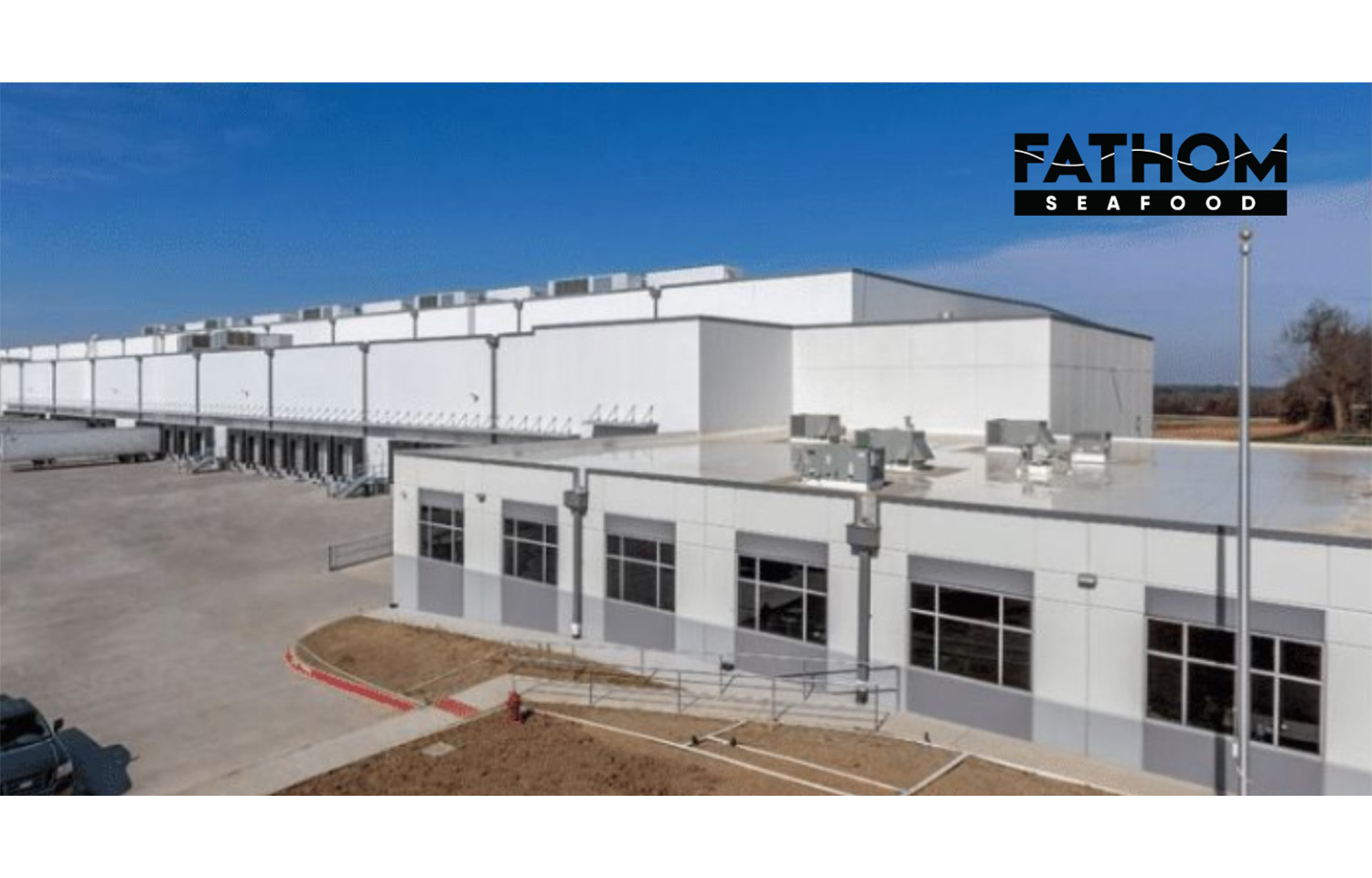
Fathom Seafood CEO Cody Mills got his start in the seafood industry trading geoduck he sourced from a friend out of the back of a Honda Element.
Now, his company is poised to begin construction on a USD 280 million (EUR 257 million), 550,000-square-foot seafood facility in Tacoma, Washington, U.S.A., that promises to be one of the most advanced of its kind in the world.
Mills told SeafoodSource that until recently, Fathom Seafood has been entirely self-funded, but that changed with its push to build the new facility. The company is about to wrap up a funding round that will help build the processing facility, and Fathom has a strategic programmatic development partner that will help the company build multiple facilities.
“They actually agreed to put up all of the money for this facility,” Mills said.
As it prepares to start building, Fathom has also garnered multiple offers from companies willing to partner on the operating side of the business and is currently evaluating those to make sure it secures the right partner once things are up and running.
Mills said the Port of Tacoma is also on board with the construction, and the new facility will be built on a brownfield site which will transform blighted land into an economic engine for the area.
“We’re going to provide hundreds of jobs in the Port of Tacoma, and we’re going to be doing automated processing with robots, as well as adding robotics. To be able to do all that at this 550,000-square-foot facility, we brought in Domenic Prinzivalli,” Mills said.
Prinzivalli is the former global head of operation services at Amazon and an expert in leveraging automation, robotics, and software for optimizing supply chains and boosting efficiency. In his role with Amazon, he was responsible for non-corporate real estate at the company and helped roll out the supply chain that the company uses in North America, Europe, and Asia.
Amazon’s model, where it transitioned from a provider of its own goods to a logistics hub selling outside products, is similar to what Mills said he wants to accomplish with Fathom Seafoods’ new facility.
“What we’re doing here today is transitioning from 95 percent our products to hopefully 95 percent everybody else’s products,” Mills said. “This is a third-party processing facility with third-party logistics on site – so everything in one place with a third-party waste capture stream on site.”
The processing facility will be capable of handling multiple different species – which also allows the company to operate more regularly and will help provide more concrete, long-term jobs while still handling a seasonal product.
The idea of aggregating resources to one place to make things more efficient isn’t just a theory either.
Mills said the company has already been actively doing it in its current facilities.
“We’re aggregating resources from 17 docks from Alaska, Canada, Washington, Oregon, and California back to the Port of Tacoma,” he said. “We’re already doing this business model; we’re just blowing it up and adding in more species and then adding in other suppliers being able to use it.”
Mills said having everything a company needs to process a product in one place – from cold storage through to final packaging – will also add efficiency by reducing the amount of trucking product back and forth.
“There’s so much trucking in between individual plants,” Mills said.
Some products in the seafood industry can be trucked back and forth multiple times – from primary processing, to cold storage, then back to secondary processing, then back to cold storage, and so on.
“In this case, we can get rid of all that trucking, which costs a lot of money and eats up a lot of margin potential,” Mills said.
Mills said in addition to having efficient processing lines with a high level of automation that reduces the need for shipping product back and forth, the new facility also has multiple logistics connections of its own for rail, marine shipping, air freight, and road freight so when it comes time to ship a finished product, there’s plenty of nearby options.
“We’ll have air, truck, rail, and sea cargo all in one facility at the port,” Mills said. “Our goal is to make other facilities mimic this first facility, as well, and then connect them via rail. We’ve already had these discussions with BNSF, UP, Norfolk Southern, and CSX.”
Fathom’s planned cold storage facility will be multi-temp, allowing it to handle various products with different temperature requirements.
The overall goal, according to Mills, is to create a third-party processor that can handle the needs of companies looking for a product in an efficient way.
“Say you’re a retailer, and you’re like, ‘I want a 7- by 11-inch package that has seven different species in it.’ Well, they could put in seven of those lines at all of these different seafood companies to meet that package size, or they send all of their seafood to this single place and we put it into that package size for both companies,” Mills said. “We don’t need to gatekeep them from making a deal; we’re here to provide the service for a fee.”
Multiple companies have already agreed with Fathom’s vision, and a few have signed letters of intent – including distributors and retailers, Mills said.
As Fathom works on taking the facility from vision to reality, it’s hiring talent to help it get there.
In addition to hiring Prinzivalli, Fathom has also hired two other key executives in its new push.
One is Lawrence Bushnell, who was formerly a sales manager at Trident Seafoods managing its salmon and black cod and brings 39 years of experience in the seafood industry. After leaving Trident, he started Gratia Dei Seafoods, but Mills said Fathom has convinced him to come on board the team.
The other is Tyler Sturrock, who most recently worked at Wells Fargo managing inventory clearance at Peter Pan Seafoods after it was put into receivership.
“We’re trying to acquire talent and assemble talent that really has experience in this industry,” Mills said.
Through the talent and the massive facility, Fathom wants to create economies of scale and allow other companies to use that efficiency to drop costs and onshore more processing in the U.S. That goal is especially relevant today as an ongoing trade war and new import rules like the Food Safety Modernization Act (FSMA) begin to make it more difficult to import and export products.
“All this gets easier by doing this here,” Mills said.
