




Bergen, Norway-headquartered Lerøy Seafood Group (LSG) has reported mixed results in Q3 2025, with low salmon prices and biological challenges dragging down the performance of its Farming segment, but its value-added processing, sales and distribution (VAPS&D) division delivering record earnings.
The company’s operational EBIT for the quarter was NOK 15 million (USD 1.5 million, EUR 1.3 million) – down from NOK 412 million (USD 41 million, EUR 35.4 million) a year ago and even lower than the NOK 680 million (USD 67.6 million, EUR 58.4 million) reported for Q2 2025.
Total revenues for LSG in the three-month period increased 11 percent year over year to NOK 8.76 billion (USD 871.5 million, EUR 752.7 million).
CEO Henning Beltestad said in the firm’s Q3 report that the period was characterized by high sea temperatures and increased sea lice pressure, as well as an ISA outbreak at one of the company’s Lerøy Aurora sites, which he said will continue to impact the timing of harvests in Q4.
Beltestad also highlighted that salmon spot prices in Q3 were an average NOK 8.00 (USD 0.80, EUR 0.69) per kilogram lower than the same period last year at NOK 62.90 (USD 6.26, EUR 5.41), while production costs per kilogram increased due to the aforementioned biological conditions.
The total Q3 2025 harvest for LSG’s Farming segment, which posted a loss of NOK 306 million (USD 30.4 million, EUR 26.3 million) in the period, amounted to 59,168 gutted weight tons (GWT) of salmon and trout, up 15 percent from the corresponding period last year.
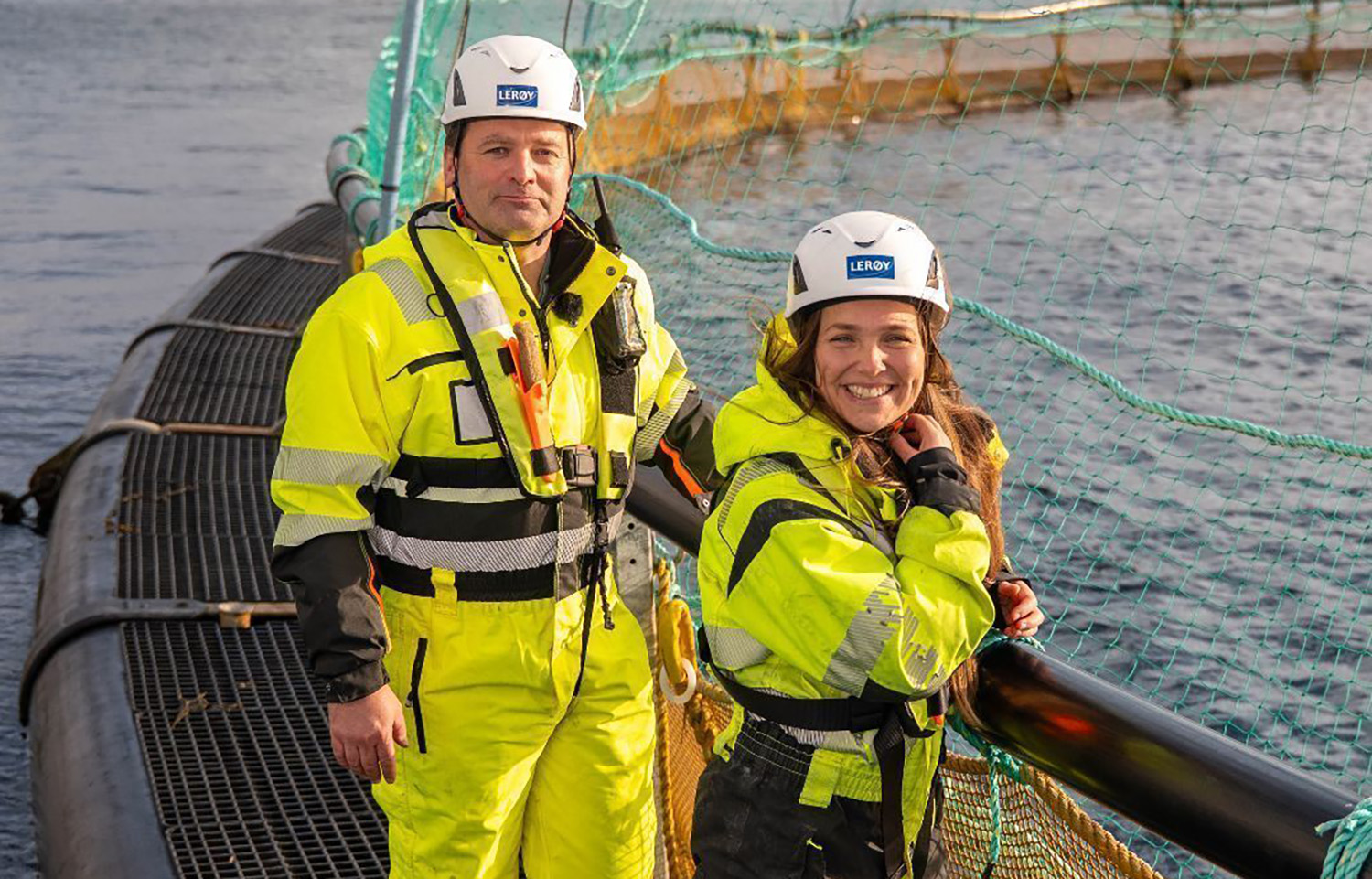
To mitigate some of the challenges the firm experienced in the quarter, Lerøy has implemented roe, smolt, and shielding technology that are already showing clear improvements “with strong, robust fish going into 2026,” Beltestad said.
Around 31 percent of the Farming segment’s total harvest now benefits from shielding technology, the firm said, which comprises four elements: submerged farming, semi-contained farming, laser delousing, and – from Q1 2027 onward – closed contained farming, with an order recently placed for three such units.
“We are investing in new solutions and are trying to be innovative to have even more sustainable production and to increase our performance in the sea,” Beltestad said.
In contrast to Farming’s results, LSG’s VAPS&D segment achieved a record operational EBIT of NOK 410 million (USD 40.8 million, EUR 35.2 million).
The segment has continued its strong development, with high demand seen across the value chain and strong growth in Asia in particular, where it’s building markets through new branch offices, Beltestad said.
“They are doing a fantastic job in this segment, and we believe we will see further improvement going forward,” he said.
Elsewhere, the firm’s Wild Catch segment delivered an operational EBIT of NOK 3 million (USD 298,459, EUR 257,897), compared to a loss of NOK 58 million (USD 5.8 million, EUR 5 million) in Q3 2024.
Though Q3 is typically the low season for Wild Catch, record-high cod prices helped offset lower catch volumes in the period, with the year’s quota down 32 percent compared to 2024.
A total 13,500 GWT of wild catch was reported for the quarter – up 200 GWT year over year. Of this, cod accounted for 1,200 GWT.
Beltestad said there are prospects for further reductions in cod quotas for 2026, but early indications suggest these may increase again starting in 2027.
Looking ahead to next year, LSG expects lower production costs per kilogram in Farming and continued growth in VAPS&D.
The company forecasts a harvest volume of 195,000 GWT in Norway for both 2025 and 2026.
Including its 50 percent share of Scottish Sea Farms, total harvest volume is expected to reach 217,500 GWT in 2026, compared to 211,800 GWT anticipated for this year. LSG is expecting a more balanced salmon market next year, too, following this year’s record-high supply growth.
Acknowledging that Q3 was a mixed quarter for LSG, Beltestad maintained that the long-term perspective is good.
“It’s a positive outlook for all our segments,” he said.
