






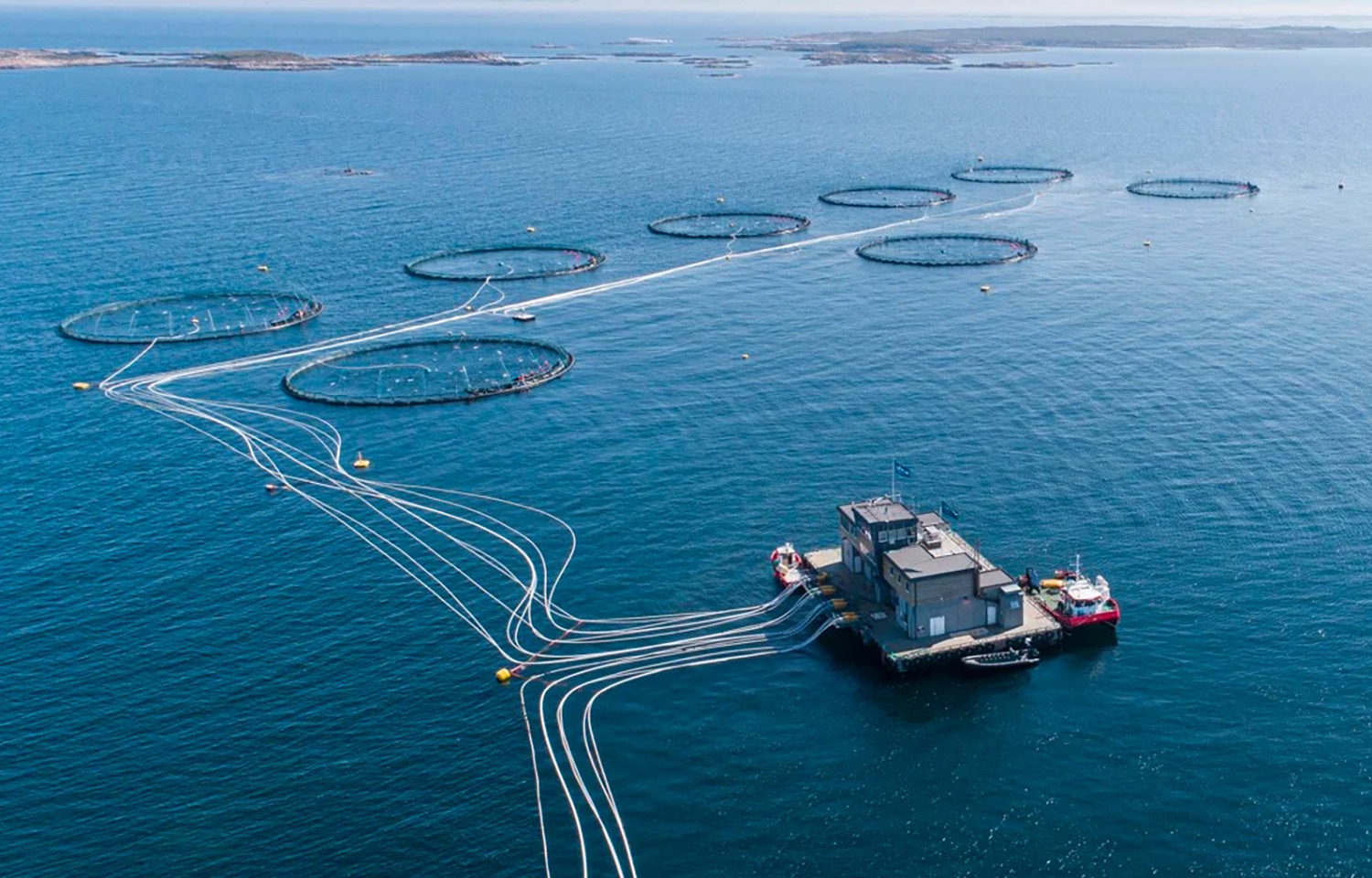
Bergen, Norway-headquartered Lerøy Seafood Group’s integrated value chain and robust business model helped it weather industry headwinds in the second quarter of 2025, according to CEO Henning Beltestad.
Delivering the group’s Q2 results on 20 August, Beltestad said the three-month period featured solid operations across all three of Lerøy’s business segments – Farming, Wild Catch, and VAP, Sales, and Distribution (VAPS&D) – with strong earnings particularly achieved in Wild Catch and VAPS&D. Beltestad emphasized earnings in the former segment were accomplished despite lower fishing quotas.
As a result, the firm recorded revenues of NOK 8.8 billion (USD 860.4 million, EUR 737.9 million) in the period, marking a 15 percent increase on the same period last year.
Though Lerøy’s revenues spiked, its operational EBIT dropped 25 percent year over year to NOK 680 million (USD 66.5 million, EUR 57 million), as the profitability of its Farming segment fell sharply due to a significant drop in salmon and trout prices during the quarter. Those declines outweighed both a 33 percent rise in harvest volume and lower costs per harvested kilogram year over year.
According to Lerøy’s Q2 2025 report, Farming achieved revenues of over NOK 3.3 billion (USD 322.7 million, EUR 276.7 million) in the period, which was on par with the corresponding period of last year. At the same time, its operational EBIT totaled just NOK 256 million (USD 25 million, EUR 21.5 million), compared to NOK 777 million (USD 76 million, EUR 65.1 million) in Q2 2024.
Additionally, the firm’s profit contribution from associated companies and joint ventures totaled a loss of NOK 15 million (USD 1.5 million, EUR 1.3 million) in the period, compared to positive profit of NOK 52 million (USD 5.1 million, EUR 4.4 million) in Q2 2024. Again, this decrease was attributed to significantly lower salmon prices that hurt price realizations for Scottish Sea Farms, a joint venture Lerøy co-owns with fellow salmon-farming firm SalMar.
“The spot prices for salmon were about NOK 30 (USD 2.93, EUR 2.52) per kilogram lower than in the same quarter last year, which, of course, affected us in this quarter,” Beltestad said.
The total Q2 2025 harvest for Lerøy’s Farming segment amounted to 48,898 gutted weight tons (GWT), up 33 percent from the corresponding period last year.
Beltestad said he expected the third quarter of the year to be a bit more biologically challenging due to high seawater temperatures, so LSG is maintaining its full-year 2025 harvest guidance of 195,000 GWT for Norway, Beltestad said.
With the firm’s 50 percent share of Scottish Seafarms expected to yield 16,000 GWT, its total estimated volume for Farming is 211,000 GWT.
Elsewhere in the firm, Lerøy’s Wild Catch segment reported revenues of over NOK 1 billion (USD 97.8 million, EUR 83.9 million), which was NOK 320 million (USD 31.2 million, EUR 26.8 million) more than a year previously. Its operational EBIT climbed NOK 152 million (USD 14.9 million, EUR 12.7 million) to NOK 148 million (USD 14.5 million, EUR 12.4 million).
In total, the firm caught 17,687 GWT of fisheries products in the quarter, compared to 17,829 GWT a year previously. The nearly even catch volumes came despite a 32 percent cod quota reduction for 2025.
Year over year, prices for cod, haddock, and saithe in Q2 2025 were up 22 percent, 55 percent and 69 percent, respectively, the report said.
LSG’s VAPS&D segment generated record revenues of NOK 8.5 billion (USD 831.1 million, EUR 712.7 million) in the period and an operational EBIT of NOK 351 million (USD 34.3 million, EUR 29.4 million) – up from NOK 7.3 billion (USD 713.7 million, EUR 612.1 million) and NOK 217 million (USD 21.2 million, EUR 18.2 million) in the year-ago period.
Beltestad attributed the impressive quarter for the segment to strong demand in end markets and good positioning with strategic customers globally, including new branch offices in Asia that are starting to show results.
“We are on a good trend in this segment, and we are really satisfied with its development. It’s positive for the future,” he said.
In the report, the company said it has ambitions to grow this segment’s EBIT to NOK 1.25 billion (USD 122.2 million, EUR 104.8 million) for the full year.
Initiatives implemented to achieve this spike include increasing volumes and improving the utilization of its factories, as well as making investments in factory improvements within selected European markets. Lerøy further acknowledged that this target is “ambitious” but stated that among other factors, lower raw material prices and increased capacity utilization can help to support margins and profitability.
