




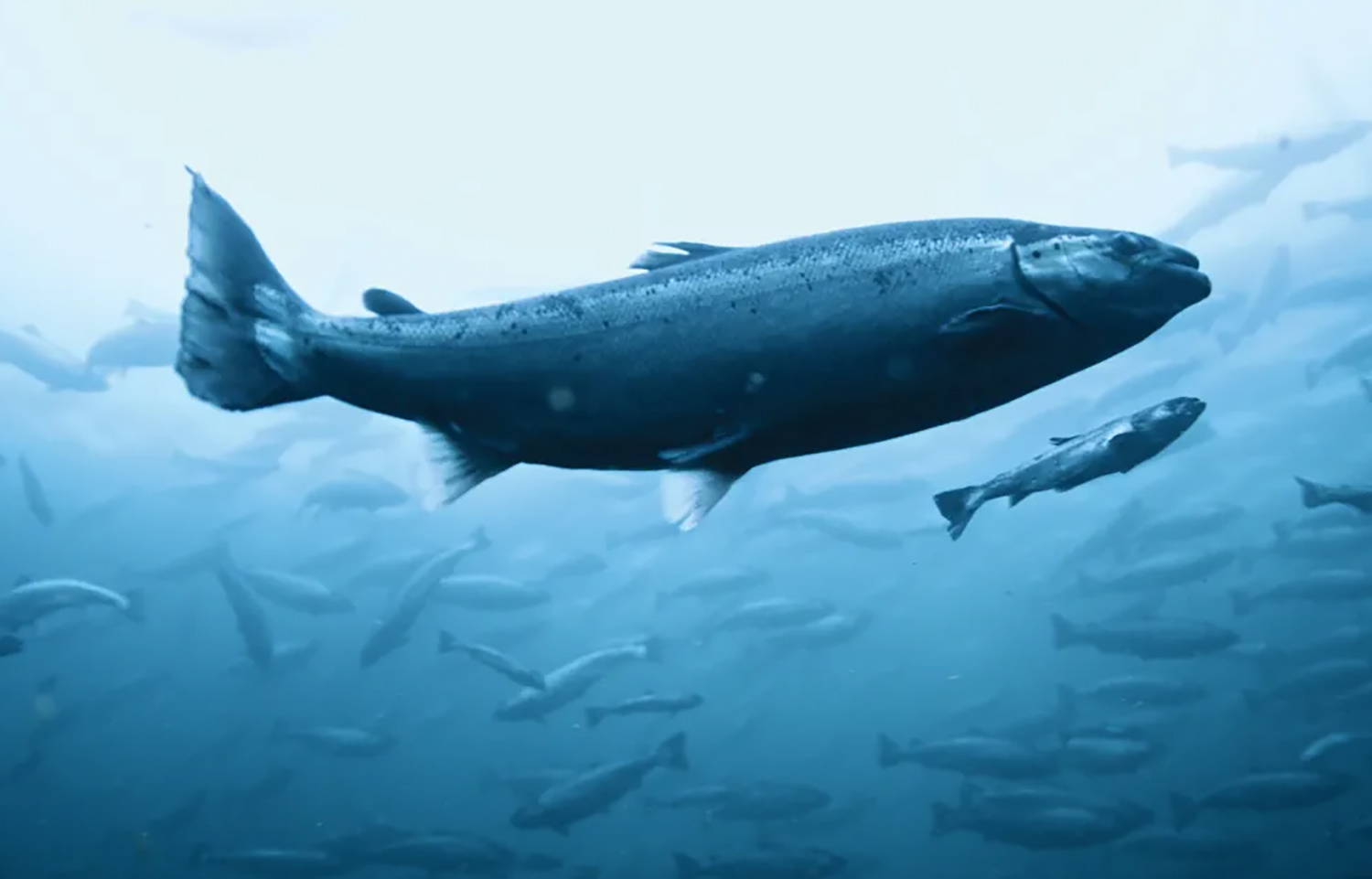
Bergen, Norway-headquartered salmon-farming firm Mowi recently reported a record Q3 harvest of 166,000 gutted weight tons (GWT), and with more fish in the sea than ever before for the firm, it has increased its full-year 2025 volume guidance by 9,000 GWT to 554,000 GWT, as well as to 605,000 GWT for 2026.
Mowi has largely attributed the guidance spikes to its acquisition of a controlling stake in fellow Norwegian aquaculture firm Nova Sea.
The acquisition was approved and closed in October, and the process of integrating the company is now “in full swing,” with the intention to capture EUR 34 million (USD 39 million) worth of synergies, Mowi CEO Ivan Vindheim said in the firm’s Q3 2025 report.
Elsewhere in the report, Mowi noted that its Norwegian operations produced 99,444 GWT of salmon in the three-month period – down from a record 105,776 GWT a year previously.
Meanwhile, the firm’s Chilean operations produced 22,374 GWT, compared to 23,211 GWT previously; Scotland contributed 17,399 GWT, compared to 15,227 GWT in Q3 2024; Canada harvested 15,646 GWT, compared to 6,684 GWT; Iceland, through Mowi’s subsidiary Arctic Fish of which it owns 51 percent, produced 5,400 GWT, compared to 3,407 GWT; Ireland harvested 3,010 GWT, compared to 3,663 GWT in the same quarter a year ago; and the firm’s Faroese operations contributed 2,367 GWT, compared to 3,051 GWT.
Despite the record harvest volume, Mowi reported an operational EBIT of EUR 111.7 million (USD 128.2 million) for Q3, representing a decrease of more than EUR 61 million (USD 70 million) on the corresponding period of last year. Its revenues slipped by over EUR 50 million (USD 57.4 million) to EUR 1.39 billion (USD 1.6 billion), as well, and the firm largely attributed the drops to lower market prices.
“The third quarter was like previous quarters this year – characterized by soft prices following well-supplied markets. In the third quarter, the price was even below industry costs,” Vindheim said. “However, on a positive note, the industry supply growth has now normalized after unprecedented growth earlier this year and is now hovering around 0 percent which, under normal circumstances, should pave the way for better prices going forward.”
Helping to mitigate the issue of lower market prices a little bit was the fact the company was able to reduce its farming costs by EUR 50 million in the period compared with Q3 2024 and by EUR 126 million (USD 144.6 million) for the year to date.
“These are both considerable amounts,” he said. “Furthermore, our standing biomass cost continues to develop positively on lower feed prices which bodes well for our P&L costs next year.”
Those low raw material prices allowed Mowi’s downstream business, Mowi Consumer Products, to deliver its best Q3 earnings to date, with an operational EBIT of EUR 65.7 million (USD 75.4 million) and operating revenue of EUR 907 million (USD 1 billion), compared to Q3 2024’s EUR 43.5 million (USD 49.9 million) and EUR 911.6 million (USD 1 billion), respectively. Nearly 69,002 MT of products were sold by the division in the quarter, compared to 65,005 MT in the corresponding period of last year.
“Low prices for farming mean low raw material costs for consumer products and, therefore, higher profit. This relationship proved to be true in the third quarter,” Vindheim said.
With its second-highest quarterly sales volume of EUR 25.7 million (USD 29.5 million) and 177,087 MT sold, Mowi Feed also delivered a strong quarter for the firm. This comes after the firm said earlier this year it was conducting a strategic review on the division. Vindheim provided an update on the review in the firm’s Q3 report, saying it remains ongoing and that a possible sale of the division is still a possibility.
Looking forward, Vindheim said that the longer-term target is for Mowi to organically achieve an annual harvest volume of at least 650,000 GWT by 2029.
“This we will achieve through, among other things, increased smolt stocking and by means of post-smolt because we still have underutilized license capacity in Mowi in several of the countries where we operate,” he said. “With post-smolt, we can increase the productivity from licenses already in operation.”
Helping the company achieve this goal is a new 6,000-MT post-smolt RAS facility in Kilvik, Norway. The first delivery from this site is anticipated for Q2 2026, with full production expected in 2027. Mowi also just placed an order for four new closed containment systems for post-smolt production in its Region West location of Norway.
