






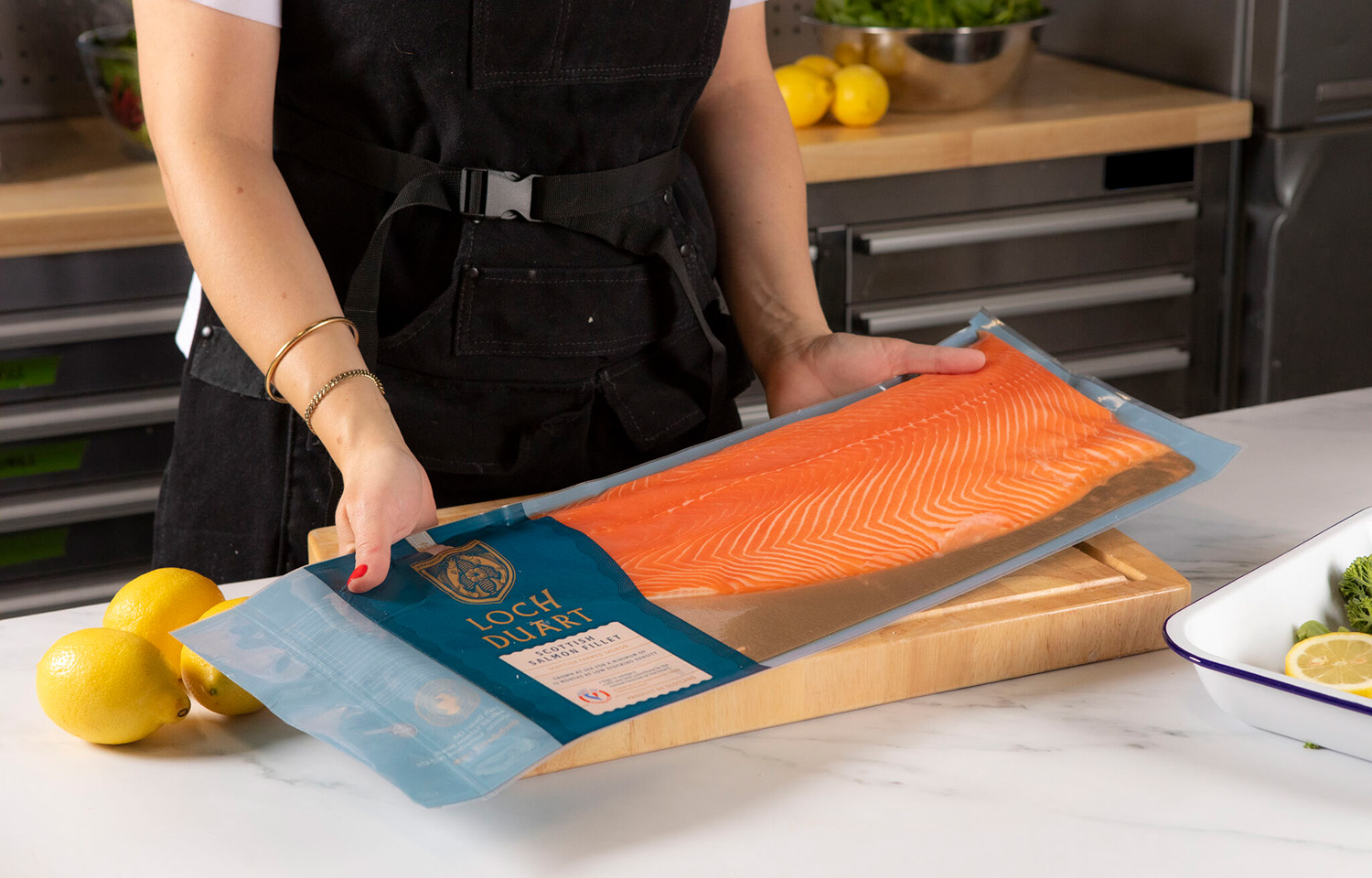
Loch Duart recently posted declines in annual turnover and profit for the 12 months ending 31 March 2024.
The Scourie, Scotland-based salmon-farming firm said the decreases were anticipated due to ongoing updates at its farming sites and in its operations in support of future growth.
Loch Duart, owned by U.S. investment fund SAF II Master Fund, achieved a turnover of GBP 43.1 million (USD 55 million, EUR 50.3 million) in its latest fiscal year, down from the GBP 52.5 million (USD 67 million, EUR 61.3 million) it posted in the previous year.
Its operating profit fell from GBP 4.7 million (USD 6 million, EUR 5.5 million) to GBP 1.3 million (USD 1.7 million, EUR 1.5 million) year over year, and its net profit for the year dropped from GBP 3.4 million (USD 4.3 million, EUR 4 million) to GBP 710,457 (USD 906,586, EUR 829,726).
The company experienced these drops while it has been developing plans for long-term, sustainable growth that includes goals to increase production through new sites and optimizing the potential of existing ones.
Even though the company saw a decline in profit in the period, it said it had maintained “industry-leading standards of fish welfare, environmental stewardship, community engagement, and exceptional product quality,” specifically addressing increasing biological challenges created by rising water temperatures.
Loch Duart also said it made investments in infrastructure and operational capacity during the year, as well as following the year’s end.
The company is also exploring the potential for reopening its Canadian operations. The company had at one point planned to expand in Nova Scotia via its Snow Island subsidiary, with the goal of producing 6,000 metric tons of fish annually, but those plans never materialized after the Canadian government rejected its expansion application.
Loch Duart said its move to expand into Canada would be a means to avoid deleterious exchange rates, as it exports a significant percentage of its production. Reopening its Canadian operations would also reduce operational and financial risk, it said.
The company’s salmon are raised in low-density, low-energy, sheltered sites that use a bespoke fish feed and feature minimal fish handling. Producing around 6,000 metric tons of salmon per year, Loch Duart supplies its fish to hotels, restaurants, and retailers in the U.K. and overseas markets.
