


The 32nd edition of Seafood Expo Global/Seafood Processing Global – taking place at Fira de Barcelona in Barcelona, Spain, from 21 to 23 April – will feature, in its conference program, more than 30 educational sessions led by more than 90 international seafood industry experts.
The keynote will take place 21 April. Prins is an independent journalist, author, and former Wall Street executive, who often speaks about the ability to bridge politics, finance, and global economics, Diversified said. She’s authored seven books, including “Collusion: How Central Bankers Rigged the World,” “All the President’s Bankers,” and “It Takes a Pillage.”
“In this address, free and open to all, Prins will deliver a forward-looking economic outlook for 2026, tailored to the global seafood sector – connecting macroforces to daily decisions, from U.S.-China trade tension fallout to evolving E.U. labeling regulations, traceability mandates, and energy price swings,” Diversified said. “Whether you're navigating Latin American shrimp exports, Middle East shipping chokepoints, or European labeling mandates, Prins will break down the real forces behind the headlines and what they mean for seafood's global future.”
A conference session titled “Blue Ports and the Fisheries Industry: Building Resilient and Efficient Value Chains” will be presented by ANFACO-CYTMA Spain Secretary General Roberto Alonso and also feature FAO Fishery Officer Rome Shirlene Maria Anthonysamy, CEPESCA Secretary General Javier Garat Pérez, Chair of the International Board of FiTI Audun Lem, and Blue Ports Initiative Consultant Yolanda Morales. FAO will explore how ports serve as key hubs for quality control, traceability, processing, and logistics, supporting both competitiveness and sustainability across coastal economies, Diversified said.
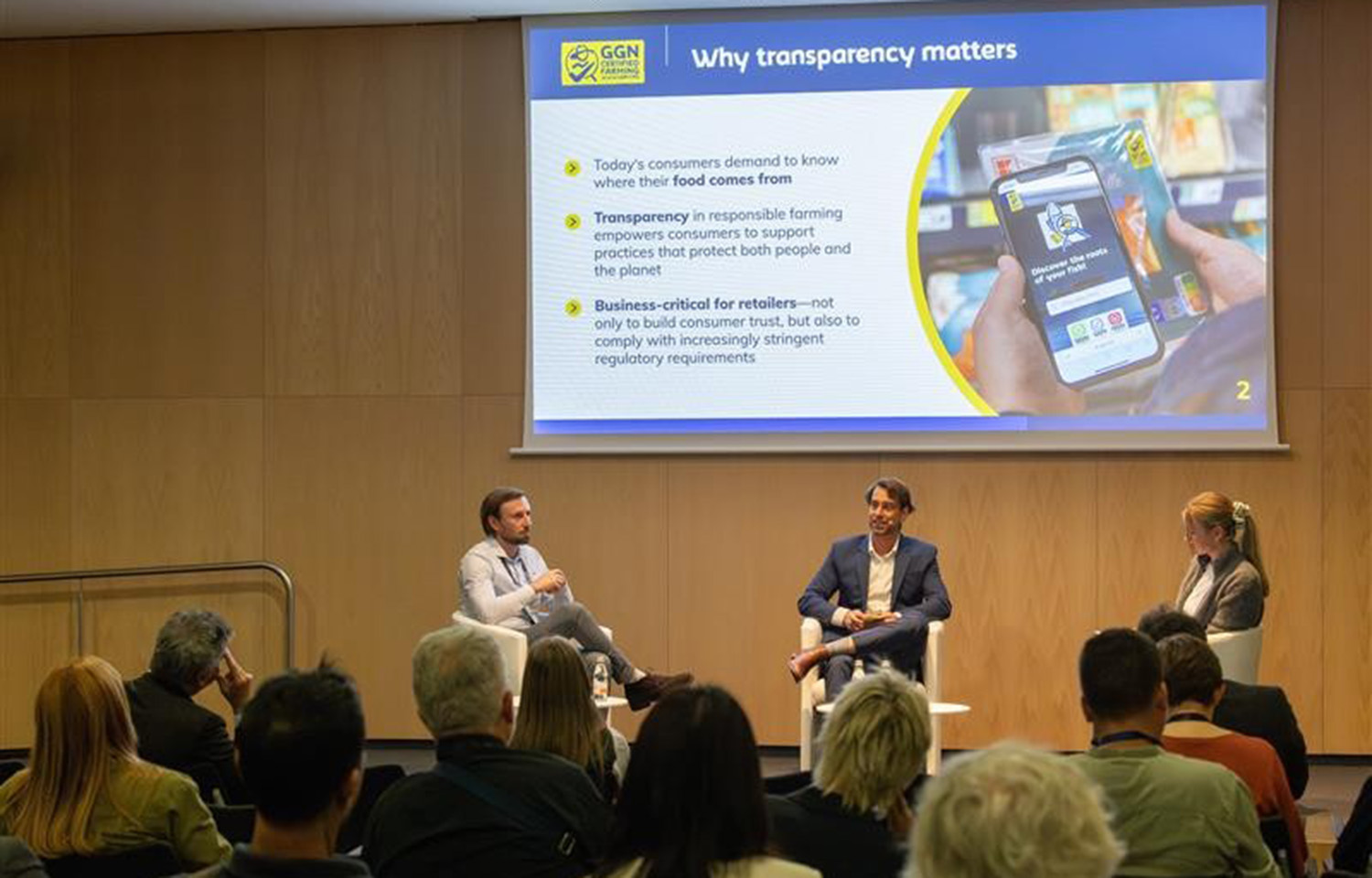
“Sustainability continues to be a central theme throughout the conference program,” Diversified said. “Experts from NGOs, academia, and the private sector will discuss strategies for improving responsible aquaculture practices, supply chain transparency, and environmental performance across the seafood industry. Sessions will address issues such as traceability systems, labor and human rights considerations, certification and reporting requirements, and collaborative initiatives designed to strengthen responsible seafood sourcing worldwide.”
Another session, “Seafood Trade in the Tariff Era: An Analysis of Challenges and Opportunities between the E.U. and U.S.,” will focus on bringing together trade and industry experts to examine shifting supply flows, evolving tariffs, and opportunities for exporters navigating a more fragmented global seafood market.
“Emerging Seafood Consumption Trends in Japan in a Changing Global Supply,” presented by Meros Consulting Co-Founder and Head of the European Office Tina Peneva, will explore the cultural and economic factors that drive demand shifts in Japan, like product formats, channels, and sustainability considerations such as consumer choice.
Another session, titled “Navigating Uncertainty: Building a Resilient E.U. Market for Fisheries and Aquaculture Products,” will examine how Covid-19, Brexit, and geopolitical shocks have reshaped the E.U.’s supply chains and highlight strategies for adaptation, diversification, and long-term resilience.
Leaders from the WWF, Conservation International, Sea Farms, Deliberate Capital, and WWF-U.S. will speak at a session titled “Mangroves + Aquaculture: A New Collaboration Frontier for Nature-Positive Seafood” to explore how partnerships between seafood producers and NGOs can protect critical ecosystems while scaling responsible aquaculture.
Additionally, an economic researcher at Wageningen University and Research will highlight innovations in low-carbon seafood production, waste valorization, and digitalization across fisheries, aquaculture, and processing, offering actionable insights on how technology and sustainability are transforming seafood value chains in “Perfect Symphony: Sustainable Seafood by Low CO2, Circular Byproducts and New Technology.”
