



Representatives from Chile, Ecuador, and Peru have come to an initial agreement regarding management of the region’s giant squid (Dosidicus gigas) fishery.
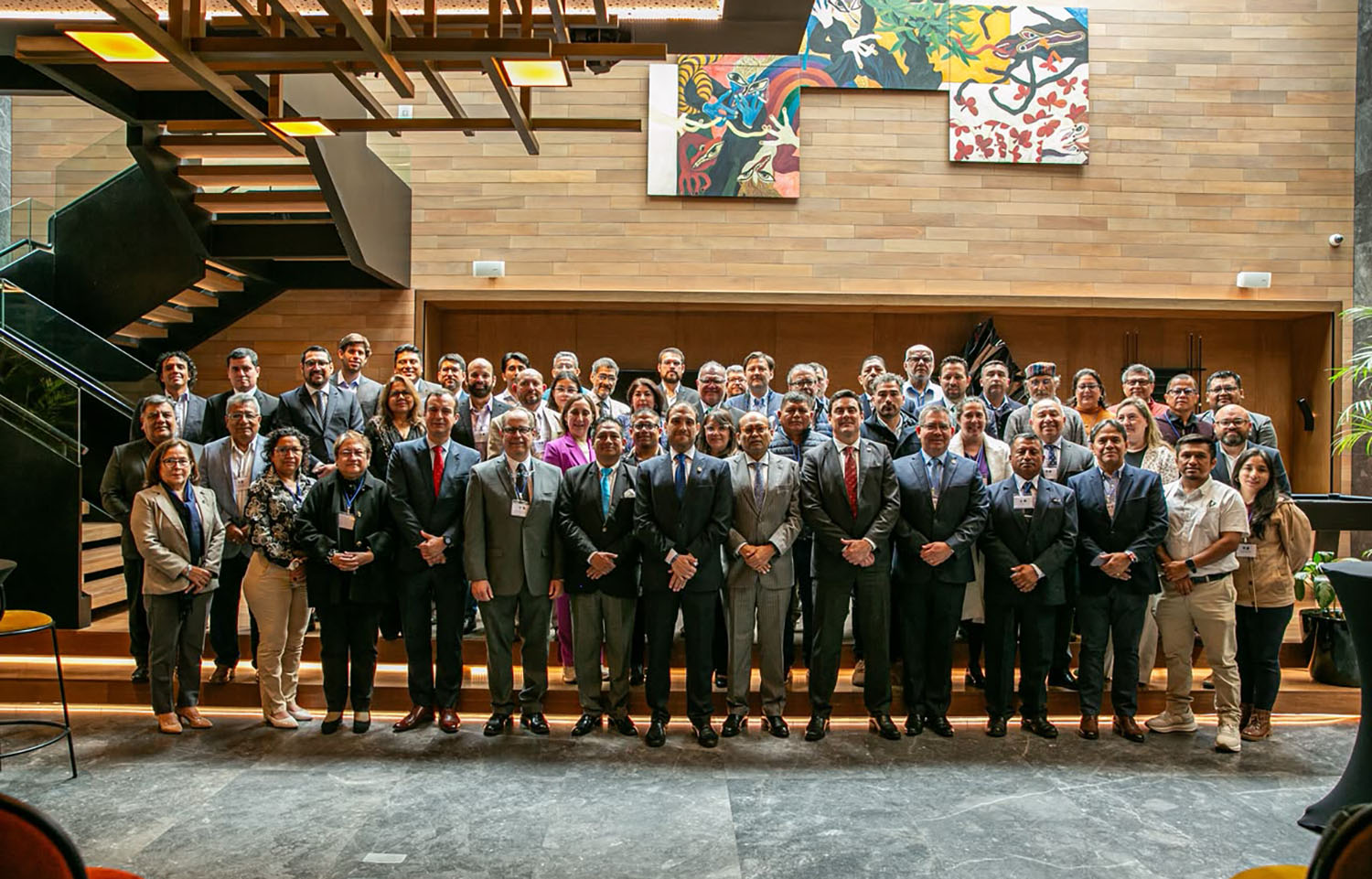
Peru Deputy Minister of Fisheries and Aquaculture Jesús Barrientos, Chile Undersecretary of Fisheries Oswaldo Urrutia, and Ecuador Deputy Minister of Aquaculture and Fisheries Hugo Vera recently met in Lima, Peru – along with scientists, representatives of artisanal and industrial fisheries, and NGO representatives – to attend the “Sustainability of Giant Squid in the Southeast Pacific” regional workshop organized by the United Nations’ Permanent Commission of the South Pacific (CPPS) and the Committee for the Sustainable Management of Giant Squid of the South Pacific (CALAMASUR).
The workshop culminated in the adoption of a proposal document in which participants reached a consensus aimed at strengthening scientific cooperation between the three countries, moving toward more coordinated fisheries governance, recognizing the socioeconomic importance of giant squid for coastal communities, and exploring joint mechanisms for regional collaboration.
The participants agreed that giant squid, also known as cuttlefish and jumbo flying squid, is a strategic resource for the region – both for its economic and food security relevance – but also acknowledged the challenges posed by its high biological and environmental variability.
According to CALAMASUR President Alfonso Miranda, participants also agreed that gaps in scientific information persist and that fishing in international waters without effective control could compromise the future sustainability of the fishery.
The South Pacific Regional Fisheries Management Organization (SPRFMO) has a mandate to ensure the conservation and sustainable management of both horse mackerel and giant squid in international waters of the South Pacific.
While horse mackerel has received scientific investment, periodic stock evaluations, and clear management rules for more than a decade, CALAMASUR has expressed disappointment that giant squid has been exploited for 14 years without effective catch limits or scientific recommendations to guide sustainability.
Miranda has previously blamed lack of political will for the dearth in action but said the recent workshop represents a step in the right direction.
“Rarely has there been an opportunity for agents of the productive sector of Peru, Chile, and Ecuador to sit down for two days to say what we think and what we dream, and that is why this meeting was valuable. This [proposal] has been a triumph of joint work, and we hope that it will serve as a starting point for the CPPS to be that great articulator that revives the spirit of Santiago in 1952,” he said, referring to the year when the CPPS – an intergovernmental maritime organization – was founded to coordinate regional maritime policies and protect marine resources.
Miranda added that hard work lies ahead now that the groundwork has been laid.
“In the coming months, the challenge will be to translate these consensuses into effective mechanisms for scientific cooperation … for the benefit of the sustainability of the resource and the communities that depend on it,” he said.
