






More than 50 organizations from Latin America, North America, and Europe have presented a joint statement to the South Pacific Regional Fisheries Management Organization (SPRFMO), demanding urgent measures to improve the conservation and management of the giant squid fishery on the high seas and to rein in China’s distant-water fishing fleet.
The joint statement was signed by 17 artisanal fishing organizations from Chile, Ecuador, Mexico, and Peru, including Peru’s National Society of Artisanal Fisheries (SONAPESCAL), the National Squid Coordinator of Chile, and Ecuador’s Cooperative of Artisanal Fisheries Production of Santa Rosa. Signatories also included 21 companies and business associations in charge of the processing and export of giant squid in Chile and Peru, such as the Chilean Trade Association of Fish Processing Plants (APPES-Chile) and the Peruvian Chamber of Giant Squid (CAPECAL), as well as 20 international civil society organizations, including the Environmental Justice Foundation, Oceana, The Pew Charitable Trusts, and the Innovations for Ocean Action Foundation (I4OA).
The signatory organizations voiced their support for nine conservation and management proposals – proposed by Ecuador, Peru, the United States, South Korea, the European Union, and New Zealand – that will be discussed at the 14th meeting of the SPRFMO, set to be held in Panama in March. These seek to regulate fishing in international waters of the South Pacific, establish precautionary catch limits, strengthen monitoring and oversight, and protect the labor rights of crew members.
According to a statement from the Committee for the Sustainable Management of the Southern Pacific Jumbo Flying Squid (CALAMASUR), the giant squid is one of the most important fisheries in the world, with annual catch totals exceeding 1 million metric tons (MT). Its catch is mainly divided between three countries: Peru, which accounted for 51 percent of landings between 2019 and 2023; China, with 41 percent; and Chile, with 7 percent.
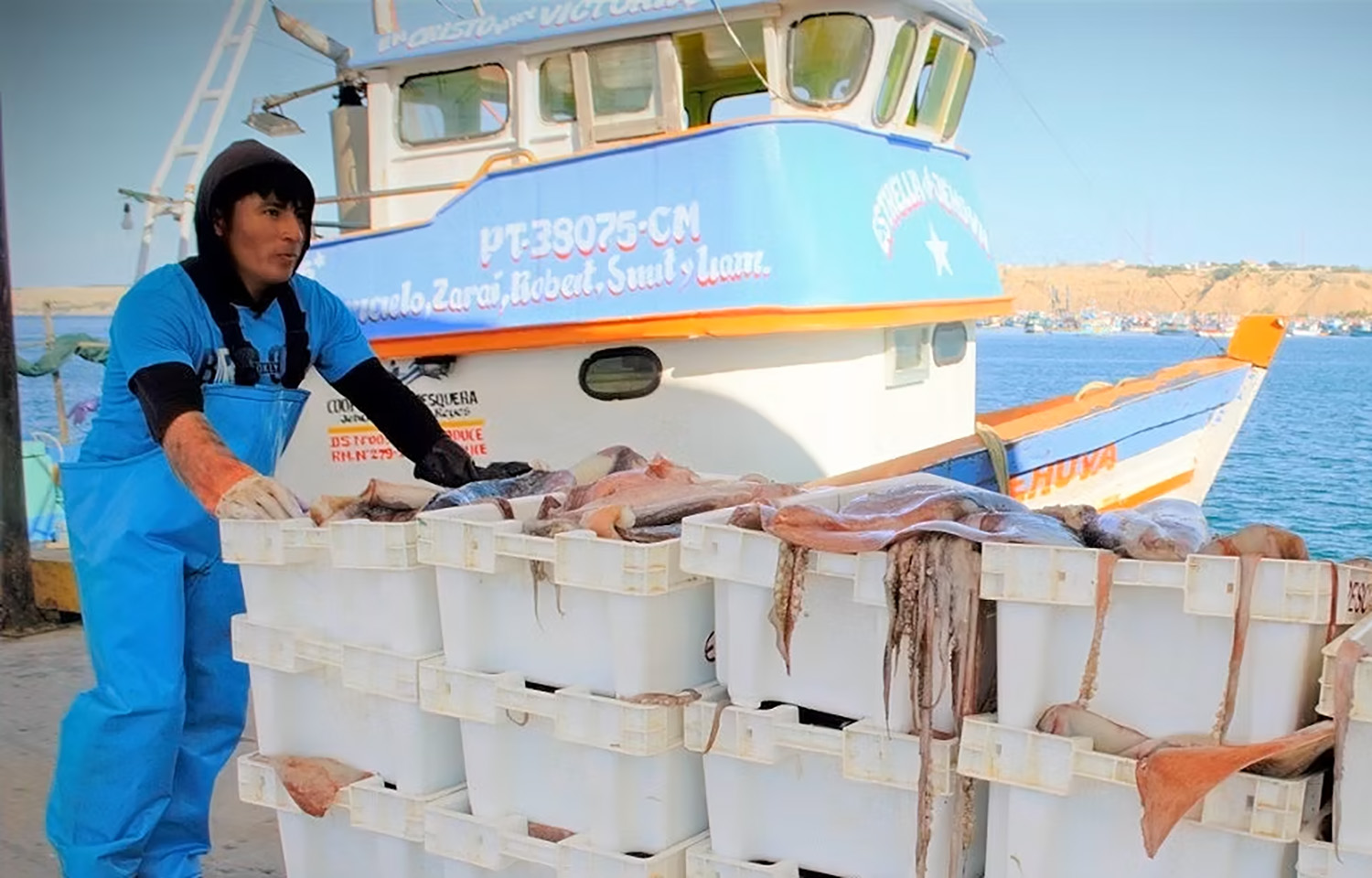
The resource supports tens of thousands of artisanal fishers in Peru and Chile, where more than 6,000 vessels operate. In both countries, the activity is carried out mainly in jurisdictional waters and under strict management systems that include annual catch quotas and, in the case of Peru, closed seasons to protect the reproduction of the resource.
However, in the international waters of the South Pacific, where the Chinese distant-water fleet operates almost exclusively, a regulatory vacuum persists that allows open-access fishing without catch limits, CALAMASUR reported. The Latin America-based organization has been outspoken in urging more Chinese cooperation to drive change in the South Pacific squid fishery.
The SPRFMO was created to prevent unregulated fishing in international waters, but that objective has not been met, according to CALAMASUR President Alfonso Miranda, who said in the 13 years of the organization's existence, China has caught about 5 million MT of giant squid without scientific advice to guide those totals. Between 2020 and 2024, China has increased its annual landings to more than 400,000 MT, which marked an increase of nearly 65 percent when compared to the previous decade and displaced Peru as the world's leading producer of the resource.
While artisanal fishers in coastal countries must conform to quotas based on scientific criteria, China's fleet of 671 large-scale vessels have been allowed to operate without restrictions. Recent research presented by the Chilean Fisheries Development Institute (IFOP) has warned of signs of deterioration in the health of the giant squid population distributed in international waters.
“There is clear agreement: Without effective rules on the high seas, this fishery has no future,” CALAMASUR said. “The SPRFMO must act responsibly and put an end to a situation that threatens the sustainability of giant squid and the livelihoods of thousands of artisanal fishers in Latin America.”
