





The Committee for the Sustainable Management of the Jumbo Flying Squid of the South Pacific (CALAMASUR) expressed disappointment in the lack of action on squid sustainability at a recent meeting of the South Pacific Regional Fisheries Management Organization (SPRFMO), calling the move “insufficient.”
Despite two weeks of talk, the 17 members of SPRFMO were only able to agree to a slight reduction in vessels authorized to participate in the South Pacific fishery. The result left participants at the meeting in Panama with “a bitter feeling,” CALAMASUR President Alfonso Miranda said in a release.
The SPRFMO has a mandate to ensure the conservation and sustainable management of both horse mackerel and jumbo flying squid, which can also be referred to as giant squid, in international waters of the South Pacific. While horse mackerel has received scientific investment, periodic stock evaluations, and clear management rules for more than a decade, “giant squid has been exploited for 14 years without effective catch limits or scientific recommendations to guide its sustainability,” Miranda said, blaming a lack of political will.
The inaction is even more grave considering the fishery’s growth, Miranda said. The jumbo flying squid catch barely topped 100,000 metric tons (MT) per year at the turn of the century; today it exceeds 1.3 million MT, placing it among the world’s 10 largest fisheries.
“Almost 50 percent of the world's catch of giant squid occurs in the international waters of the South Pacific, but even so, in that area fishing is expected to continue without limits,” he said.
Miranda said SPRFMO has avoided applying even the most basic principle of modern fisheries governance: the precautionary approach. Developed in the 1970s and widely adopted in the world's fisheries, the precautionary approach applies preventive limits to avoid the collapse of the resource when there is scientific uncertainty over the biomass.
During the SPRFMO meeting, Peru and Ecuador proposed the adoption of precautionary measures, including a catch limit and the creation of no-fishing zones in areas near the waters of Peru, Ecuador, and Chile, but the proposals were not adopted.
Instead, the Commission approved a 15-percent reduction in the number of vessels registered to fish for jumbo flying squid. It also set a one-year deadline to define more ambitious measures, which Miranda labeled simply a postponement of structural decisions.
“Reducing the total registered fleet by 15 percent only takes it from 671 to 570 ships… [That] sounds very good for the grandstands, but it lacks real impact in reducing the risks to resource sustainability,” National Society of Artisanal Fisheries of Peru (SONAPESCAL) President Elsa Vega said.
The move is “insufficient” and can cause a false sense of regulatory progress, hindering further work, according to Miranda.
“The SPRFMO has set a one-year countdown and that clock has already started ticking. We’ve been told that developing the evidence to determine the management measures to be applied could take at least three more years. So it is necessary to reflect on whether it will be possible to maintain such a large fishery without limits for many more years,” he said.
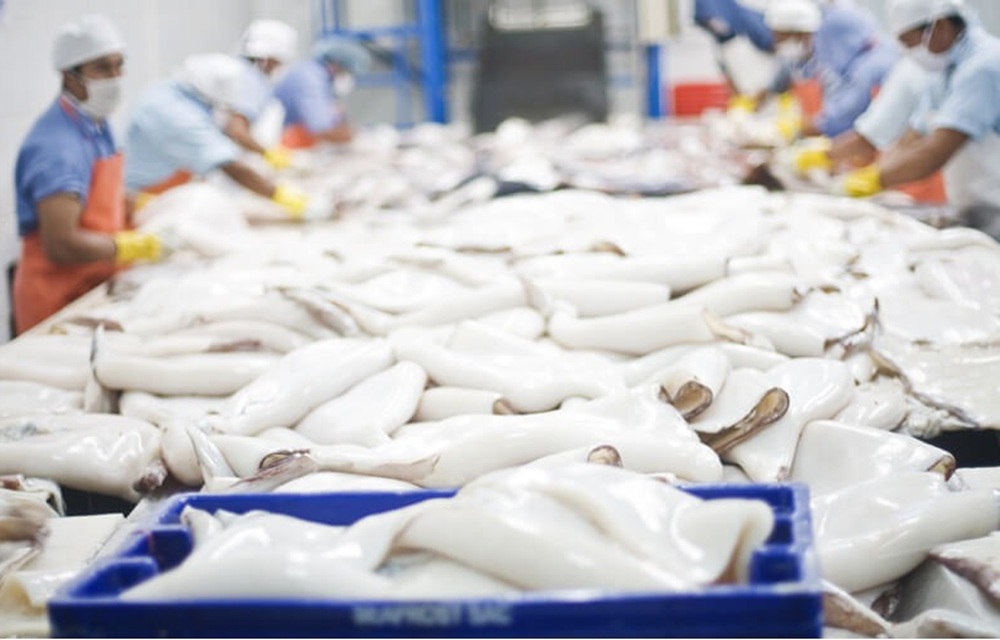
Last month, more than 50 organizations from Latin America, North America, and Europe presented a joint statement to SPRFMO, demanding urgent measures to improve the conservation and management of the jumbo flying squid fishery on the high seas and to rein in China’s distant-water fishing fleet.
The joint statement was signed by 17 artisanal fishing organizations from Chile, Ecuador, Mexico, and Peru; 21 companies and business associations in charge of the processing and export of jumbo flying squid in Chile and Peru; and 20 international civil society organizations, including the Environmental Justice Foundation, Oceana, The Pew Charitable Trusts, and the Innovations for Ocean Action Foundation.
CALAMASUR has been outspoken in urging more Chinese cooperation to drive change in the South Pacific squid fishery.
