



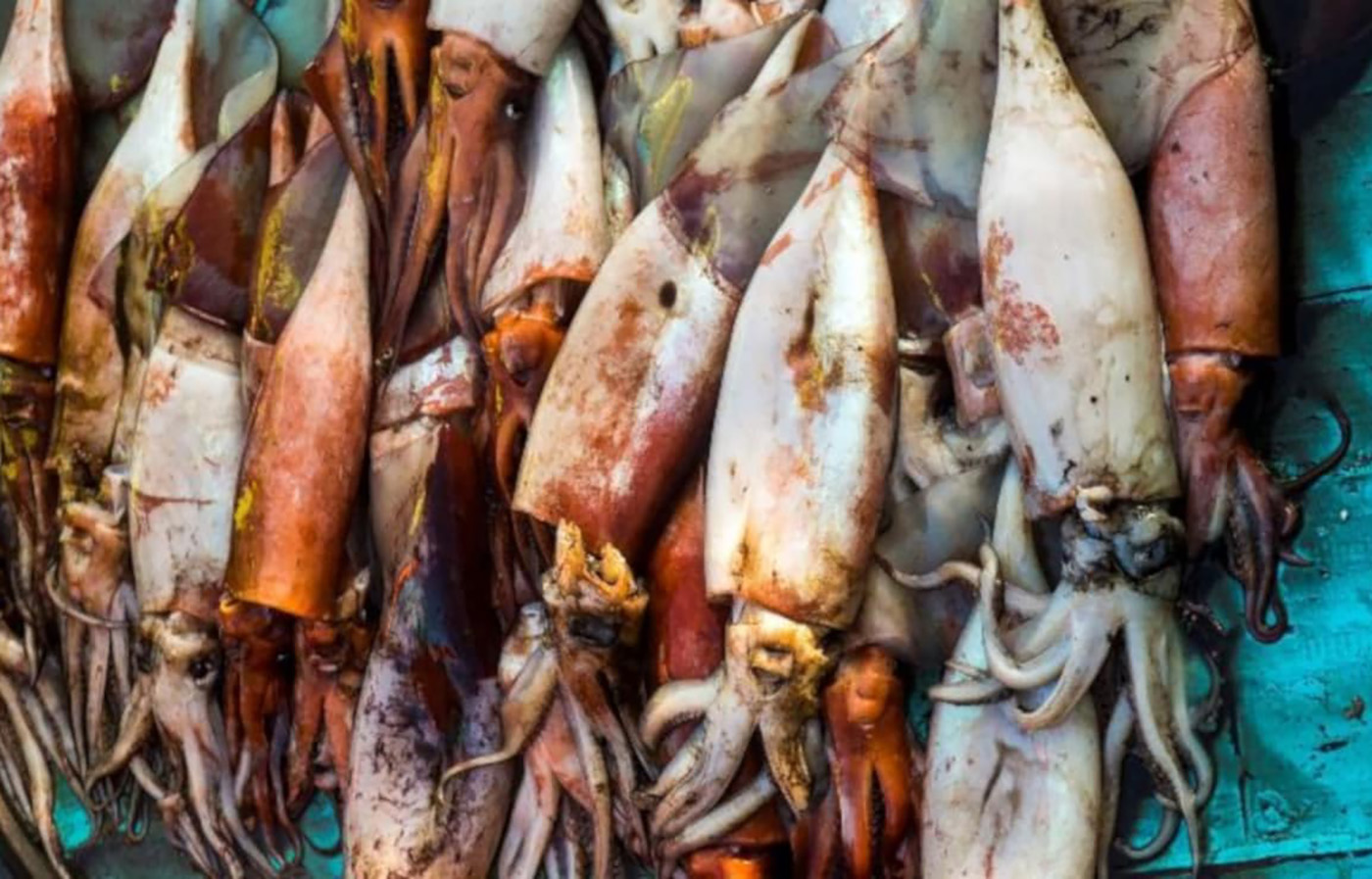
Catches have been scarce in Peru’s giant squid fishery, which, together with the related processing industry, is facing an unprecedented crisis due to high raw material costs, natural weather conditions, and illegal, unreported, and unregulated (IUU) fishing practices.
“This is the worst crisis in the 25 years since squid began to be exploited in significant volumes in Peru,” Committee for the Sustainable Management of the Southern Pacific Jumbo Flying Squid (CALAMASUR) President Alfonso Miranda said in a release, estimating a 40 percent to 50 percent drop in value for 2024 and “an even steeper” fall in terms of volume.
Peru's Ministry of Production said catches have been affected by poor climate conditions, and Miranda said he was skeptical whether catches will improve in the upcoming summer season.
Regardless of weather conditions, the state of the stock is hard to predict as forecasts for the fishery are not based on scientific management since there has not been a research cruise on the jumbo flying squid in Peruvian waters since 2019.
Though the industry can not do much about weather patterns, Miranda said, it can do something about IUU fishing in the fishery.
“The lack of regulation enforcement and satellite monitoring of foreign vessels, particularly from the Chinese fleet, in Peruvian waters increases the risk of IUU fishing practices,” he said, calling for greater “citizen vigilance” to monitor the arrival of foreign vessels at ports and for stronger government action to protect Peru's marine resources.
Miranda – who is also the president of the Peruvian National Society of Industries’ Fisheries and Aquaculture Committee – has been highly critical of Chinese ships that are suspected of IUU practices and failing to obey Peruvian laws while being allowed to dock at Peruvian ports.
Current regulations, enacted earlier this year, require any foreign vessel looking to enter Peru to have a government-sanctioned SISESAT satellite device onboard and activated, regardless of the reason for its entry.
However, this year dozens of Chinese vessels have docked in Peru, many of them lacking the satellite control system required by law and possessing records of illegal fishing and human rights abuses against their crews.
“[IUU fishing] is not only an economic problem; it is about safeguarding the livelihoods of Peruvian fishermen and the sustainability of our marine ecosystems,” Miranda said, noting that the fishery sustains 20,000 fishers and their families, as well as coastal communities.
CALAMASUR has also been critical of the South Pacific Regional Fisheries Management Organization’s (SPRFMO) lack of resolve in the fight against IUU fishing, calling for the implementation of strong, consistent binding measures for the organization’s members in the squid fishery.
The giant flying squid fishery, located off the western coast of South America, is the top squid fishery in the world by output, accounting for over 30 percent of global squid volumes, according to the U.N.’s Food and Agriculture Organization (FAO).
CALAMASUR is composed of leading industry players – such as representatives of the artisanal, industrial, and processing sectors – from Chile, Ecuador, Mexico, and Peru that are involved in fishing for jumbo flying squid.
It has advocated for jumbo flying squid stock in Pacific waters to be sustainably managed, according to scientific recommendations based on rigorous, transparent assessments.
The industry group was formed in 2018 and has observer status in the SPRFMO, presenting statements requesting improvements in science, management, monitor, control, and surveillance.
