




Some South American nations like Peru have instituted measures to crack down against illegal, unreported, and unregulated (IUU) fishing, but fleets with histories of illegal fishing have simply moved south to Chile to have their vessels serviced.
Last year, Peru’s Production Ministry issued an emergency decree which sought to strengthen the country’s fight against IUU fishing by restricting foreign vessels in Peruvian waters. The regulation – which largely aims to protect Southern Pacific giant flying squid and is mostly directed toward China’s controversial distant-water fleet – requires any foreign vessel looking to enter Peru to have a government-sanctioned SISESAT satellite device onboard and activated, regardless of the reason for its entry.
Since the decree’s entry into force, the presence of Chinese ships in Peru have been reduced to a minimum, Committee for the Sustainable Management of the Southern Pacific Jumbo Flying Squid (CALAMASUR) President Alfonso Miranda said in a release.
However, it seems those ships are now simply opting to go to friendlier ports, including in Chile.
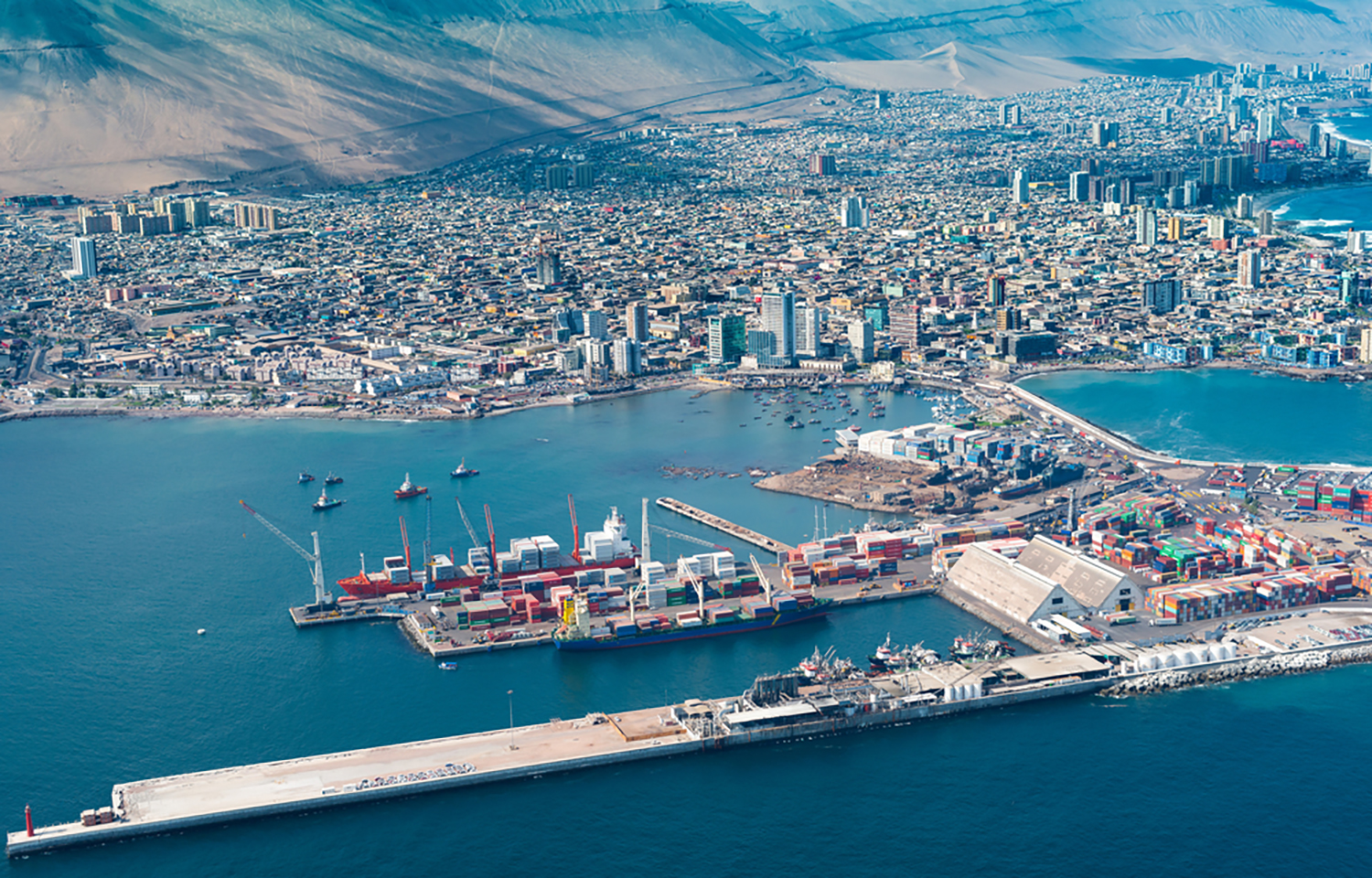
“According to data from Global Fishing Watch, since the entry into force of the Peruvian standard, 12 arrivals of Chinese squid vessels have been registered at the Chilean ports of Iquique, Valparaíso, and Talcahuano to receive the port services that Peru previously provided,” Miranda said, adding that another six ships are awaiting authorization to enter Chilean shipyards.
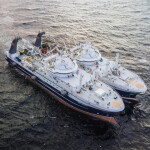
Some of the ships in that fleet include the Fu Yuan Yu 7872 vessel, which according to seafood traceability tool Bait to Plate, was sanctioned by the U.S. Department of the Treasury due to its involvement in the illegal transshipment of sharks in 2017 and for allegations of forced labor and violence on board.
Similarly, the Hua Ying 819 vessel was sanctioned in 2019 by Peruvian authorities due allegedly carrying out illegal fishing and for presenting false information to authorities when confronted in Peruvian waters.
“The Peruvian law is working. These vessels have preferred to migrate rather than comply with the minimum requirement of installing Peruvian satellite equipment, [the cost of which] is not onerous. This [confirms] our suspicions about these vessels’ repeated refusal to be monitored,” Miranda said.
In turn, spokesperson for the National Alliance for the Defense of Artisanal Fishing of Chile Pascual Aguilera, who is a member of CALAMASUR Chile, said that Chile is likely going to have to increasingly deal with the entry of these distant-water fleets since the country lacks the regulatory requirements of other nations.
“These vessels, which don’t exactly stand out for their good behavior, would prefer to enter our country,” Aguilera said. “Unfortunately, our authorities do not require them to use our satellite positioner. Peru closed the door to them, and now Chile has opened the door to them.”
He further explained that Chile’s fishers need to “remain vigilant over the presence of these boats in our waters.”
Miranda said the discussion over this situation needs to occur on a regional level, with shared responsibilities to respond to IUU fishing in the South Pacific.
“This problem should be discussed bilaterally between Chile and Peru in order to establish a common standard for the protection of the seas,” he said.
CALAMASUR has also been critical of the South Pacific Regional Fisheries Management Organization’s (SPRFMO) lack of resolve in the fight against IUU fishing, calling for the implementation of strong, consistent measures for the organization’s squid-fishing members.
The giant flying squid fishery, located off the western coast of South America, is the top squid fishery in the world by output, accounting for over 30 percent of global squid volumes, according to the United Nations’ Food and Agriculture Organization (FAO).
CALAMASUR is composed of leading squid-fishing industry players – such as representatives of the artisanal, industrial, and processing sectors – from Chile, Ecuador, Mexico, and Peru. The industry group was formed in 2018 and has observer status in the SPRFMO, presenting statements requesting improvements in science, management, monitor, control, and surveillance.
Illegal fishing constitutes the sixth-most lucrative criminal endeavor globally, with estimated annual revenues of somewhere between USD 15 billion and USD 36 billion (EUR 13.4 billion to EUR 32.2 billion), according to a 2017 report by Global Financial Integrity. The Chinese fishing fleet – estimated at 15,000 vessels by the Overseas Development Institute – is by far the largest in the world, and China is the country with the worst rating in illegal fishing, according to a 2019 Global Initiative report.
