






The Chilean Salmon Council, a trade association formed in 2020 aimed at representing the interests of the country’s salmon-farming industry, is looking to leverage Chile’s agricultural strength to enhance ties with local aquaculture firms.
“Sixty percent of the feed that feeds our salmon comes from grains such as wheat, soybeans, canola, or rapeseed,” Salmon Council Executive Director Loreto Seguel said in a release. “A good part of these grains is imported, but we also produce them in large volumes on our own soil, particularly in three regions: La Araucanía, Maule, and Biobío.”
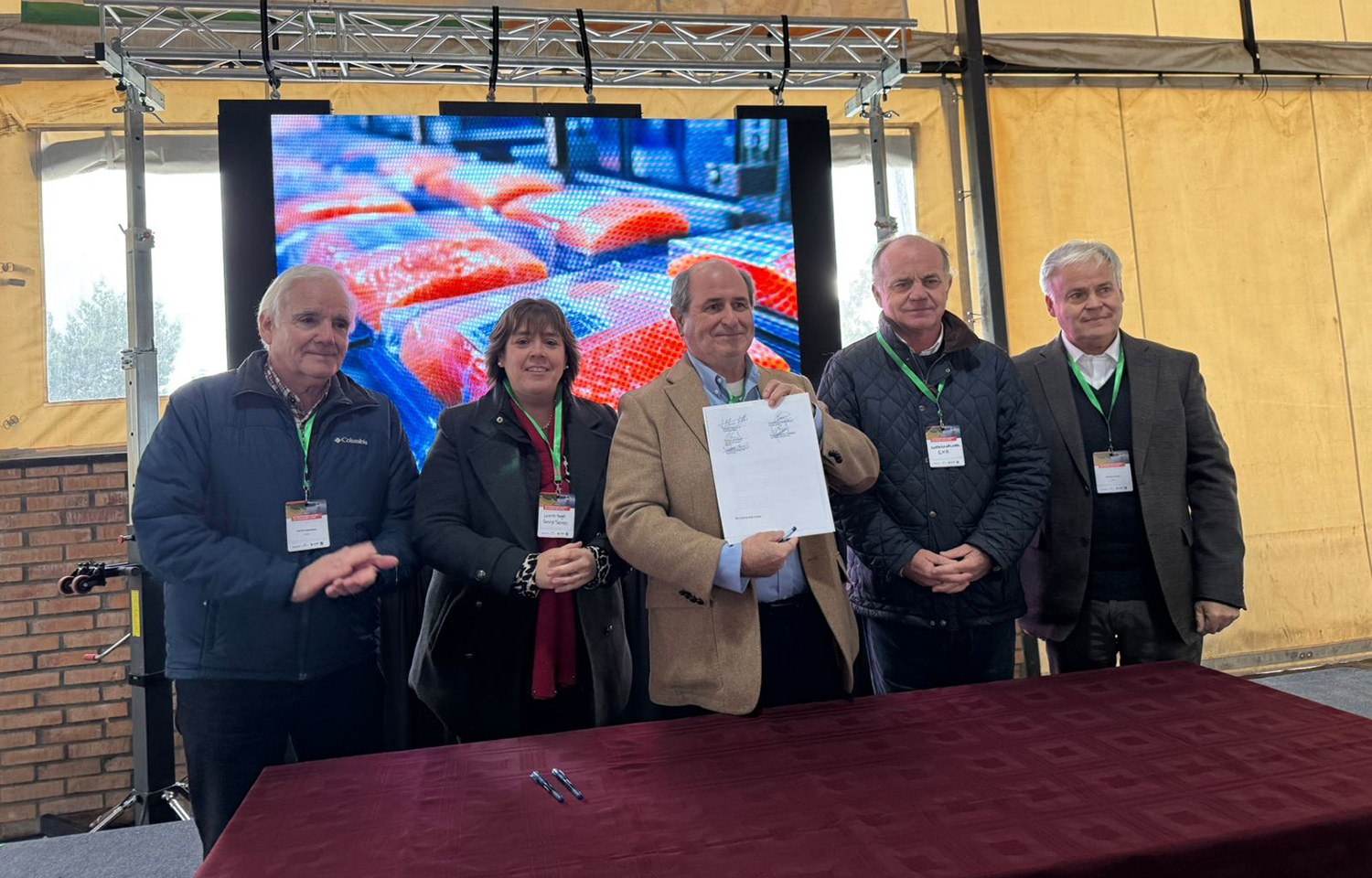
With this in mind, five Chilean organizations – the Salmon Council, the Temuco Agricultural Development Society (SOFO), the National Agriculture Society (SNA), the Southern Agricultural Consortium (CAS), and the Agricultural and Livestock Society of Osorno (SAGO) – have joined together to launch the Agro-Salmon Roundtable. This venture will focus on establishing public-private coordination to plan joint actions, identify productive opportunities, and promote activities such as technical meetings, visits, and field work.
The overarching objective is to form a strategic alliance between salmon farming and agriculture, forging a path toward a productive supply chain that generates local jobs and boosts local economies.
“By activating these synergies that share a productive vocation, sustainability, and territorial roots, we are building a national industry of great value and [one] that prioritizes cooperation over competition," Seguel said.
SNA President Antonio Walker said that the plan is to plant 200,000 new hectares of grains to support the local production of fish feed.
“As the world's second-largest producer of salmon, Chile has great potential for growth, which could have a transformative impact on the countryside. Collaborative work is essential in achieving this, with agriculture as a supplier of the grains necessary for the industry,” he said. “This vision of solid, legitimate growth, which unites sea and land and science and tradition, offers Chile the opportunity to think big, strengthen local talent, and lead a sustainable industry.”
Likewise, Eduardo Renner, the president of SOFO, said that the alliance seeks to set a basis for knowledge exchange, helping the industry identify new business opportunities, promote technological development and joint research, and address regulatory issues with a unified voice.
“Agriculture and salmon farming in the south cannot continue to advance on separate paths,” he said. “We are united in the countryside, we are united by work, and we are also united by the same need to continue growing with a vision of the future.”
Seguel has previously emphasized the importance of finding synergies wherever possible for the salmon-farming industry.
“When associations come together and work together, we have much greater strength to be able to achieve regulatory change and improve practices. Today, associations have to advance hand in hand; it is no coincidence that we have signed a cooperation agreement with the National Association of Entrepreneurs or an agreement with the National Agriculture Society,” she told SeafoodSource at the beginning of the year.
Some of the Salmon Council’s other efforts this year have included attempts to introduce Chilean coho into French cuisine, launching an interactive e-book detailing the health and environmental benefits of consuming salmon, and assisting in salmon-farming firms’ goals to implement AI-based solutions throughout the different processes of production.
