




The Atlantic States Marine Fisheries Council (ASMFC) has voted to continue a ban on female horseshoe crab bait harvesting in the Delaware Bay for two years.
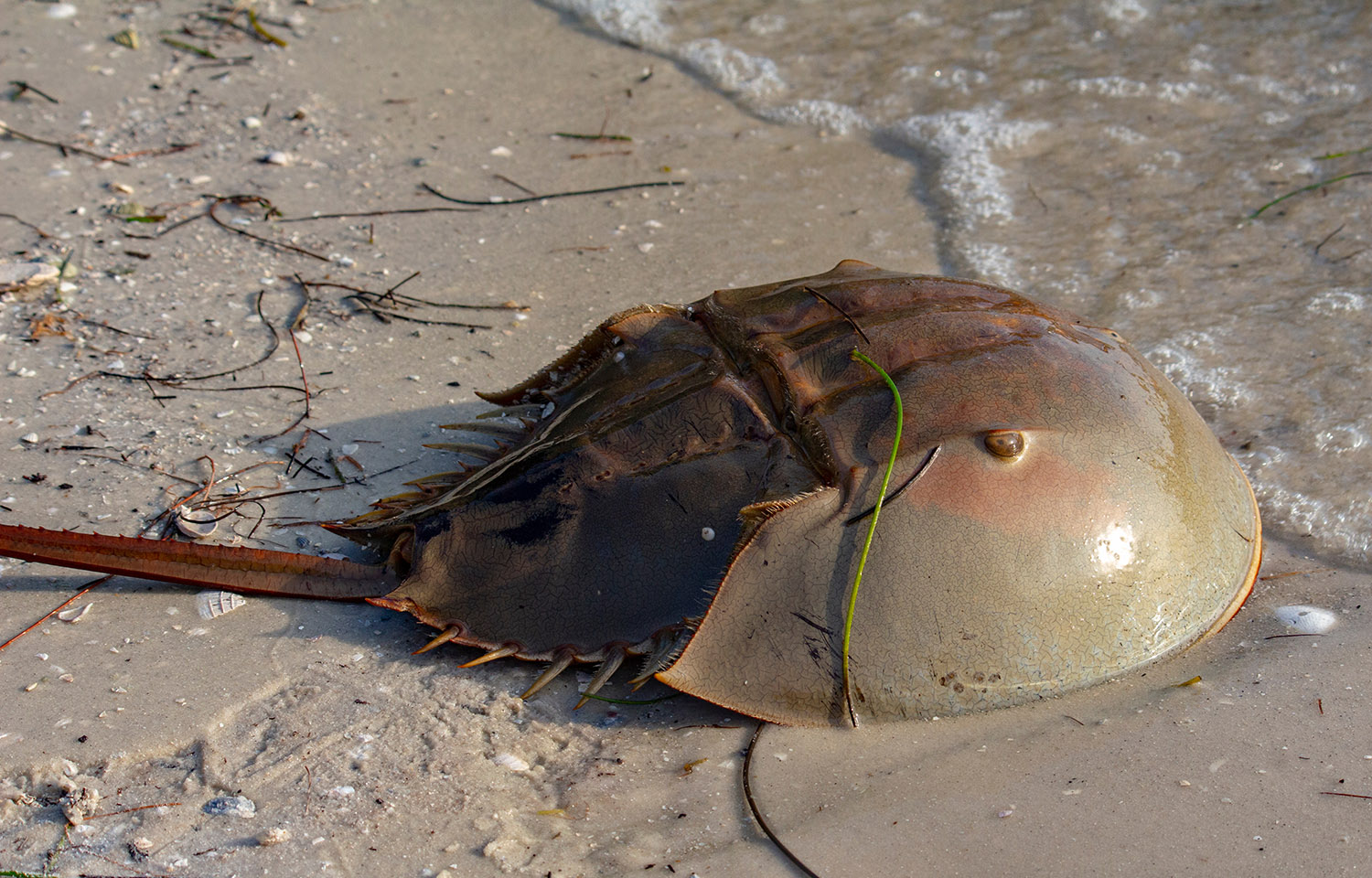
Horseshoe crabs are both harvested for bait and bled for their blood, which is valued in biomedical testing for its unique ability to clot when exposed to bacterial toxins.
For more than a decade, however, regulators have banned any harvest of female crabs from Delaware Bay on the U.S. East Coast because their eggs are an important food source for coastal wildlife, especially shorebirds.
“Imperiled migratory shorebirds, including the federally threatened red knot and a host of marine organisms, depend on the eggs female horseshoe crabs lay every spring,” David Mizrahi, vice president of research and monitoring at the New Jersey Audubon Society, said in a release.
Despite concerns, the model used by ASMFC’s Horseshoe Crab Management Board has continued to recommend a female harvest. Last year, though, the board voted to continue the prohibition on harvesting females despite the model’s recommendation of 175,000 female crabs in 2025.
“This decision will give red knots and other shorebirds that utilize Delaware Bay a fighting chance at survival and recovery,” Earthjustice Biodiversity Defense Program Senior Attorney Ben Levitan said at the time. “But, the status of red knots remains precarious, and the commission should not be considering the risky recommendations of its flawed computer model year after year.”
Acknowledging the issue with the model, the board announced its intention to update the model. In February 2025, the board announced an interim solution authorizing itself to set male-only harvests for up to three years at a time while the model is being updated, bypassing the need to discuss overturning the ban on female harvests every year. The plan was approved in May.
However, the board opted not to exercise that authority at its October meeting – its first chance to use the new rule. While the board again opted to ignore the model’s recommendation of a harvest of 175,000 female crabs for 2026, according to Earthjustice, the council voted 10-4 to set a two-year, male-only harvest instead of extending the prohibition the full three years.
“While a two-year pause is a slight improvement over the one-year pauses we’ve seen recently, we are disappointed that the commission didn’t use its available tools to protect Delaware Bay,” Levitan said in a release. “We continue to urge the commission to adopt enduring protections rather than renew the threat of a female horseshoe crab harvest every year or two.”
Other conservation groups were also quick to criticize the commission for not extending the male-only harvest to a full three years.
“The longer the reprieve from harvest for Delaware Bay’s horseshoe crab population, the better for the ecosystem as a whole,” Defender of Wildlife Senior Attorney Jane Davenport said in a release. “While a two-year reprieve is better than none, we’re disappointed that the commission couldn’t settle on something longer, based on science. Horseshoe crabs are connected to the survival of the threatened rufa red knot, as well as dozens of other species, from shorebirds to fish to sea turtles. Threatening one species threatens many more.”
“The ASMFC’s decision to set horseshoe crab harvest quotas for only a two-year period is unfortunate,” Mizrahi noted. “Longer-term species management specifications are essential for recovery of this keystone species.”
