






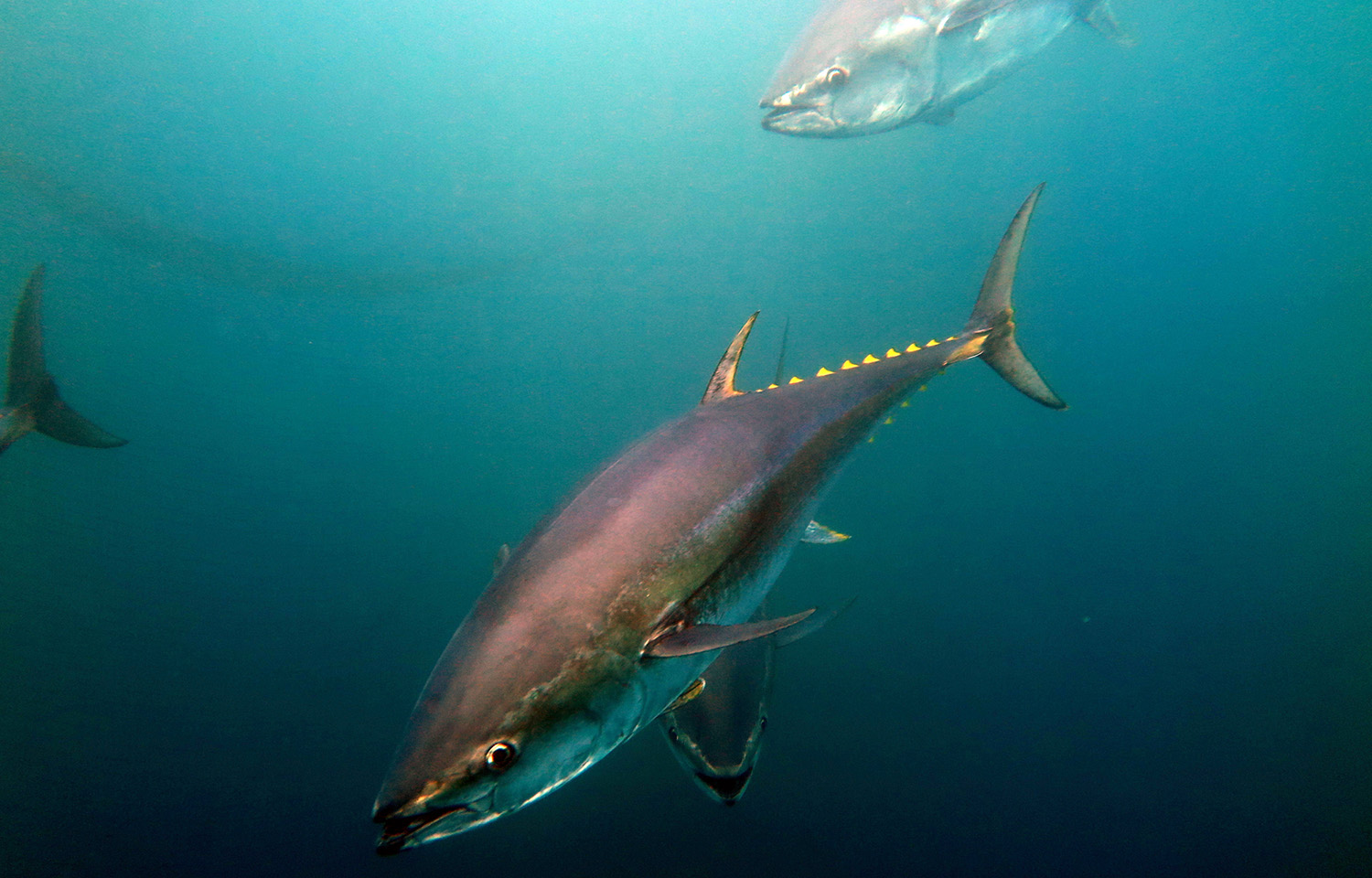
Pasaia, Spain-headquartered marine technology firm AZTI conducted an international study about how rising ocean temperatures affect Atlantic bluefin tuna, finding that climate change has a direct correlation to changing feeding, spawning, and harvesting locations.
The study, titled “Navigating Future Waters: The Resilience of the Atlantic Bluefin Tuna Under Climate Change,” found that as the ocean warms, bluefin tuna are likely to shift progressively northward for cooler, more conducive waters, including off of Northern Europe and Greenland.
The study used advanced models to combine environmental data, bluefin tuna behaviors, prey distribution, and fishing activity, projecting multiple climate scenarios through the end of the 21st century and underscoring the need for both flexible and climate-adaptive fisheries management.
As bluefin move north, areas such as the Mediterranean Sea and the Gulf of Mexico – currently referred to as the Gulf of America by the U.S. government – “could become increasingly unsuitable for spawning,” the study said.
Those two areas are currently the main spawning grounds for bluefin tuna, according to AZTI. Researchers cited that if greenhouse gas emissions reach their worst projection, the Mediterranean’s bluefin tuna habitat suitability could reduce by 27 percent, while the Gulf’s could decrease by as much as 70 percent, which could jeopardize the species’ long-term reproductive success.
Bluefin’s key prey species, such as sardines, mackerel, and squid, are also expected to evolve in distribution by shifting to higher latitudes and creating new overlap areas, particularly in boreal regions. These new areas could act as “climate refugia,” the study said, becoming future popular spots for habitability in more favorable conditions.
Researchers said that incorporating these climate change impacts into fisheries management plans will be essential for bluefin sustainability.
“Bluefin tuna show a strong capacity to adapt, but our projections indicate that climate change is altering the balance between feeding areas, spawning grounds, and fishing activity,” AZTI Researcher Maite Erauskin-Extramiana, who was the lead author of the study, said. “That is why it is essential to progressively integrate projected climate change impacts into management systems so we can anticipate change and manage resources more efficiently and sustainably.”
AZTI’s study was published with support from Spain’s Ministry of Science and Innovation, European Projects FutureMares, SusTunTech, Mission Atlantic, Biodiversa+, and SOMBEE.
