






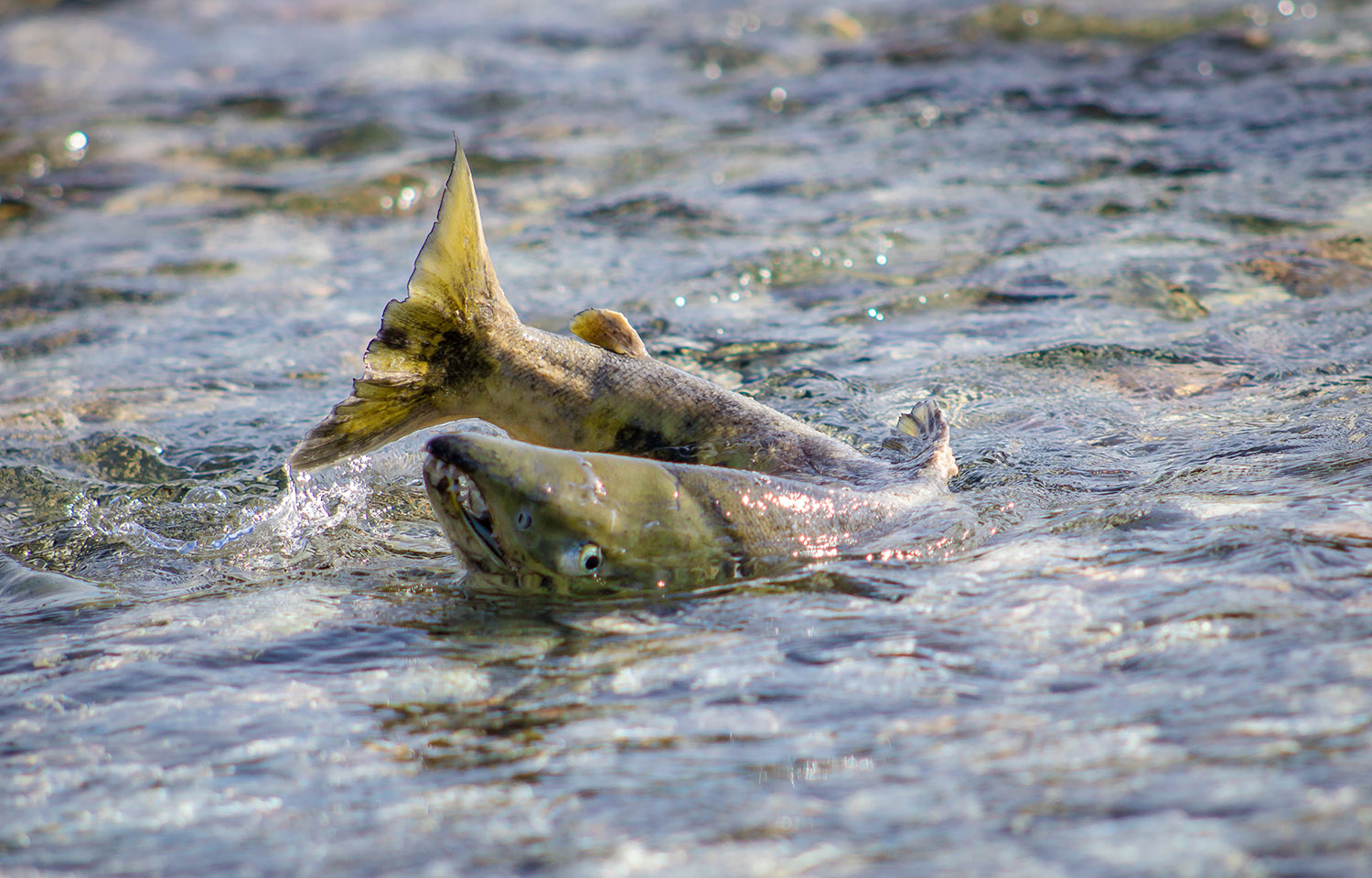
Chiefs representing First Nations communities in British Columbia, Canada, are calling on regulators to stop American fishers in the U.S. state of Alaska from intercepting salmon bound for Canadian rivers.
Chiefs from the Tŝilhqot’in Nation attended the Pacific Salmon Commission recently in Portland, Oregon, U.S.A., to protest salmon fishing in the Alaska 104 Fishery, located in Southeast Alaska just north of the Haida Gwaii Archipelago. According to the chiefs, the fishery is located along the migration path of sockeye salmon set to return to the Fraser River, intercepting many fish that would otherwise go back to British Columbia.
The Tŝilhqot’in Nation rely on the sockeye salmon for their cultural practices and food security, and chiefs from that nation say Alaskan fishers are stealing their salmon before they can return, undermining local conservation efforts.
As an example, the Tŝilhqot’in Nation points to 2019, when low returns of sockeye in the Fraser River forced closures of Canadian fisheries. The Tŝilhqot’in also suspended its community-based fishery to allow the population to recover but later learned that fishers in Alaska’s District 104 Fishery were allowed to harvest 45,000 Chilko River sockeye and 78,000 Fraser River sockeye that same year.
“Year after year, we are faced with record-low Chilko sockeye returns, while the Alaskan 104 Fishery catches these salmon without limit,” Tŝilhqot’in National Government Tribal Chair Chief Joe Alphonse said in a statement. “Even when we have closed our traditional fishery to conserve the salmon – Alaska continues to harvest. Our people depend on the salmon run every year to ensure that our families do not go hungry. We call on the Pacific Salmon Commission to stop the Alaskan 104 Fishery until the Chilko sockeye run rebounds and to create a meaningful seat at the decision-making table for the Tŝilhqot’in Nation to manage our own stocks.”
In 2024, a total of 142,129 sockeye salmon were harvested in the District 104 fishery, significantly lower than the long-term average of 439,000 fish.
The Pacific Salmon Commission, which oversees implementation of the Pacific Salmon Treaty between Canada and the United States, held
The Pacific Salmon Commission, formed by the governments of Canada and the United States to implement the Pacific Salmon Treaty, held its annual meeting from 10 to 14 February.
