





The United Nations Agreement on Marine Biological Diversity of Areas beyond National Jurisdiction (BBNJ Agreement), also widely known as the High Seas Treaty, entered into force in January after crossing the ratification threshold in September 2025.
The Pew Charitable Trusts said the new treaty, which took decades of negotiations to pass, will finally create a mechanism for the world to preserve two-thirds of the ocean lying outside national borders.
“Two-thirds of the ocean lies outside of all national borders, and the vast majority of those waters are vulnerable to threats like overfishing and pollution. But with the High Seas Treaty’s entry into force, that can start to change,” The Pew Charitable Trusts Director of Ocean Governance Liz Karan said.
Though the deal has entered into force, what still has not been decided is which city will serve as the High Seas Secretariat, which will manage implementation of the treaty by organizing meetings, managing data-sharing platforms, establishing marine protected areas, overseeing compliance, and more.
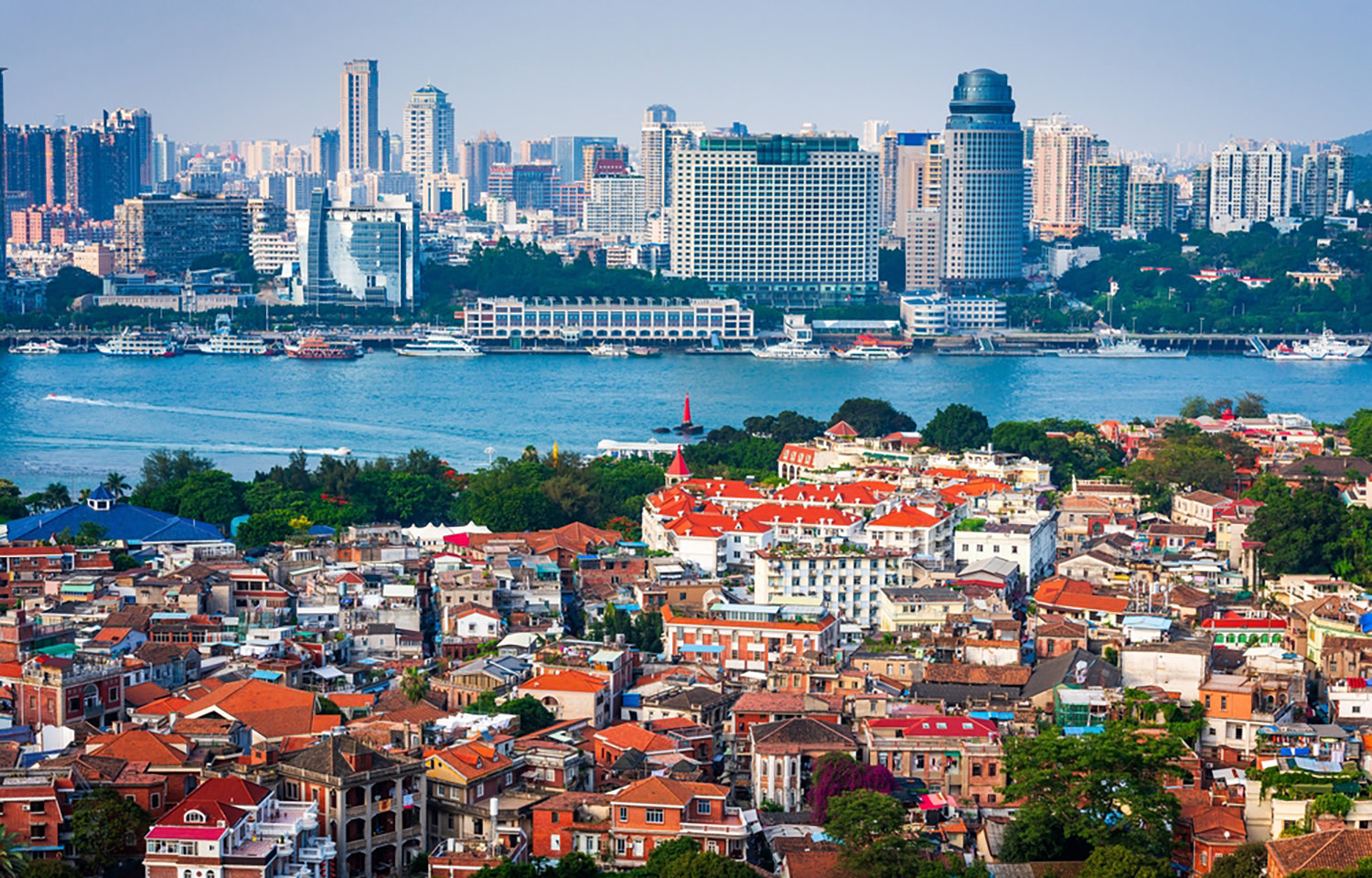
Three cities have come forth as frontrunners to function as the High Seas Secretariat: Brussels, Belgium; Valparaíso, Chile; and Xiamen, China.
Regarding the latter bid, Yan Zhihuang, director of the Fujian Provincial Department of Ocean and Fisheries, said Xiamen, as well as the province of Fujian in which it is located, aims to position itself as “a hub for marine governance” and that the location of the secretariat in the region would spur dynamism for ocean enterprises.
According to Hang Zhou, an assistant professor at the Department of Political Sciences at Université Laval in Quebec City, Quebec, Canada, Xiamen offers unique benefits that may make it attractive as secretariat.
Zhou said Xiamen is home to some of China’s leading marine research institutions, including Xiamen University and the Third Institute of Oceanography of the Ministry of Natural Resources.
“The latter has a particularly strong research tradition in marine biological genetic resources, as well as marine biodiversity and ecosystem conservation – both highly relevant to BBNJ implementation, especially regarding issues such as marine genetic resources, conservation, and marine protected areas,” Zhou told SeafoodSource.
Zhou also said Xiamen has had experience hosting international ocean-related events, which will be a primary role of the city chosen as secretariat.
“For example, the World Ocean Week in Xiamen has been held annually since 2005, and the city has hosted events such as the APEC Blue Economy Forum,” Zhou said.
Marine biologist Songlin Wang, who is the president and founder of the Qingdao Marine Conservation Society, said Xiamen’s bid to host the secretariat position is bigger than just the ambitions of one province, stating that on a national level, Beijing officials have expressed strategic governance interests in the position.
He told SeafoodSource that hosting the secretariat in Xiamen “could enable China to play a more active role in shaping international ocean governance while enhancing agenda-setting influence, leveraging scientific and technological capacity, and strengthening diplomatic engagement in global cooperation.”
China potentially securing an active role in shaping international ocean governance is exactly what worries some sector observers, especially as provinces like Fujian subsidize sprawling distant-water fleets.
Chime Youdon, a research fellow at the New Delhi, India-based National Maritime Foundation, said she worries the secretive nature of Chinese decision-making procedures may be reflected in the governance model it would take to the secretariat position. She particularly singled out the approach Chinese officials have historically taken to environmental impact assessments, which are “centralized, hierarchical, and comparatively non-transparent,” rather than “participatory and science-driven models that underpin many Western environmental regimes,” Youdon said.
Youdon added that she is also worried China would be able to hide or highlight data as it sees fit as secretariat, as Chinese authorities can already restrict data under national security grounds.
“Data is, thus, framed not as a neutral scientific commons but as an object of state security and sovereign control,” she said.
Fujian is also home to distant-water fishing companies with a history of illegal, unreported, and unregulated (IUU) fishing incidents, including Fuzhou Hong Long Distant-Water Fishing Co., which was sanctioned by the U.S. government in 2022 for alleged connections to illegal fishing and labor abuses.
The track record of some of these fishing companies is the reason why some, including Milko Schvartzman, the ocean policy coordinator at Argentina-based environmental NGO Circulo de Politicas Ambientales, have expressed vehement opposition to Xiamen’s candidacy for the secretariat.
“China has demonstrated that in the high seas, it acts without respect for the norms or the conservation of the resources which are the patrimony of humanity. They have also operated without respect for the living conditions of the workers on fishing vessels,” he said. “China also exerts economic pressure on developing countries to yield to its abuses in the exploitation of marine resources. There is no precedent to suggest China hosting the BBNJ being positive for the ocean – quite the contrary.”
Conversely, some like Zhou have opined that hosting the secretariat may help keep the nation’s distant-water fishing fleet in line, as Xiamen, Fujian, and the country would have a reputation as secretariat to uphold.
“Hosting the secretariat would likely place greater regulatory pressure on provincial authorities to ensure that vessels registered in the province avoid scandals or compliance issues, as any incident could quickly become a reputational or political problem,” he said.
The decision on which city will become the High Seas Secretariat is expected later this year.
