





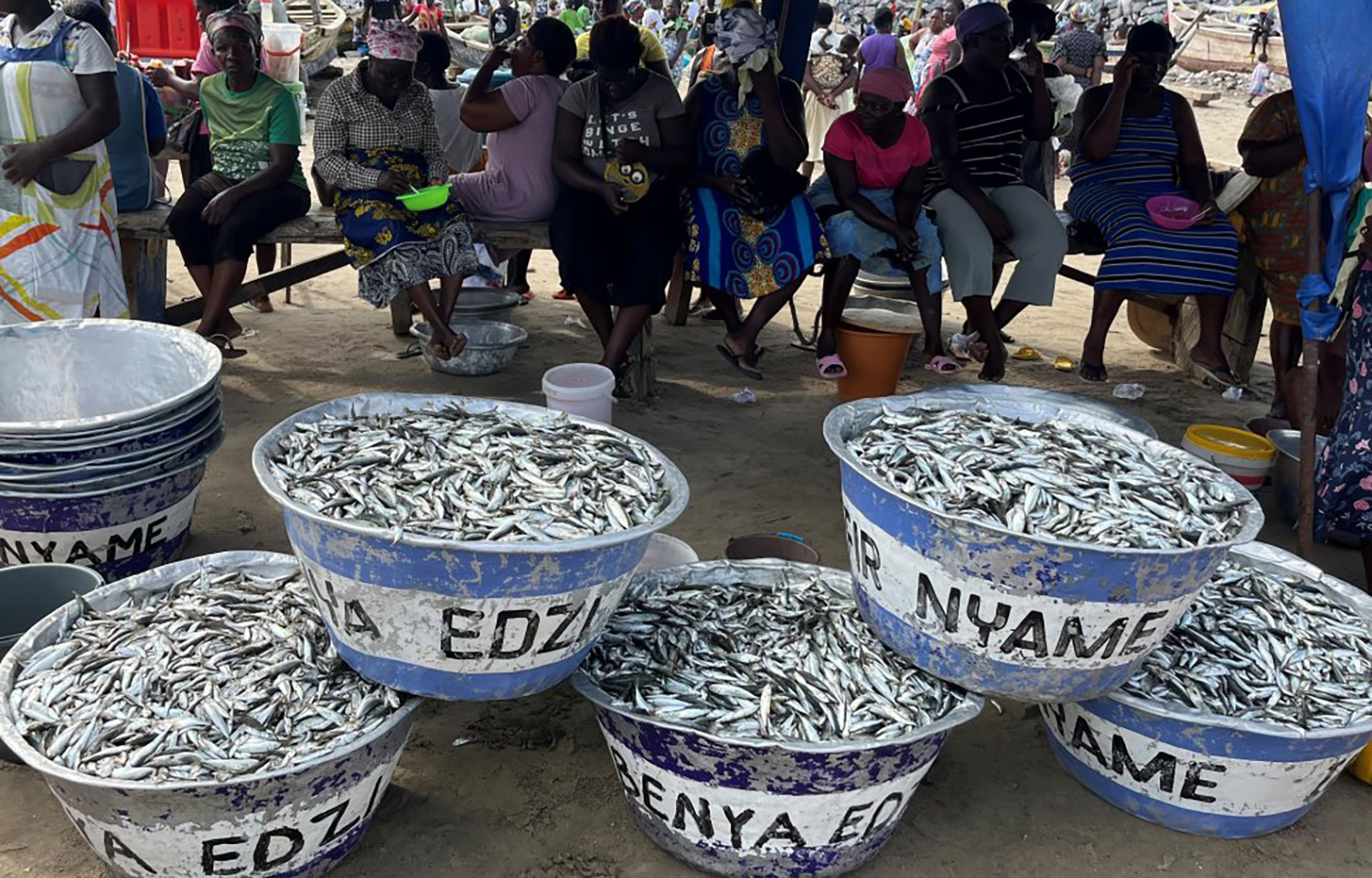
Climate change is decimating the stocks of small pelagic fish in Ghana and putting the livelihoods of more than 100,000 fishers, as well as 2 million others working up and down the country’s seafood value chain, at risk, according to a new report.
The report, published by the Center for Strategic and International Studies – a Washington, D.C., U.S.A.-based think tank – said that although shrinking fish stocks have mostly been attributed to overfishing in the past, overfishing only tells “part of the story.”
"Even if the fishery were better-managed, local stocks would not be able to recover due to the warming of offshore ocean waters driven by climate change, and communities that now depend on fishing will soon need help transitioning to alternative livelihoods," the report said.
Robert Paarlberg, one of the report's authors, told SeafoodSource the impact of climate change in the Gulf of Guinea, which borders such countries as Benin, Côte d'Ivoire, Ghana, Guinea, Liberia, Nigeria, Sierra Leone, and Togo, is currently suffering from “an ocean-warming trend that has driven fish into cooler waters – out of the reach of traditional fishers.”
“This is an impact that will continue since the warming will continue,” he said.
The report specifically focused on Ghana because “70 percent of the small pelagic fish caught along the coast of the Gulf of Guinea are caught by Ghanaian fishermen.”
“Ghanaian fishers migrate along the coast. For example, many of the coastal fishing communities in Cote d’Ivoire are made up of Ghanaians,” Paarlberg said.
According to Paarlberg, Ghana and other countries surrounding the Gulf of Guinea can slow the issue of shrinking stocks by implementing "improved management of the fishery, such as through imposing disciplines on both Chinese trawlers and on local canoes.”
In that regard, Paarlberg has commended fishers in the Gulf of Guinea who have voiced their criticisms to authorities on the illegal fishing activities they have seen conducted by Chinese trawlers, such as using small mesh nets to take undersized juvenile fish that have not had a chance to reproduce and fishing within zones reserved for artisanal canoes.
With support from civil society organizations, they “have made some progress in bringing the trawlers under better control,” Paarlberg said.
Through improved management of the fishery could help, Paarlberg explained that “the warming ocean will prevent the fishery from ever returning to its earlier abundance” and added that many African governments have little desire to heavily invest in mitigating climate change as a whole, as their countries are not the major sources of greenhouse gas emissions that are contributing to a warming planet.
“African governments are understandably reluctant to devote their limited resources to reducing greenhouse gas emissions since the much larger emissions of other regions such as Europe, North America, and China are the source of the problem,” he said. “In addition, while United Nations climate meetings have promised to finance both mitigation and adaptation in Africa, most of the promised money has never been delivered.”
Because the damage done is irreversible, the best course of action for coastal fishing communities in Ghana battling the effects of climate change is diversifying income sources so they do not depend so heavily on catching fish – a process that is already underway, according to Paarlberg.
“[These communities] are already beginning to do so, seeking employment in construction, sewing, selling, and other options – a task that will take place over more than one generation, and it should be assisted by government programs in vocational training,” he said.
