






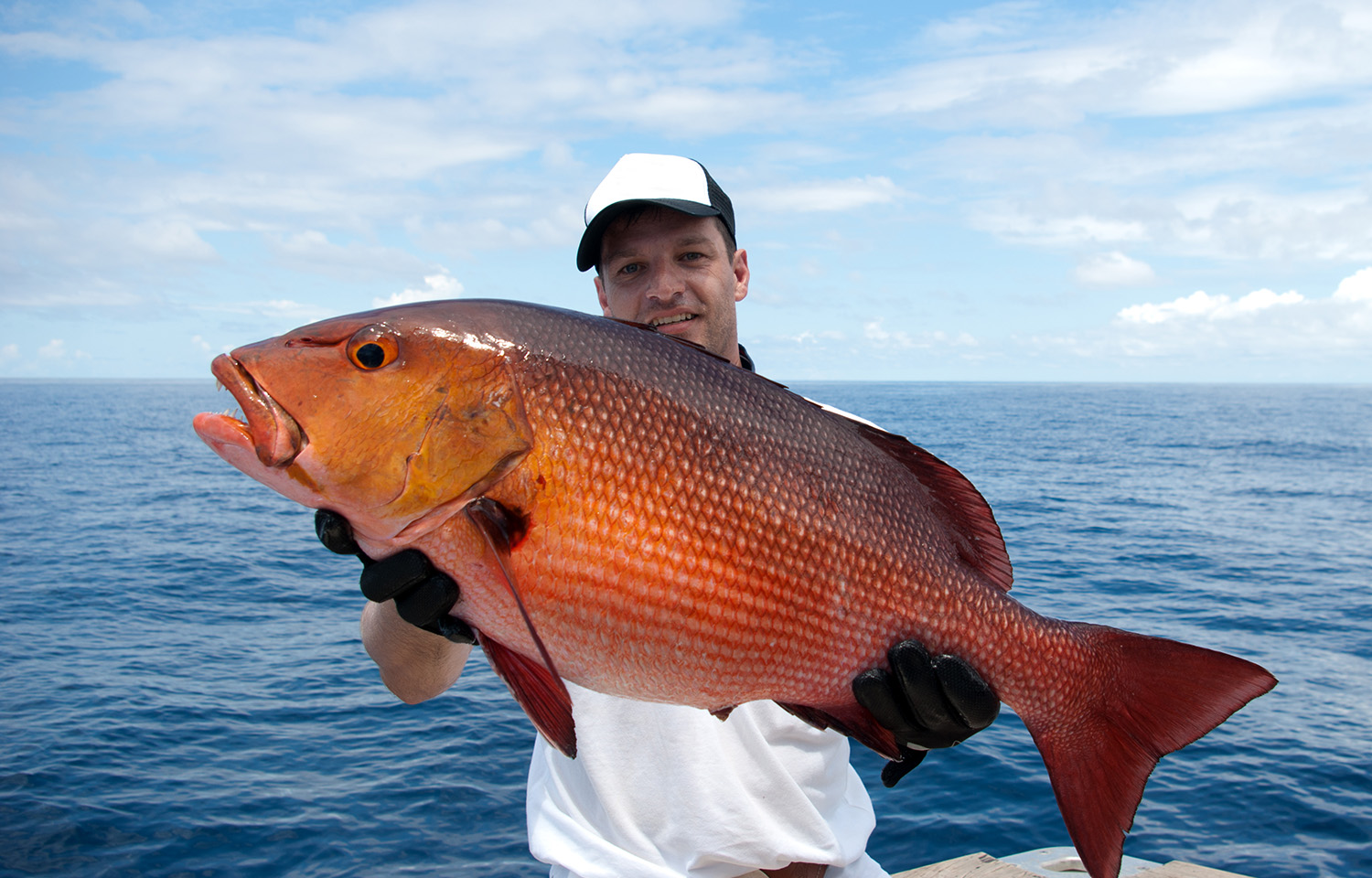
A group of commercial fishers, seafood processors, and buyers from the U.S. states of North Carolina and Florida have filed a lawsuit against the federal government’s management of the Southeast Atlantic red snapper fishery, claiming that regulators are not adequately taking action on dead discards from the recreational sector.
“This case challenges the ongoing lack of accountability for dead discards of red snapper in the South Atlantic Snapper-Grouper fishery, which directly harms commercial fishermen in that region and violates the Magnuson-Stevens Fishery Conservation and Management Act,” the lawsuit states.
The lawsuit is the latest battle in the ongoing fight between commercial fishers, recreational fishers, and the federal government over management of the Southeast Atlantic red snapper fishery. Though the stock was first listed as subject to overfishing in 2021, fishers in the region argue that the population is far more abundant than official data shows. A December 2024 government assessment again found that Southeast Atlantic red snapper was subject to overfishing.
U.S. federal law requires the government to implement regulations to end overfishing; the recreational season was open for a single day and the commercial season for just a single month.
When the South Atlantic Fishery Management Council declined to take action on developing a new management plan to end overfishing, conservation groups sued NOAA Fisheries, and a court agreed that the federal agency was required to finalize a management plan by June 2025.
That plan, Amendment 59, was finalized on 11 June, setting a total annual catch limit (ACL) of 509,000 fish – 34,000 for landed fish and 475,000 for dead discards. Regulators allocated roughly 28 percent of the catch – approximately 102,951 pounds – to the commercial sector and the remaining 72 percent – approximately 263,815 pounds – to the recreational sector.
On 3 July, a group of commercial fishing companies, fishers, buyers, and processors joined together to sue the federal government in the U.S. District Court for the District of Columbia over this plan, claiming NOAA Fisheries violated federal law by not adequately addressing the issue of dead discards.
Most mortality in the fishery stems from dead discards, primarily due to recreational fishing. From 2021 through 2023, 98 percent of all red snapper discard mortalities came from the recreational sector, according to the federal government. The commercial fishing sector has long used that fact to argue that they deserve a greater share of the ACL.
In issuing the final rule on 11 June, NOAA Fisheries claimed it was waiting for more information and giving the South Atlantic Fishery Management Council more time to take action before addressing dead discards.
“In view of the fact that new stock assessment information will be available soon and taking the substantial concerns expressed in the public comments into account, [NOAA Fisheries] decided to move ahead with only three actions, which will provide the Council another opportunity to consider other management measures to reduce dead discards and increase red snapper fishing opportunities in a future amendment,” NOAA Fisheries explained in the Federal Register.
However, the commercial fishers behind the lawsuit claim not taking action on dead discards disproportionately affect the commercial sector, since most dead discards come from recreational fishers.
“By consigning dead discards to management outside the ACL system, the Amendment 59 Final Rule also allows a de facto reallocation of red snapper catch away from the commercial sector and toward the recreational sector – which is responsible for virtually all of the dead discards,” the lawsuit states.
The plaintiffs behind the suit are Hatteras, North Carolina-based commercial fishing company Slash Creek Waterworks; Titusville, Florida-based commercial fisher Antonio Giambanco; Hatteras, North Carolina-based commercial fish buyer and wholesaler Avon Seafood; Raleigh, North Carolina-based seafood buyer, processor, and wholesaler J. Ryan Speckman; and Atlantic Beach, North Carolina-based commercial fishing business Strawberry.
The plaintiffs are asking the court to vacate Amendment 59 and order NOAA Fisheries to revise the ACL in a way that addresses dead discards.
Lawmakers at both the state and federal level have taken action to try to keep waters in the Southeast Atlantic open for red fish harvesting despite NOAA Fisheries’ plan.
At the state level, legislatures have worked to implement new state fisheries that would allow red snapper fishing to continue in state waters, which extend 3 miles out from shore.
In U.S. Congress, federal lawmakers have introduced a bill that would block the agency from closing the recreational fishery for three months of the year. Legislators have also provided funding for the Great Red Snapper Count, an independent study designed to contest the official stock assessment and provide a more accurate picture of the species’ abundance.
