


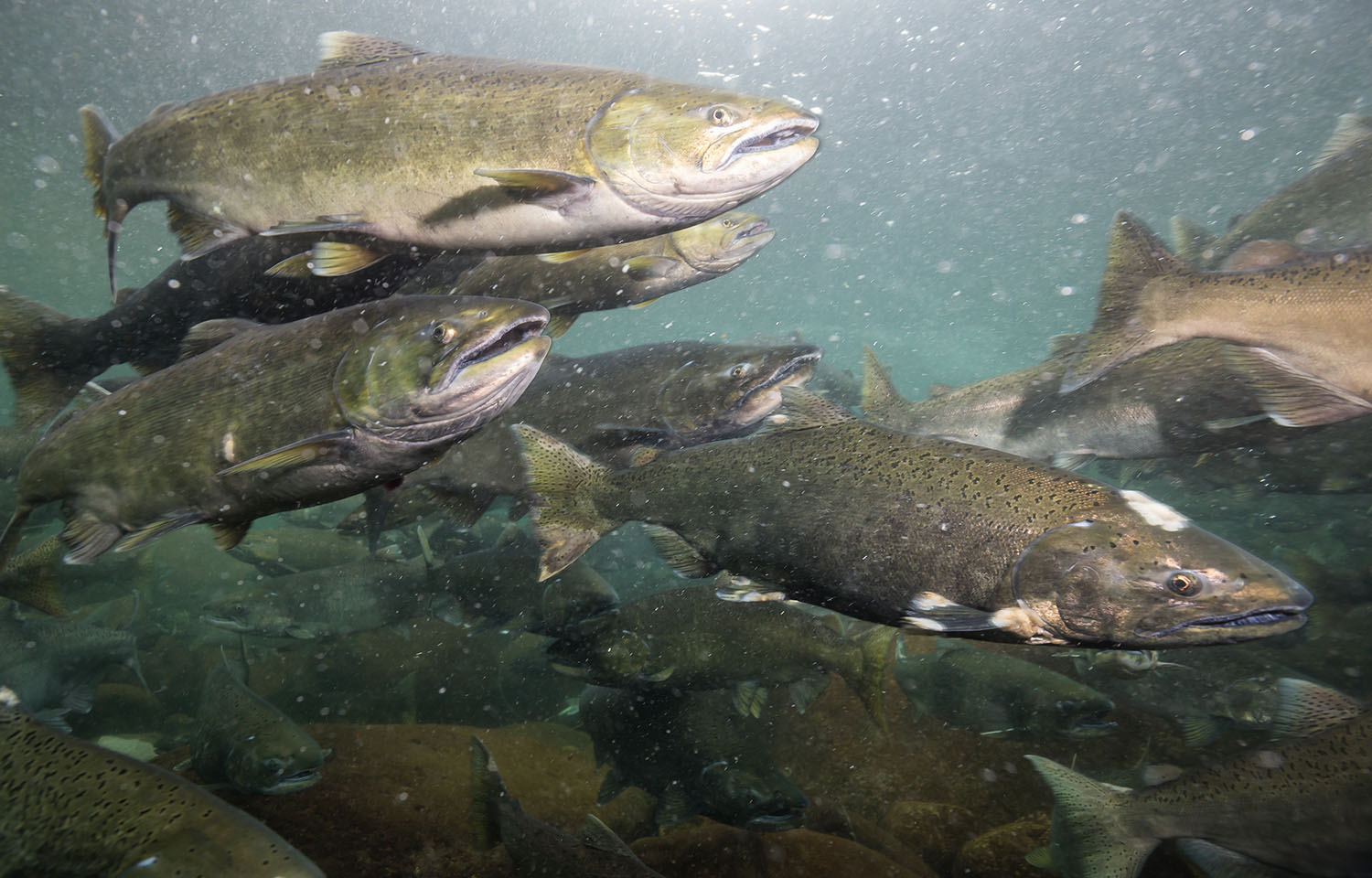
The Wild Fish Conservancy (WFC) and The Conservation Angler (TCA) have announced plans to sue the federal government over the damage they claim hatchery fish are doing to wild salmon, steelhead, and orca populations.
“Mitchell Act hatcheries are causing harm that we know how to prevent. We’re taking this action today as part of our long-standing commitment to hold the federal government accountable and prevent further violations that imperil these species and the ecosystems they depend on,” WFC Executive Director Emma Helverson said in a release. “It’s time for NOAA to stop prioritizing maintaining harmful hatchery practices over their responsibility to protect wild fish for current and future generations.”
According to the two NGOs, the NOAA Fisheries’ documentation justifying operations at Mitchell Act-funded hatcheries operating below the Bonneville Dam in the Columbia River is inherently flawed and contains “scientifically indefensible conclusions.” The groups have long maintained that hatchery-raised fish are a major threat to wild fish populations and that government documentation has failed to properly account for that. A 2016 legal challenge by WFC successfully overturned a 1999 Biological Opinion, forcing NOAA Fisheries to release updated documentation in 2017.
NOAA Fisheries was challenged by WFC and TCA in 2024, with the groups alleging multiple violations of the 2017 Biological Opinion. Again, the federal government was forced to issue a new 2024 Biological Opinion to address the issues raised in the lawsuit.
Now, the forthcoming lawsuit will allege that the government’s 2024 Biological Opinion – which justifies the continued hatchery operations – is inadequate and violates the Endangered Species Act (ESA).
“NOAA’s rushed and flawed 2024 analysis leaves long-standing harm from Mitchell Act hatcheries unaddressed and lets these programs delay action on problems the federal government itself has identified as threatening the survival of wild salmon and steelhead,” TCA President John McMillan said in a release. “Rather than requiring immediate action to protect wild salmon and steelhead, the new plan repeats the same mistakes – relying on weak measures that will not even go into effect for several more years and ignoring the best available science while wild fish continue to decline.”
The lawsuit will accuse the government of a “failure to use best available science; failure to adequately protect wild fish from genetic and ecological impacts of hatcheries; reliance on unenforceable and vague terms; and failure to provide justification for delaying critical conservation measures that were required but never implemented under the previous biological opinion.”
WFC has worked aggressively to limit hatchery fish production and commercial salmon harvesting in an attempt to protect and conserve wild fish populations. The NGO is currently petitioning the government for ESA protections of some wild salmon runs in the Pacific Northwest, and has sued NOAA Fisheries over missed deadlines in responding to those petitions.
WFC also came close to closing down the Southeast Alaska commercial Chinook salmon fishery in 2023. In response to a lawsuit filed by the group challenging a 2019 Biological Opinion justifying the impact of commercial salmon fishing on Southern Resident killer whale, a judge vacated the biological opinion, theoretically cancelling the forthcoming salmon season. An appeals court later allowed commercial fishing to take place while NOAA Fisheries updated its biological opinion.
