






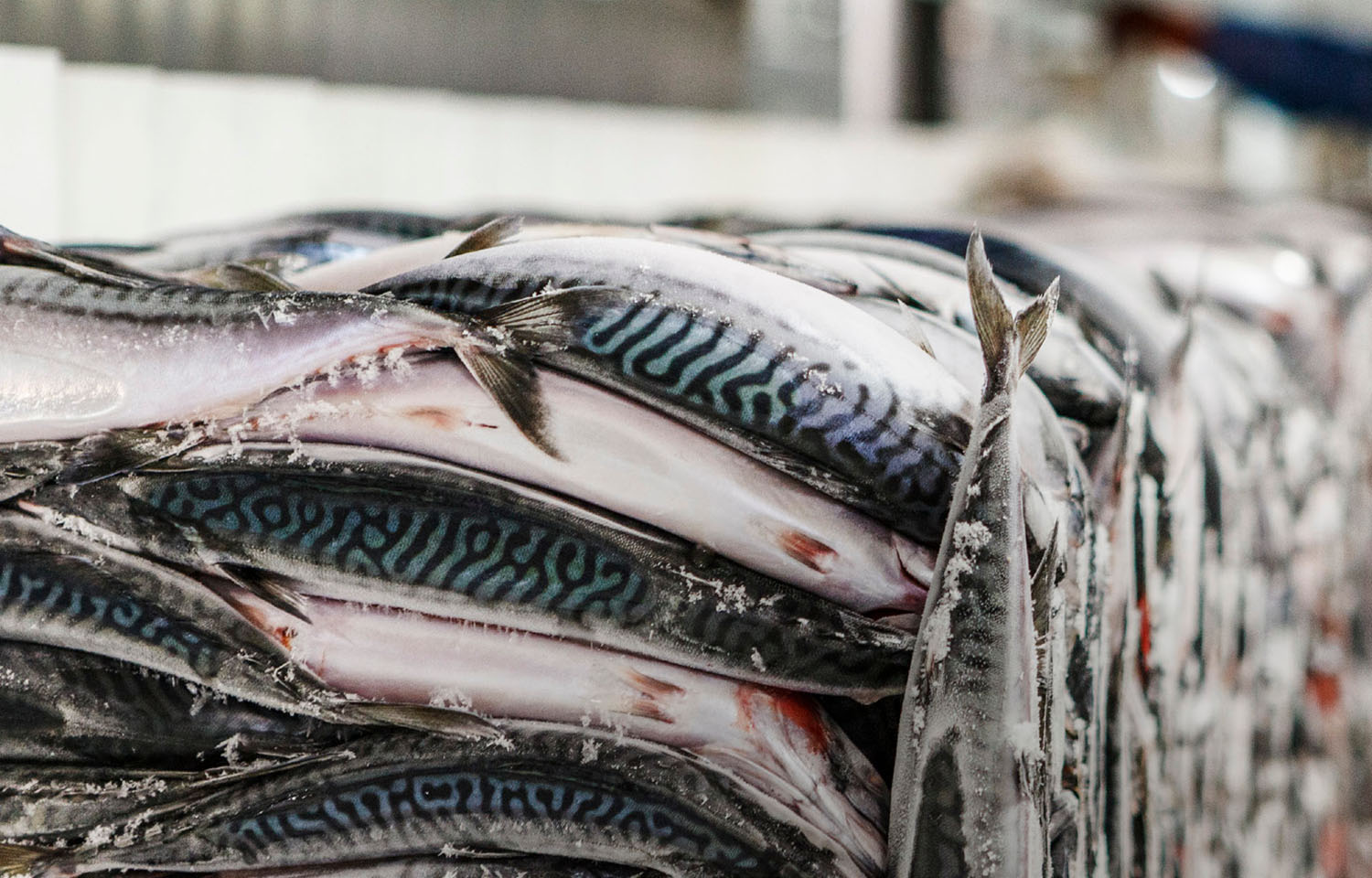
Representatives of the European Union fishing industry are calling a mackerel quota agreement between the U.K., Norway, and the Faroe Islands disappointing in the face of continued overfishing of the stock.
The governments of the U.K., Norway, and Faroe Islands agreed to a series of fisheries arrangements for the Northeast Atlantic mackerel stock – a stock shared between the three countries and the E.U., Iceland, and Greenland. In October, all six member states agreed to a total allowable catch (TAC) of 739,386 metric tons (MT) – in line with scientific advice from the International Council for the Exploration of the Seas (ICES).
That agreement, however, does not specify how each member state will divide the TAC. The agreement between U.K., Norway, and Faroe Islands will see the three catching a total of 531,129 MT of the quota – leaving 208,257 MT, or 28 percent, of the TAC to the three remaining member states. In a release, the governments of the U.K., Norway, and Faroe Islands said the new agreement was purposely designed with the other three members in mind.
Europêche and the European Association of Fish Producers Organisations (EAPO) disagreed with that assessment and said the agreement will only continue the critical issues the Northeast Atlantic mackerel fishery has faced. The species was one of multiple pelagic species that lost Marine Stewardship Council (MSC) certification in 2020 after continued overfishing, and multiple organizations have issued repeated calls for action to stop overfishing.
“This agreement does not solve the critical issue of catches exceeding the TAC set in line with scientific advice. Instead, it rewards the setting of excessive, inflated unilateral quotas by some parties in recent years,” Europêche and EAPO said in a joint statement. “Therefore, the E.U. industry urges all coastal states to resume their consultations on a comprehensive sharing arrangement that should reflect genuine, sustainable track records and interests.”
According to the two organizations, the 28 percent quota that has been left for the three remaining member states and the E.U. is not in line with historic fishing shares or economic interest.
“Furthermore, it legitimizes continuous overfishing by some on the basis of excessive, inflated unilateral quotas that stray far from the shares applicable under the last sharing arrangement,” the organizations said. “For example, the Norwegian share is almost 38 percent higher than from 2014 to 2018.”
The E.U. industry said it “dismisses” the agreement between the other three member states and that without a comprehensive agreement between all six states involved in the fishery, overfishing will persist.
“The E.U. industry continues to urge the commission and the council to act decisively against this irresponsible behavior, for example, by using its power as the main market for the other coastal states’ seafood exports,” Europêche and EAPO said.
Tim Heddema, a spokesperson for the E.U. pelagic fishing industry, said the new agreement will do nothing to stop overfishing and will leave a renewal of the fishery's Marine Stewardship Council certification out of reach.
“The parties involved are legitimizing unsustainable practices by fixing these shares and transferring quotas from one to the other, quotas that in fact constitute Monopoly money as they should never have been set at such an inflated level,” Heddema said. “One would hope that the U.K. teams up with their sustainability-oriented partners in the E.U. rather than with those who are responsible for recent overfishing and, in light of current world affairs, have a questionable choice of allegiances. The only solution is a comprehensive agreement that is not based on distorted track records.”
