




The Icelandic government has declared the possible collapse of a major Atlantic Ocean current a national security risk.
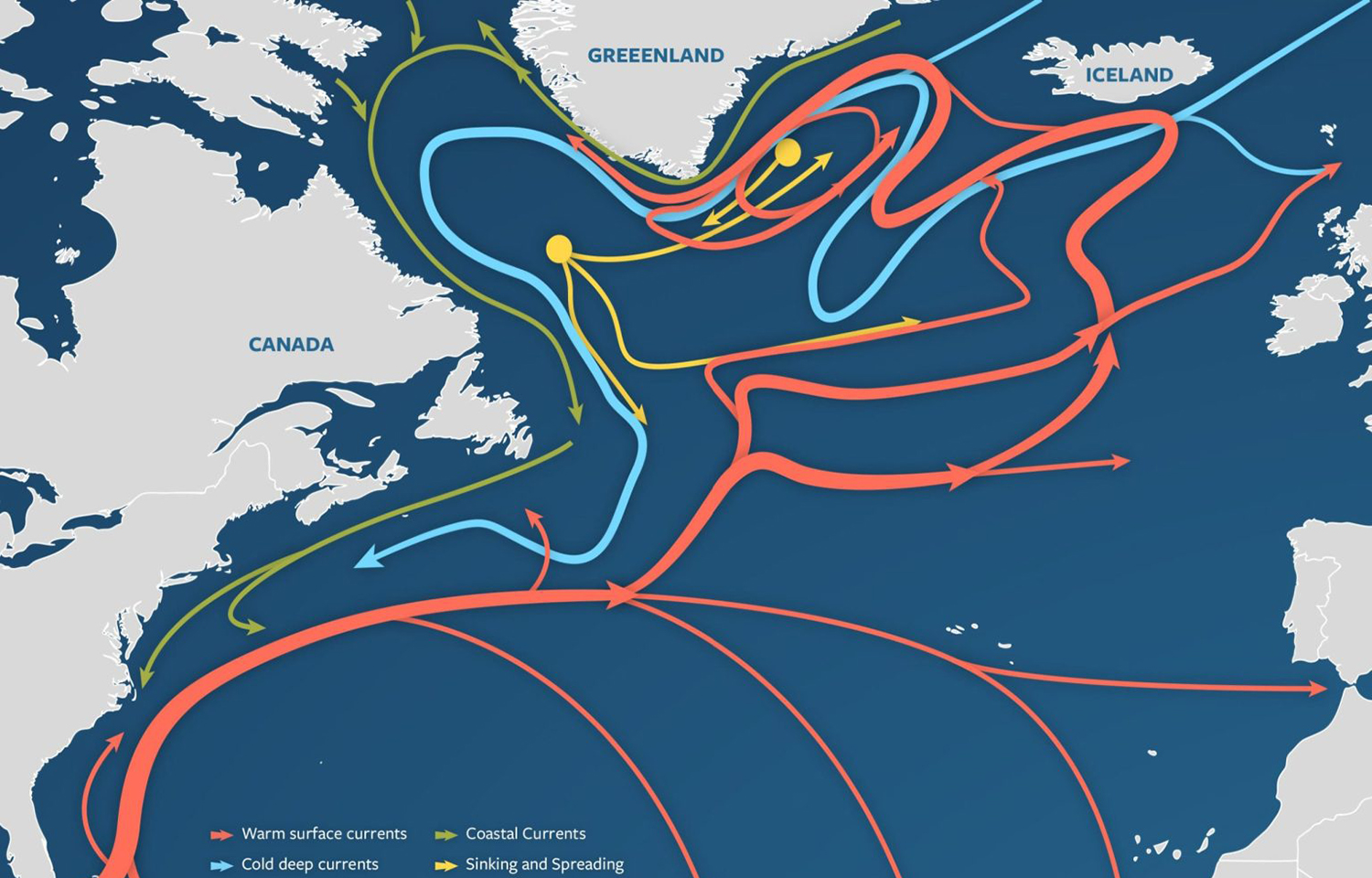
The Atlantic Meridional Overturning Circulation (AMOC) is an ocean current system that brings warmer waters from the tropics through the Arctic and into the North Atlantic Ocean, as well as colder waters south, which helps to regulate global climate.
Recently, experts have raised the possibility of the AMOC collapsing, which could make winters across Europe harsher and disrupt weather worldwide. These warnings have been brought to the attention of Iceland’s National Security Council, marking the first time a climate-related issue has been brought before the council, which now is coordinating a response to the issue.
"It is a direct threat to our national resilience and security,” Icelandic Climate Minister Johann Páll Johannsson told Reuters.
This comes after Icelandic members of parliament attending the COP30 conference in Brazil last month focused on the dangers of the AMOC collapsing.
“It’s very important that we start using our voice very strongly in this forum now and, of course, that we meet our international obligations in this regard,” Iceland MP ÁSa Berglind Hjálmarsdóttir said in an interview with Icelandic media outlet mbl.is.
In addition to the effects the current has on climate, the AMOC is also essential for marine life. The circulation carries nutrients, increases salinity, and brings oxygen to the deepest levels of the ocean. If circulation slowed or collapsed, it could, for example, reduce zooplankton populations, which would, in turn, affect the entire food system. Additionally, the circulation is essential in preventing further acidification in the ocean, helping shellfish, plankton, and corals build shells.
The Sustainability Directory found that the effects would likely impact commercially important species.
“This could have significant economic consequences for fisheries in the region, as well as ecological impacts on the ecosystems these species inhabit,” it said.
While Johannsson and others in the Icelandic government consider the issue to be a potential security threat, neighboring countries are less worried.
“We don’t think there is an acute need to prepare the Faroes for a scenario with a weaker Gulf Stream,” Karin M. H. Larsen, an oceanographer from the Faroese Institute of Marine Research, told Faroe Islands public broadcaster KVF.fo.
Larsen acknowledged there was a chance that the circulation would stop at some point but there were no indications that would be any time soon.
“It’s possible long term, but the scientific uncertainties are big,” she said, adding that there were too many uncertainties to decide whether it would take a century or longer, if at all. “For now, it’s better to deal with the fact that the ocean is getting warmer.”
The Norwegian Ministry of Environment, meanwhile, told Reuters that it was seeking to deepen its understanding through new research.
