






The sustainability of fisheries in the Southwest Atlantic Ocean,along the coasts of Brazil, Uruguay, and Argentina, are threatened by fractured governance, biodiversity data gaps, and accelerating climate change, according to a new study published in the journal Discover Oceans.
The Southwest Atlantic is a biodiversity hotspot where water masses converge and mix, helping to regulate Earth’s climate while supporting productive fisheries.
Designated by the Food and Agriculture Organization (FAO) of the United Nations as Major Fishing Area 41, it is also a major corridor for species migration. Along the entire supply chain, the fishing industry in the area employs nearly 900,000 people, attracts over 32,000 artisanal and industrial vessels, and injects around USD 5 billion (EUR 4.2 billion) annually into the region’s economy.
However, despite historical efforts, the Southwest Atlantic Ocean is one of the few large oceanic regions with no dedicated governance body regulating all shared resources.
The study, conducted by researchers from Brazil, Uruguay, and Argentina, said that with no dedicated body overseeing the region’s waters, there is a consequent lack of local data on species and ecosystems, and instances of illegal, unreported, and unregulated (IUU) fishing practices – especially by distant-water fleets targeting squid and tuna – have grown.
“In the context of increasing geopolitical tensions, there is an opportunity to strengthen regional ocean governance in the Southwest Atlantic,” said Juliano Palacios, a postdoctoral fellow with the University of British Columbia and the lead author of the study.
The study points out that there has been some country participation in such regional bodies as the International Commission for the Conservation of Atlantic Tunas (ICCAT) and bilateral agreements between Argentina and Uruguay, but countries bordering the Southwest Atlantic have not been involved in any trilateral mechanisms to protect the region or regulate fisheries since the 1990s, when the Regional Fisheries Advisory Commission for the Southwest Atlantic (CARPAS), a cooperation established by FAO in the 1960s, was abolished.
Uruguay is also the only Southwest Atlantic country that has ratified the Port State Measures Agreement (PSMA), an international mechanism that requires its parties to strengthen oversight of foreign fishing vessels to combat IUU fishing.
The study noted that the geographic proximity among Uruguay, Brazil, and Argentina undermines the effectiveness of Uruguay’s ratification, as foreign vessels seeking to avoid oversight in Uruguay can divert to nearby non-PSMA ports in Argentina and Brazil.
The lack of oversight in these ports also makes it easier for vessels involved in illegal fishing to opportunistically reflag to domestic registries, which allows them to evade port controls and landing restrictions.
According to a study published last year in Science Advances, between 2016 and 2021, the number of port visits by vessels that reflagged to domestic flags in Brazil and Uruguay increased by around 27 percent and 57 percent, respectively.
The analysis also highlighted that recent climate change effects make collaboration among all three countries more pressing, as the warming of ocean waters and changes in circulation patterns are already shifting species distribution trends and leading to new shared stocks and the movement of straddling stocks into the high seas.
Luis Gustavo Cardoso, an oceanographer at the Fish Population Dynamics Laboratory at the Federal University of Rio Grande, said that the Southwest Atlantic is undergoing “an accelerated process of biogeographical reorganization, in which the warming of the waters is driving consistent latitudinal changes, alterations in species composition, and a progressive restructuring of regional fisheries.”
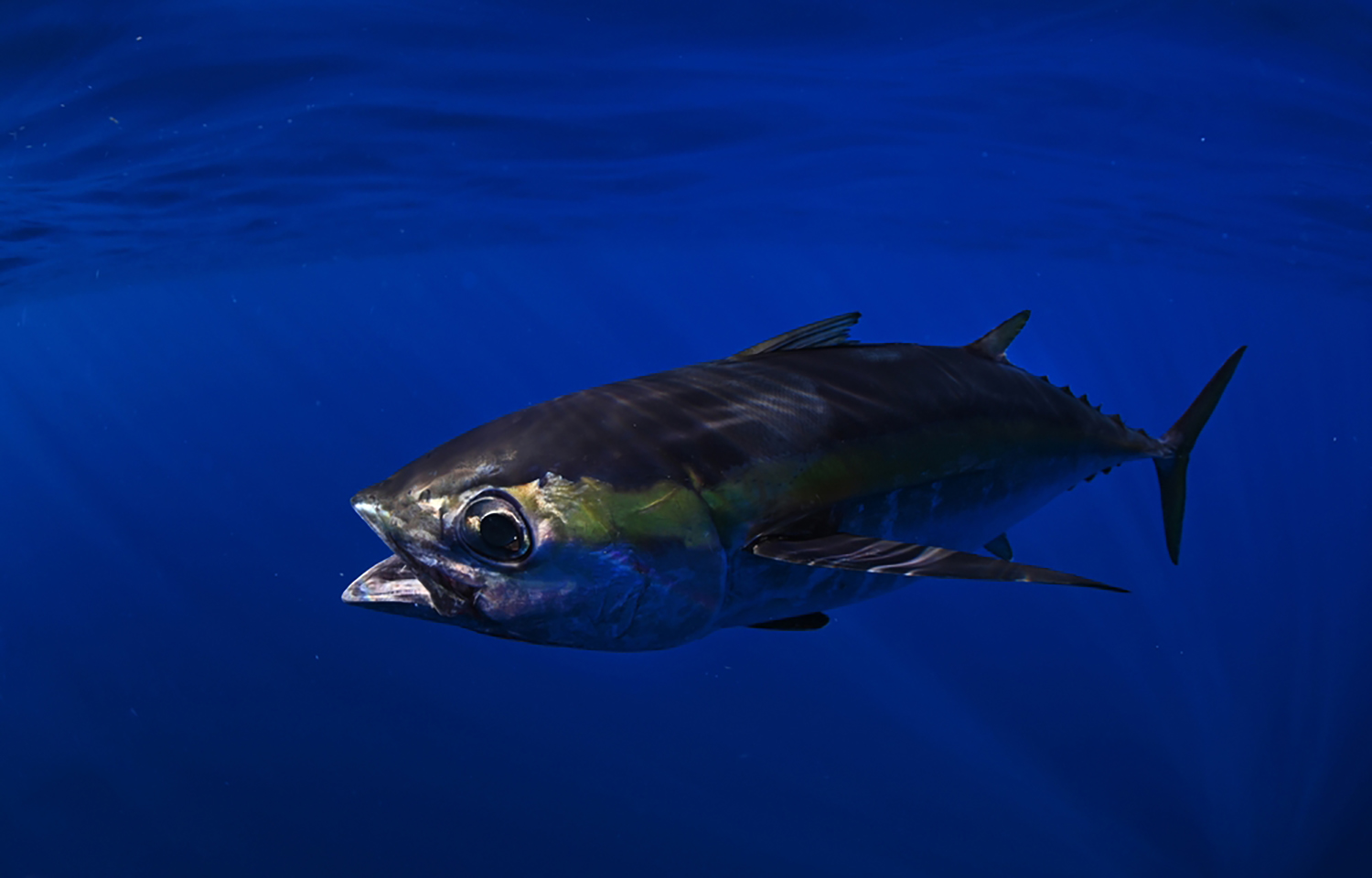
According to Cardoso, some pelagic species, such as the blackfin tuna (Thunnus atlanticus), originally found along all North American and South American coasts down to Rio de Janeiro, Brazil, have already expanded their distribution toward the South Pole, reaching southern areas of Brazil where they were not previously found. The same is true for the Brazilian sardine (Sardinella brasiliensis), which has been appearing beyond its historical southern range due to warmer ocean waters.
“We are seeing a tropicalization, with a steep increase in the capture proportion of species with affinity to warmer waters and a fast rise in the average capture temperature since the 2010s,” he said.
Species such as the Argentine hake (Merluccius hubbsi) and the whitemouth croaker (Micropogonias furnieri) are some of the next species that could move out of traditional waters, Cardoso said, while animals with lower mobility, such as crustaceans and mussels, may be unable to migrate and, thus, are more vulnerable.
For Palacios, the political fragmentation in the region reduces the ability to coordinate management of shared stocks, increasing the risk of overexploitation and conflict over access to valuable fisheries.
To enhance regional management, Palacios and colleagues suggest that countries in the Southwest Atlantic Ocean can start by sharing scientific data and management strategies that do not necessitate a formal political structure, similar to the Nauru Agreement (PNA), which governs tuna fisheries in the Western Pacific Ocean.
“We hope that this will be a political moment to discuss this, that climate change will be considered, and that there will be effective collective action from the three countries to protect this very important region of the ocean,” said Palacios.
The researchers decided to publish the analysis now, according to Palacios, because several high-profile events were recently held in Brazil, including the UN Conference of the Parties to the Convention on Climate Change (COP30) and the third Symposium on the implementation of the High Seas Treaty (BBNJ).
