



The International Seabed Authority (ISA) has so far failed to adopt a set of regulations on global seabed mining at its ongoing annual meeting at the same time U.S. President Donald Trump is seeking to bypass the organization's authority and commercialize the sea floor for mining purposes.
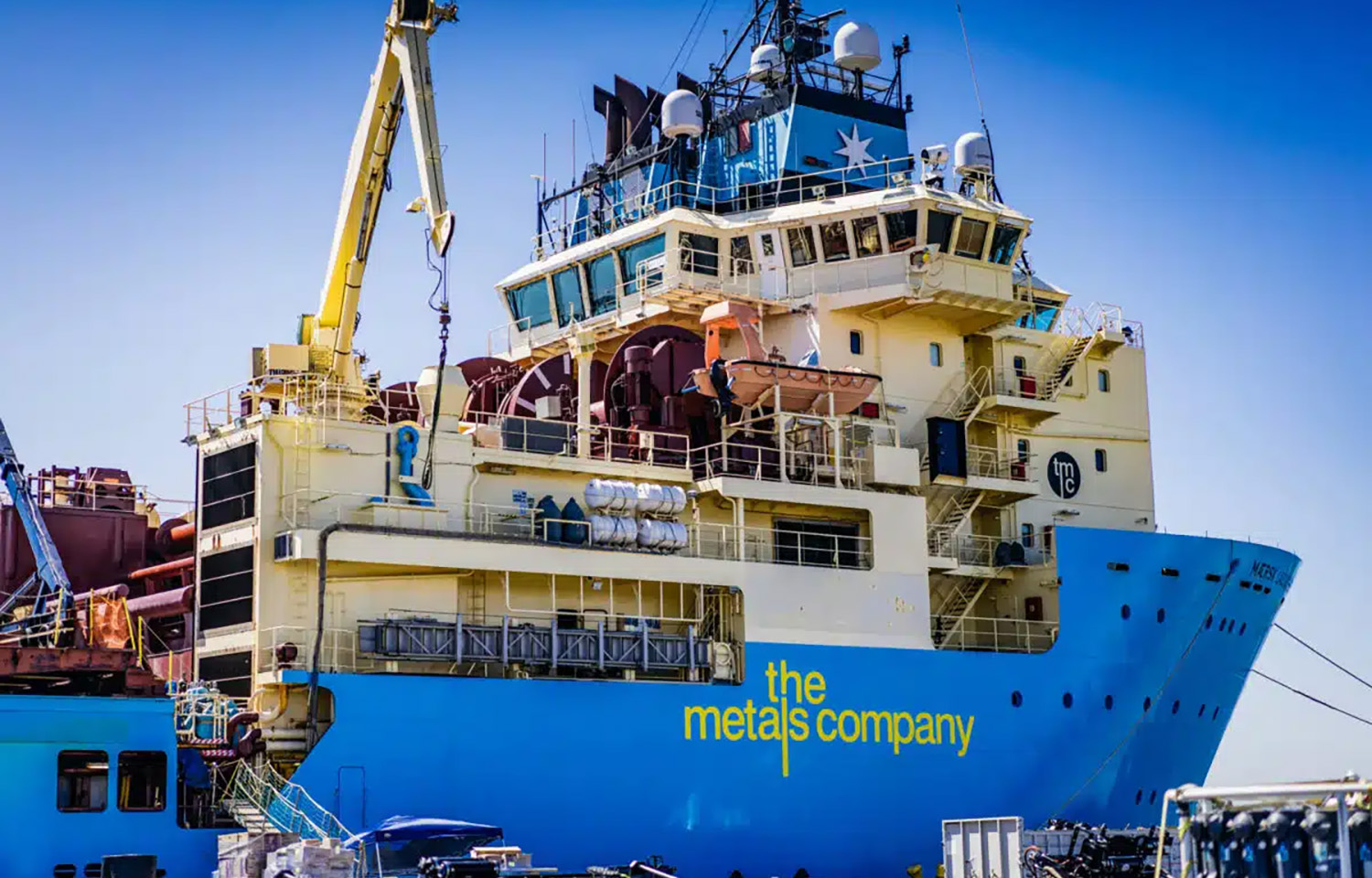
Even though the ISA holds authority over global seabed mining by virtue of a 1994 treaty ratified by 169 United Nations member states and all major coastal economies except the U.S., Trump granted Canadian deep sea mining firm The Metals Company (TMC) permits in March to begin commercializing the international seabed.
Trump argued that his reasoning for doing so was that the U.S. “has a core national security and economic interest in maintaining leadership in deep sea science and technology and seabed mineral resources.”
In so doing, he echoed the claims of TMC CEO Gerrard Barron, who has said that he sought mining permits from Trump because he could no longer wait for the ISA to finalize its regulations.
“What we need is a regulator with a robust regulatory regime and who is willing to give our application a fair hearing,” Barron said at the time, praising the Trump administration for “moving forward with urgency.”
Though ISA delegates are not expected to leave their annual meeting in Kingston, Jamaica, having adopted regulations for nations and companies seeking to mine in international waters, they did agree to open an investigation into whether The Metals Company (TMC) and its international partners are complying with the UN’s Convention on the Law of the Sea, which considers the sea floor part of the “common heritage of mankind” that requires ISA regulation.
The move has been interpreted as a veiled warning to private companies that they may become entangled in legal problems if they pursue seabed mining commercialization with The Metals Company.
According to The New York Times, discussions at the Kingston event have so far included debates over whether to revoke the exploratory permits that TMC had previously been granted by the ISA. The organization decided not to take such punitive measures but passed a resolution to investigate whether any of the ISA’s signatories were – by virtue of their involvement with TMC – in violation of its rules regarding sea mining.
ISA Secretary Leticia Carvalho reportedly urged delegates to finalize the regulations, saying that exploitation of the seabed would only be avoided through their adoption.
“What will prevent the Wild West are the rules,” Carvalho said, per the New York Times.
When the news that Trump would seek to expedite TMC’s permit request first broke, Pew Charitable Trust Seabed Mining Project Director Julian Jackson told SeafoodSource that seabed mining likely posed yet unknown threats to many fisheries.
Seabed mining involves the extraction of polymetallic nodules, which are ancient mineral-rich rocks about the size of potatoes, from the sea floor, damaging the abyssal zone and the wildlife that calls it home.
Jackson said that there are well-known risks that arise from any harm to animals in these deepest parts of the ocean, which make up the first links of the ocean-wide food chain.
“We are trying to understand the risks to the wider ecosystem but also to fisheries, consumers, and all those whose lives depend on a healthy ocean,” Jackson said.
Jackson also said that he was concerned about the way that noise and light pollution at the scale which ocean mining produces would shape the future of fisheries.
“We’re talking about operations that will run 24/7 for 30 years, so those cumulative impacts we don’t know about,” he said.
Other experts have criticized the U.S.’s plan to commercialize seabed mining on economic grounds.
“The U.S. just signed on the dotted line for a very bad economic deal" that will ultimately be a "great gift for China's economy," University of California Santa Barbara Professor Douglas McCauley said in a release issued in response to Trump’s proclamations.
“In our fever to get at these ocean minerals, the U.S. seems to have neglected to run the numbers,” he said. “The cobalt and nickel that could be mined from the ocean floor would be the most expensive cobalt and nickel mined anywhere on the planet.”
McCauley further explained that the ISA's regulatory apparatus, which TMC has critiqued as overly complicated and slow, has so far been helping to hold back unrestrained exploitation of seabed minerals by other countries.
"The U.S. has stepped forward to become the first pirate mining operation in international waters," he said. "With rules, we could have controlled the minerals that China or any country or person would take from this part of the ocean. Without any rules, China, simply put, will be far better at winning."
The U.S. plan has also drawn criticism from numerous foreign leaders, including French President Emmanuel Macron and Brazilian President Luiz Inacio Lula da Silva, both of whom used the UN’s Ocean Conference in June to express their fears about deep sea mining.
In his opening remarks at that event, Macron appeared determined to challenge Trump, saying that “the deep sea is not for sale; neither is Greenland nor Antarctica.
“There will be exploration but not use of the seafloor,” he said.
Despite the blowback the Trump plan has faced, the continued failure of the ISA to adopt regulation appears to have emboldened Barron.
“When I reflect on what I see happening in Kingston this week, I’m just so grateful we made this move to the U.S. permitting authority,” Barron said to the New York Times.
