






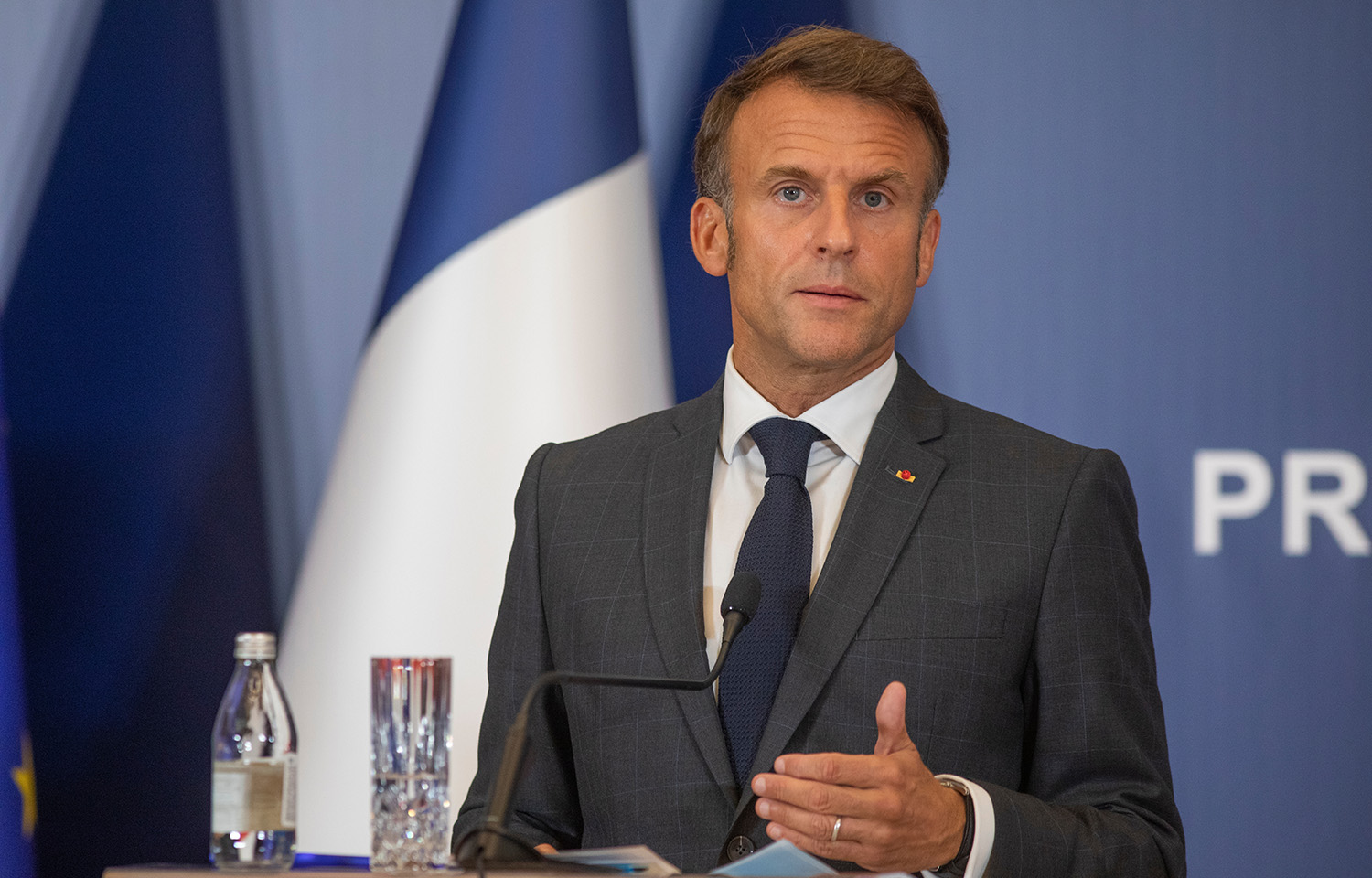
French President Emmanuel Macron and Brazilian President Luiz Inacio Lula da Silva have used their attendance at the UN Ocean Conference, taking place 9 to 13 June in Nice, France, to warn of the dangers of deep sea mining, which the U.S. recently announced plans to commercialize.
“I think it’s madness to launch predatory economic action that will disrupt the deep seabed, disrupt biodiversity, destroy it, and release irrecoverable carbon sinks when we know nothing about it,” Macron said, adding that a global moratorium on such mining was “an international necessity.”
Though U.S. President Donald Trump was not among the more than 60 heads of state who attended the UN Ocean Conference, Macron directed a portion of his opening remarks at the event toward U.S. policy on deep seabed mining.
“The deep sea is not for sale; neither is Greenland nor Antarctica,” he said, referencing Trump’s prior statements. "There will be exploration but not use of the seafloor."
On 24 April, Trump issued an executive order declaring the deep seabed open to development and ordering NOAA to expedite permits for the process within both international and U.S. territorial borders.
The United Nations International Seabed Authority (ISA) officially holds jurisdiction over seabed mining in international waters by virtue of a 1994 treaty, ratified by 169 UN member states, including every major coastal economy except the U.S.
Trump sidestepped mentioning the treaty in his executive order, instead drawing his authority from the Deep Seabed Hard Mineral Resources Act, which the U.S. passed in 1980. Under the act, companies can apply to NOAA for permits to explore and mine resources from the deep seabed. That law, however, has never been used to permit commercialized mining; so far, it has only been used for exploratory purposes.
In his executive order, however, Trump said that commercializing mining was now a matter of U.S. “national security and economic prosperity.”
Macron said that biodiversity preservation, carbon capture, and scientific knowledge collection of the seabed had to come before any commercialization.
“There are all forms of unknown treasures to be found down there which may help medicine and medical research make progress, so we need to protect the ocean depths ... so that science can first understand them,” he said. “That’s why the moratorium [on deep seabed mining] is so very important.”
Other heads of state and dignitaries attending the UN Conference shared Macron’s concern.
"Nations are … navigating new waters on seabed mining; I support the ongoing work of the International Seabed Authority on this important issue," UN Secretary-General António Guterres said. "The deep sea cannot become the Wild West.”
Brazil’s President Luiz Inacio Lula da Silva added that “hanging over the ocean [is] the threat of unilateralism” that must not be allowed.
When The Metals Company (TMC) Chairman and CEO Gerard Barron first announced that he was collaborating with the Trump administration to commercialize such mining in March, many leaders and ocean stakeholders also objected.
ISA Secretary General Leticia Carvalho swiftly issued a response to Barron's announcement, calling for “the rule of law and multilateral cooperation,” which she said were necessary to safeguard the seabed’s status as a “Common Heritage of Humankind,” referencing the UN treaty that established the ISA.
Since then, critiques of the U.S. plan to commercialize such mining have come from environmental groups, international organizations which promote cooperation between nations, and economic and scientific experts.
