






Vancouver, Canada-based seabed mining company The Metals Company (TMC) has announced that it is collaborating with the Trump administration to obtain authorization to mine the deep sea bed in international waters, in defiance of the United Nations’ International Seabed Authority (ISA).
The ISA was given jurisdiction over seabed mining in international waters by a 1994 treaty, ratified by 169 U.N. members states, including all major coastal economies, except the U.S.
TMC announced the news in a 27 March press release which argued that the ISA’s regulatory process had not kept up with the pace of TMC’s technological advancements or environmental research, which the company said had cost over USD 500 million (EUR 462 million).
“We believe we have sufficient knowledge to get started and prove we can manage environmental risks,” TMC Chairman and CEO Gerard Barron said.
According to Barron, TMC can no longer wait for the ISA’s regulatory approval.
“What we need is a regulator with a robust regulatory regime, and who is willing to give our application a fair hearing. That’s why we’ve formally initiated the process of applying for licenses and permits under the existing U.S. seabed mining code," Barron said. “After extensive legal review and constructive engagement with NOAA and other officials across the U.S. government, we believe the United States offers a stable, transparent, and enforceable regulatory path. TMC USA expects to submit applications to NOAA in the second quarter of 2025. We’re encouraged by the growing recognition in Washington that nodules represent a strategic opportunity for America – and we’re moving forward with urgency.”
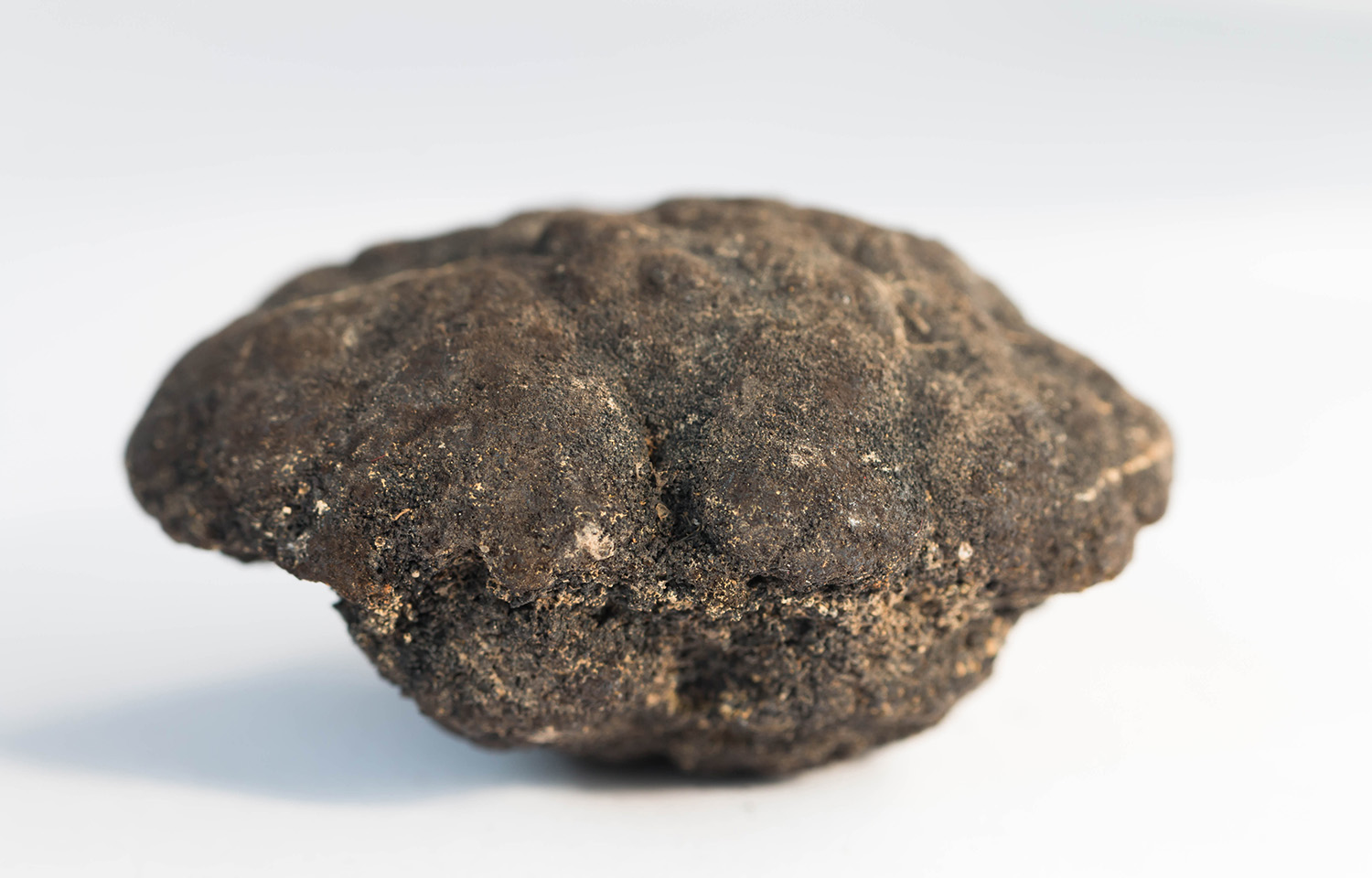
The nodules which Barron referred to are polymetallic nodules, ancient mineral-rich rocks which TMC would collect with autonomous vehicles and then send to the surface via miles-long tubes.
Scientists call the deepest portions of the ocean floor, where polymetallic nodules are found, abyssal zones. Such areas are biodiversity hotspots where animals that have often never been studied live. Many of these deep sea creatures attach directly to the sea floor and are killed when nodules are extracted.
Pew Charitable Trust Seabed Mining Project Director Julian Jackson told SeafoodSource that while the specific harms of seabed mining to fisheries have not yet been fully researched, there were some well known risks that stem from any harm that comes to animals in the abyssal zone, who make up the first links in the ocean-wide food chain. He said that Pew has worked for the last decade with the ISA to understand the risks of seabed mining for all ocean stakeholders.
“We are trying to understand the risks to the wider ecosystem, but also to fisheries, and consumers, and all those whose lives depend on a healthy ocean,” Jackson said. Deep sea life “is dependent directly on these nodules. These nodules take years to form, and they’ll be gone. And [then] the whole food chain around the nodules starts to fall apart. It’s a very sensitive environment that takes a very long time to recover.”
Jackson emphasized that research into other potential threats is underway.
One concern for fisheries, he said, was the plume of heavy metals that enters the water column when the nodules are extracted. Another was that as climate change warmed waters, fisheries, particularly that of Pacific tuna, could move into the way of mining operations.
Finally, Jackson said that the risks of noise and light pollution at the scale which ocean mining would produce would likely shape the future of fisheries.
“Bear in mind we’re talking about operations that will run 24/7 for 30 years, so those cumulative impacts we don’t know about," he said.
TMC announced its ambition to begin ocean mining in international waters while representatives for many countries were attending the 2025 meeting of the ISA in Kingston, Jamaica, where member states were slated to work on writing the laws which would regulate any seabed mining industry in the future.
ISA Secretary General Leticia Carvalho issued a response to TMC from the meeting, calling for “the rule of law and multilateral cooperation,” which she said were necessary to safeguard the seabed’s status as a “Common Heritage of Humankind,” according to the U.N. treaty that established the ISA.
Many diplomats from ISA states agreed either that the risks of mining had not yet been sufficiently researched, or that the wealth of the seabed should be the property of all nations.
"Ecosystems will be deeply harmed," ISA delegate from Costa Rica Gina Guillén-Grillo told NPR. "Species that we don’t even know will be eliminated because we don’t even know what’s down there.”
Barron remained steadfast, however, telling NPR that regardless of what happened at the Jamaica ISA meeting, his company would be “out there” mining the seabed soon.
U.S. approval of TMC’s deep-sea mining permits would be issued via the Deep Seabed Hard Mineral Resources Act, which was passed in 1980. Under the Act, companies can apply to NOAA for permits to explore and mine resources from the deep seabed. The law, however, has never been used to permit commercialized mining – only for exploratory purposes.
TMC currently holds exploratory permits in the Clarion-Clipperton Zone, a 3,100 mile stretch of the Pacific Ocean between Hawaii and Central America.
Activists responded forcefully to the company’s announcement that it was planning to commercialize these endeavors as soon as 2027.
Greenpeace’s Louisa Casson told NPR that the statement was “a desperate, very dangerous announcement” and “a slap in the face to international cooperation.”
The Deep Sea Conservation Coalition (DSCC) also described TMC’s announcement as a “reckless and desperate step” which came “after years of attempting to pressure the international community into allowing deep-sea mining.”
