

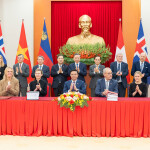

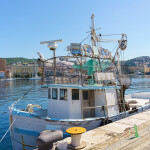



Namibia Minister of Agriculture, Fisheries, Water, and Land Reform Inge Zaamwani has officially sought approval for higher penalty fees for violators of the country's bycatch regulations.
The announcement comes nearly a year after the Southwest African country first approved stricter bycatch rules, which included a reduction in the maximum bycatch threshold from 5 percent to 2 percent across its fisheries and an increase in the penalty for violating that 2 percent limit from a 15 percent fee on every kilogram landed above the limit to 50 percent.
In an attempt to implement the fee increase officially, Zaamwani wrote to Namibia Finance Minister Ericah Shafudah requesting formal approval for the change. According to the Windhoek Observer, in the letter, Zaamwani outlined that her ministry has seen an alarming increase in bycatch volumes from fishing rights holders in recent years.
For instance, a report in The Namibian earlier this year highlighted that bycatch of pilchard in the nation’s fisheries increased by more than 1,800 percent between 2020 and 2025, exceeding 11,000 metric tons (MT) just last year compared to 680 MT in 2020.
“From a fisheries management perspective, repeated links between the same companies or vessel owners and high bycatch levels strongly suggest systematic patterns rather than random, area-specific bycatch,” Fisheries Observer Agency CEO Stanley Ndara told The Namibian.
Though bycatch has become a bigger issue in Namibia in recent years, industry stakeholders have pushed back against measures aimed at deterring the practice.
At the time the measures were approved last year, Confederation of Namibian Fishing Associations Chairman Matti Amukwa told media outlet New Era Live that the approved measures to reduce bycatch would only increase the cost of fishing and could even lead to job losses.
“Every fishing sector finds different bycatch species, some under a quota regime and others with no quotas at all. There cannot be a one-size-fits-all solution,” he said. “When the government threatens the industry, it is also threatening jobs. Employees are the most important part of the fishing industry. That must be borne in mind.”
Now that the fee increase has progressed toward implementation, industry players such as Amukwa are voicing similar concerns.
“The consequences would be immediate and severe: tied‑up vessels, job losses, and the collapse of operations that have supported coastal communities for decades. Members anticipate multimillion‑dollar write‑offs on almost every trip, extended periods of vessel inactivity, and the potential collapse of the sector,” Amukwa told The Namibian in late June. “We respectfully urge the ministry to reassess the proposed measures, pause implementation, and engage directly and openly with industry to develop practical, science-driven solutions that support both sustainability and operational viability.”
Nevertheless, the government has stated that current measures are not strong enough to deter bycatch across the nation’s fisheries, and such regulations as fees represent an immediate option in effectively regulating and managing its marine resources.
Other measures the government has considered include suspension or permanent revocation of fishing permits for repeat offenders, surrendering of excess bycatch to government at no pay, confiscation of fishing gear and vessels of offenders, and publicizing the names of bycatch regulation violators.
