



Under a new partnership with the Science Center for Marine Fisheries (SCEMFIS), NASA will provide new advanced satellite data to support fisheries and marine science research.
As part of the partnership, researchers from NASA’s Earth Science Division have joined SCEMFIS as members of its Industry Advisory Board (IAB), enabling them to integrate satellite imagery into the center’s research and creating a more formal collaborative relationship.
“NASA Earth Science is a perfect fit for SCEMFIS’ mission, which is identifying and supporting the latest breakthroughs in marine science,” SCEMFIS Director Eric Powell, who works at the Gulf Coast Research Laboratory at the University of Southern Mississippi, said in a release.
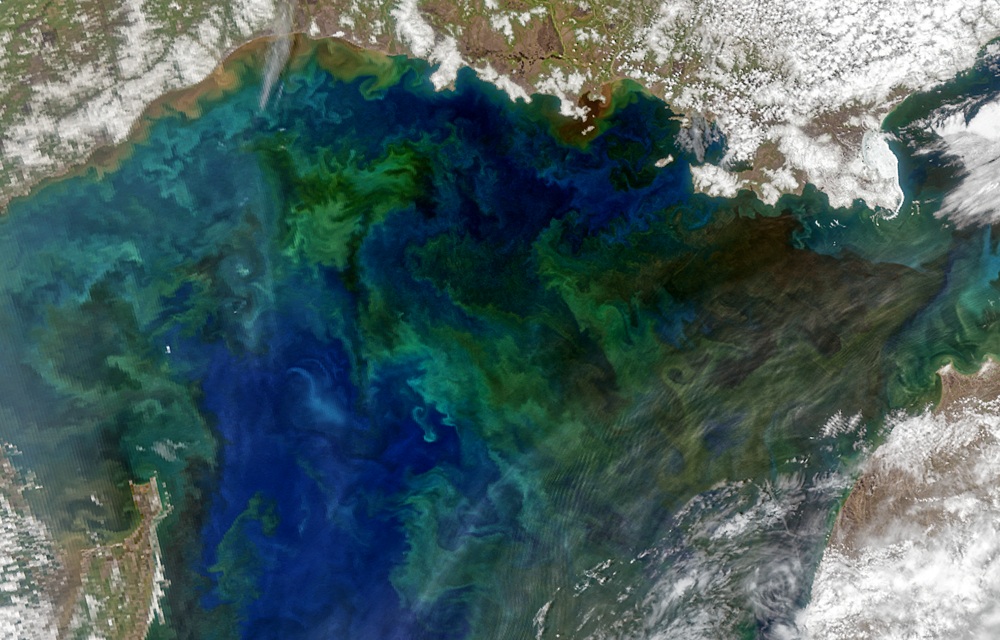
NASA satellite data is already used for marine research; according to SCEMFIS, ocean surface temperature and color data picked up by satellites have helped researchers better understand the prevalence of microscopic phytoplankton and the distribution and health of commercial species like menhaden.
In 2024, NASA expanded its ocean observation capabilities in launching the PACE satellite, which can collect data from the ultraviolet, infrared, and visible wavelengths. With access to hundreds of more colors than prior satellites, PACE enables researchers to collect advanced phytoplankton measurements and identify organisms that may be harmful to fish or consumers, SCEMFIS said.
SCEMFIS added that the partnership will allow expanded commercial applications of NASA data.
“Collaborating with NASA researchers to integrate these data into our future research will give us new insights into our oceans and the marine species that are important to us, and will benefit the finfish and shellfish fisheries and our industry partners,” Sea Watch International Senior Director of Innovation & Sustainability Joe Myers said in a release.
“The broad portfolio of ocean observations from NASA, and the advanced data from PACE in particular, will be an integral part of future SCEMFIS research,” Powell added.
