






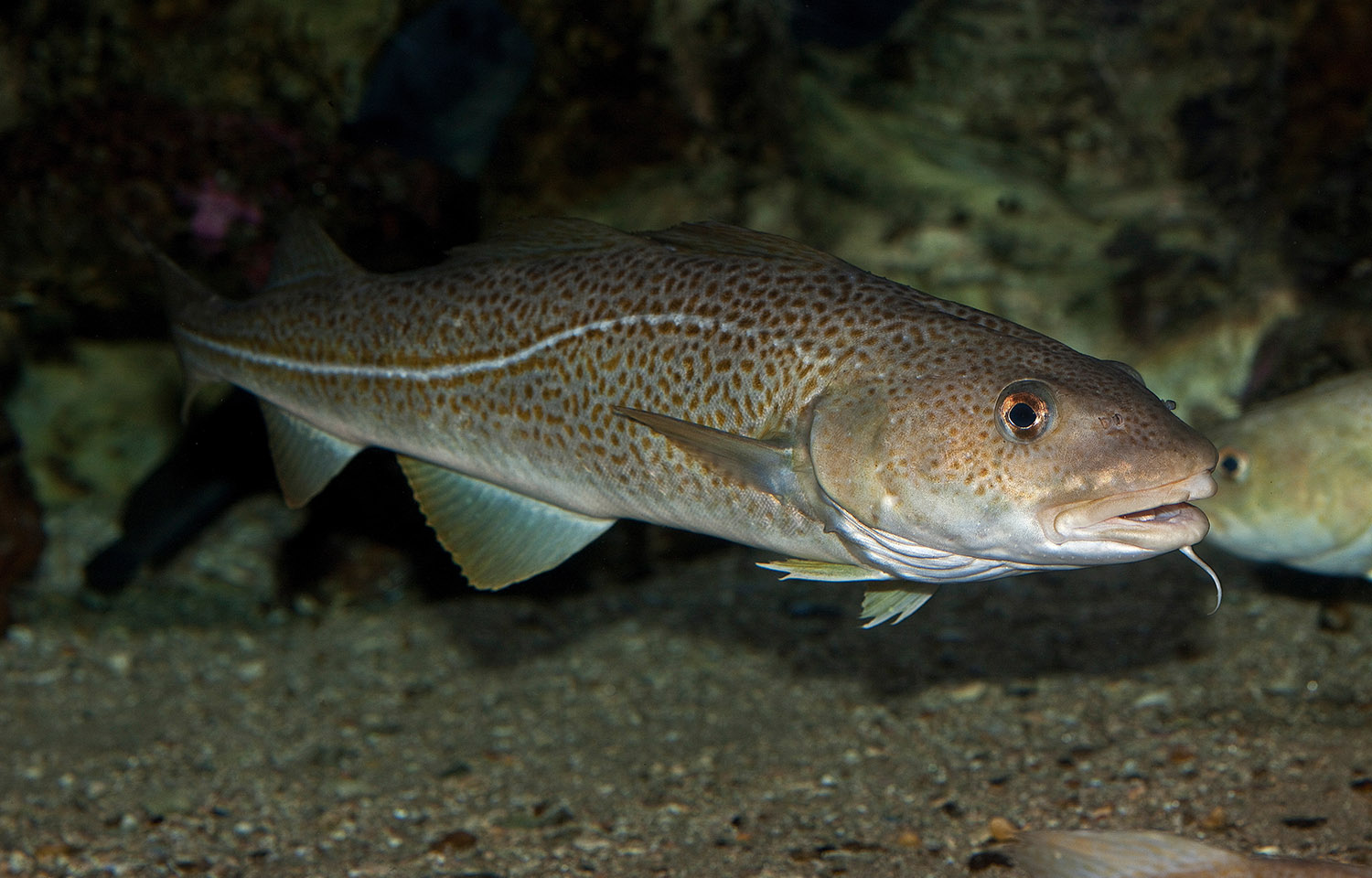
Frustrated members of the New England Fishery Management Council (NEFMC) have voted to delay work on three priority groundfish projects in order to repackage and resubmit new cod fishery regulations, which were rejected at the last minute by the U.S. federal government on procedural grounds.
“Obviously, this is very frustrating, especially to everyone who put so much work into this effort,” Council Member Alan Tracey said at a June meeting. “It's another example of where we're put in a position where we really have no choice.”
The NEFMC has been working on a major change to New England’s commercial cod fishery, transitioning from a two-stock management plan to a four-stock management plan. The new plan would set separate catch limits for each stock – the Eastern Gulf of Maine, Western Gulf of Maine, Southern New England, and Georges Bank stocks – allowing regulators to more precisely manage the sustainability of the fishery.
The plan has been met with hostility from many New England fishers, who say it will devastate the industry.
“These restrictions are going to be the end of the trawlers and anyone else buying fish,” New England Fishermen’s Stewardship Association (NEFSA) CEO Jerry Leeman said last year. “Everyone in the fisheries expects [the move] to torpedo their businesses.”
Despite that opposition, the council approved the framework in December.
However, the U.S. Department of Commerce announced that it had disapproved the plan in May, returning it to the council for reworking. In the interim, the federal government issued an emergency rule to authorize a two-stock commercial cod fishery for the 2025 season. That emergency rule can be extended for up to a year, but NEFMC staff were uncertain whether another emergency rule could be issued to keep the fishery operating for the 2026 season.
While the Department of Commerce endorsed the council’s decision to split cod management into four stocks on scientific grounds, it ultimately rejected the regulations on procedural grounds. According to the federal government – as well as comments filed by NGOs and fishing groups – a framework adjustment was the incorrect regulatory vehicle for making changes to cod stock management and, therefore, ran afoul of the Magnuson-Stevens Act, the main piece of legislation governing the nation’s commercial fisheries. In remanding the policy back to the council, NOAA Fisheries encouraged NEFMC to resubmit the policy as part of a revised amendment.
At their June 2025 meeting, council members expressed frustration that the department rejected the cod policy submission so late in the process.
“There was a general sense that the council followed the peer-reviewed science on stock delineation, that we followed the policy guidance from the regional office, and that we followed the legal advice from NOAA's general counsel on how we should proceed with making these important changes,” Council Member Geoffrey Smith said. “Despite all that, the agency disapproved the amendment. I was pretty frustrated by that and probably a little angry that we followed the advice we got and it was disapproved.”
According to council staff, there likely isn’t enough time for the council to reconsider any of the regulations and have the amendment approved by the start of the next cod season on 1 May 2026. Staff presented the council with two options: Repackage the regulations and submit a revised amendment as recommended by the federal government or leave the matter alone and let the federal government update the regulations via a secretarial amendment.
However, revising the plan will take time, and council staff made it clear that regulators would have to sacrifice some priorities to complete the task.
With staff already crafting a response to U.S. President Donald Trump’s executive order on American seafood, the repackaging of the amendment is expected to utilize the remainder of the council’s staff resources. To free up staff, the council ultimately decided to pause work on a redfish sector exemption program review, an evaluation of an at-sea monitoring system, and a revision of ABC control rules for the Northeast multispecies stocks.
It’s unlikely that the council would be able to complete those priorities either way.
While the council could theoretically forgo work on the amendment and hope that the Department of Commerce develops a secretarial amendment to govern the cod fishery, that process would still take up substantial council and NOAA Fisheries staff resources.
“If the council doesn't take up the amendment and if we get authority approval from our leadership to develop a secretarial amendment, my staff will be 100 percent focused on the preparation of that secretarial amendment, which will mean we would not be able to provide support on the other council priorities,” NOAA Fisheries Regional Administrator Michael Pentony said during the June council meeting. “Whether those other council priorities would move forward or be able to be completed, I can't speak to, but we would not be able to provide support on those.”
A secretarial amendment process also removes the council’s ability to influence management of the fishery, which members were highly reluctant to give up.
“I see we really don't have a choice,” Council Member Peter Whelan said. “We've got to repackage the amendment and send it back in. I mean, that's the only choice we have as a council. I don’t like losing control.”
Ultimately, the council voted overwhelmingly in favor of revising the amendment to include the four cod stock plan, with 16 votes in favor, one abstention, and no votes in opposition. Final action on the revised amendment is slated to take place at the council’s 23 to 25 September meeting.
